 Chuckanut Exterior
 Building Decks That Hold Up in Alger's Climate
Alger sits in a part of Whatcom County where the weather doesn't split neatly into "rainy season" and "dry season" — it's closer to a long wet stretch with a short break in it. Add in the salt-laden air that drifts up off the water and the moss that colonizes anything shaded and damp, and you've got a set of conditions that will find every weak point in a deck within a few years. We've built and repaired decks throughout this area long enough to know which details actually matter here and which ones are just extra cost.
A deck built to a generic national spec sheet is not the same as a deck built for Alger. The framing, fastener choice, ventilation, and even the board spacing all shift when you're designing for near-constant moisture exposure and salt air corrosion instead of dry heat or hard freeze-thaw cycles.
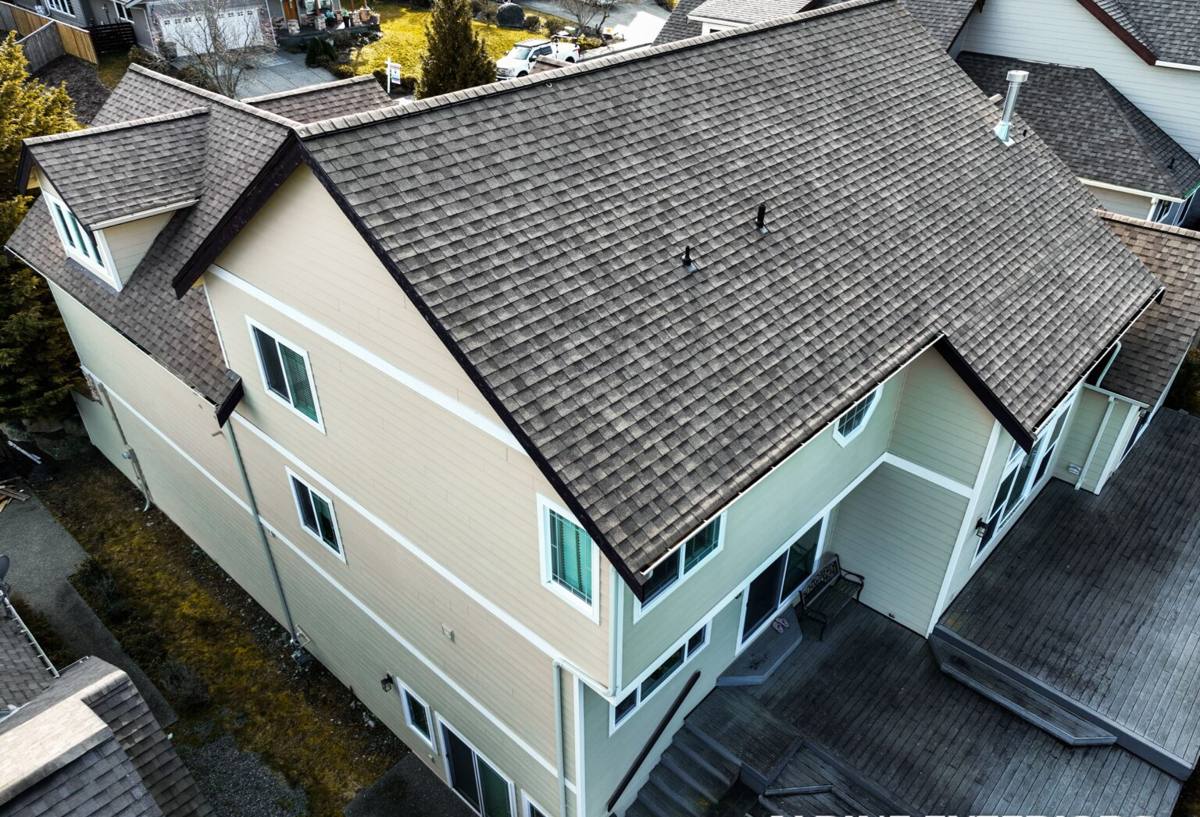
What Local Homes Actually Need From a Deck
Most of the deck problems we get called out to fix in this area trace back to the same handful of causes: trapped moisture, corroding fasteners, and moss or algae holding water against the surface longer than it should sit there. A deck built for Alger needs to answer all three.
Moisture Management First
Standing water is the enemy of every deck material, wood or composite. That means proper slope away from the house, gaps between boards sized correctly for drainage and seasonal wood movement, and joist protection so water doesn't sit in the one place you can't see it — the top of the framing under the decking.
Salt Air and Fastener Corrosion
Salt air accelerates corrosion on standard fasteners and hardware faster than most homeowners expect. A deck that looks fine on the surface can have rusting joist hangers or screws underneath within a handful of years if the wrong hardware went in. This is one of those details that's invisible until it fails, which is exactly why it matters to get right the first time rather than fix it later.
Moss and Algae Control
With as much shade and moisture as this region gets for large parts of the year, moss isn't a matter of if but when. The right board profile, gap spacing, and site orientation planning during design reduces how aggressively it takes hold, and makes the difference between an annual five-minute cleaning and a slippery, degrading surface.
Framing and Structure: The Part Nobody Sees
The framing underneath a deck does more work than the decking boards themselves, and it's the part most likely to be shortcut on a budget build. For Alger's conditions, we treat the substructure as the priority, not an afterthought.
- Ledger board attachment flashed and sealed correctly where the deck meets the house — the single most common source of hidden rot we find on deck tear-outs
- Corrosion-resistant fasteners and joist hardware rated for ground contact and moisture exposure, not standard interior-grade hardware
- Footings sized and set below frost depth and on stable soil, not just poured to minimum code
- Joist spacing tightened up under composite decking, since composite needs closer support than solid wood to avoid sagging over time
- Airflow beneath the deck preserved so moisture has somewhere to go instead of sitting trapped against the framing
Choosing Materials for This Climate
There's no single "best" decking material — there's a best material for a given budget, maintenance appetite, and exposure level. Here's how the common options actually perform under Alger's rain, salt air, and moss pressure:
| Material | Moisture & Moss Behavior | Maintenance | Typical Lifespan Here |
|---|---|---|---|
| Pressure-treated wood | Absorbs water, needs sealing to resist moss and cupping | Annual cleaning, refinish every 2-3 years | 10-15 years with upkeep |
| Cedar | Naturally rot-resistant but still needs sealing against constant wet exposure | Refinish every 2-3 years, regular cleaning | 15-20 years with upkeep |
| Composite decking | Doesn't absorb water like wood, but still needs surface cleaning where moss and algae collect | Periodic washing, no sealing or staining | 25-30+ years |
| PVC decking | Fully moisture-resistant, most moss-resistant surface option | Occasional washing only | 25-30+ years |
We'll walk through these trade-offs honestly during your estimate — the right call usually comes down to how much upfront cost versus ongoing maintenance you're comfortable with, not which material is "better" in the abstract.
Our Deck Building Process
A deck project runs smoother when the sequence is right and nothing gets rushed to hit a schedule. Here's how we approach a build in Alger:
- On-site assessment — we look at drainage, sun/shade exposure, existing structure if it's a replacement, and how the site handles water during heavy rain
- Design and material selection — sized and specified for the site's actual exposure, not a one-size-fits-all template
- Permitting — Whatcom County and local jurisdiction requirements handled before work starts, not discovered mid-project
- Demolition (if replacing) — including an honest look at the framing and ledger connection underneath, since that's often where the real problems are hiding
- Framing and structural work — built with corrosion-resistant hardware and proper flashing at the house connection
- Decking installation — board spacing and fastening pattern set for drainage and seasonal movement
- Final walkthrough — we go over care and maintenance specific to the material you chose so you know what upkeep to expect
Repair, Replace, or Restore?
Not every deck in rough shape needs a full rebuild. When we're called out to a deck that's showing wear, we look at three things before recommending anything: the condition of the framing, the age and remaining life of the decking material, and whether the ledger connection to the house is sound. A deck with solid framing but tired boards is often a straightforward re-decking job. A deck with rot at the ledger or corroded joist hardware usually needs to come down to the frame, because covering up a structural problem with new boards on top just delays a bigger repair later.
If moss and slickness are the main complaint but the structure is otherwise sound, sometimes a deep clean, a board spacing adjustment, or a switch to a more moss-resistant surface solves the problem without a full rebuild.
Why Hire a Crew That Already Works in Alger
Building codes, soil conditions, and weather patterns aren't identical from one town to the next, even within the same county. A crew that already works this specific area knows how deep to set footings for the local soil, which fastener grades hold up against the salt air coming off the water, and how aggressively to plan for moss given the shade patterns typical of Alger properties. That's not something you get from a crew that mainly works inland or in a drier climate and treats every job the same way.
We're also familiar with the practical realities of scheduling around this region's weather — knowing when a window of dry days is reliable enough to pour footings or when it's worth waiting a few more days rather than rushing concrete work into a forecast that's likely to turn.
Maintaining Your Deck Once It's Built
Whatever material you choose, a little seasonal attention goes a long way in this climate. A basic checklist we give homeowners after every build:
- Sweep and rinse the deck surface regularly, especially in shaded areas prone to moss
- Check for moss buildup at board gaps each fall before the wet season sets in fully
- Inspect fasteners and hardware yearly for early signs of corrosion, particularly on older builds
- Reseal or refinish wood decking on the schedule appropriate to the product — don't wait until it's visibly weathered
- Keep gutters and downspouts near the deck clear so runoff isn't draining directly onto or under the structure
- Trim back vegetation that's shading the deck excessively, since more sun exposure means less moss
Cost Factors to Expect
Every deck project is priced around size, material, height off the ground, and site access, but a few cost drivers come up consistently on Alger jobs:
| Factor | Why It Affects Cost |
|---|---|
| Material choice | Composite and PVC cost more upfront than wood but reduce long-term maintenance spending |
| Ledger and framing condition (replacements) | Rot or corrosion found at demolition adds structural repair scope |
| Height and railing requirements | Taller decks need code-compliant railing systems and additional structural support |
| Site access and slope | Difficult access or sloped lots increase labor time for footings and material staging |
| Permitting requirements | Larger or attached decks typically require permitting and inspection, which adds time and a modest fee |
We'll break down actual numbers for your specific project during the estimate rather than guessing at a range that may not reflect your site.
If you're planning a new deck or need an honest look at one that's showing its age, we're happy to come out and take a look. There's no pressure and no obligation — just a straight assessment of what your Alger property actually needs. Fill out the form below to request your free estimate.