 Chuckanut Exterior
 Why Deck Replacement Looks Different in the Alger Area
A deck built inland and a deck built near Chuckanut are not the same project, even if the plans look identical on paper. Homes in and around Alger sit close enough to the water that salt-laden air reaches wood, fasteners, and hardware year-round, not just during storms. Add in the long stretch of wet months typical of this part of the Pacific Northwest, and you get a combination that finds every weak point in a deck faster than almost anywhere else in the state: exposed end grain, undersized flashing, bargain fasteners, and ledger connections that were never properly sealed.
Deck replacement here isn't just about swapping old boards for new ones. It's about correcting the details that let moisture and salt do their damage in the first place, so the next deck actually outlasts the one it's replacing.
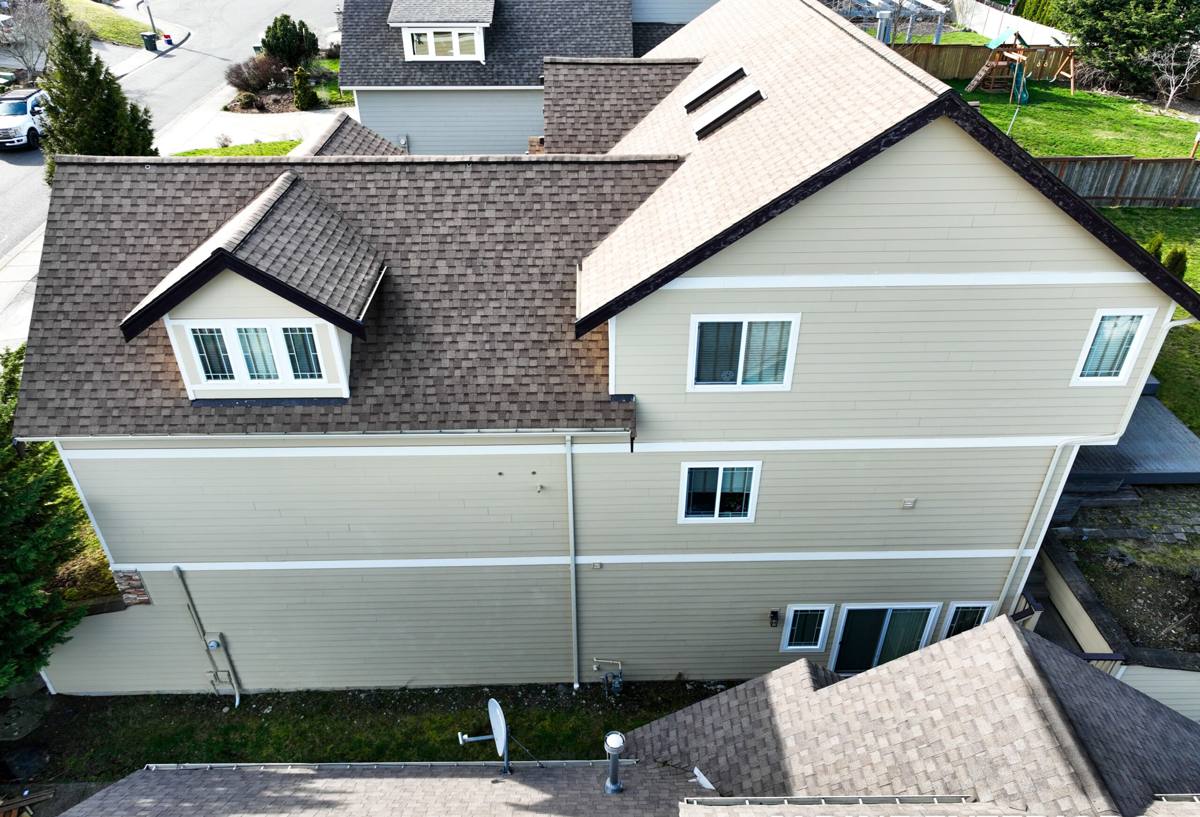
Repair or Replace? Reading the Signs
Not every deck problem means a full tear-off. But in a climate this wet, surface issues often point to deeper structural ones. Before we recommend replacement over repair, we look at the whole system, not just the boards you can see.
Signs that usually point to replacement
- Soft, spongy decking or joists you can push a screwdriver into with light pressure
- Rust streaking or crumbling around fasteners and post bases
- A ledger board that's separating from the house or shows staining below it
- Persistent moss or algae growth that returns within weeks of cleaning
- Visible sag between joists, or railings that flex more than they should
- A deck older than its material's realistic service life, especially untreated or lower-grade lumber
If the framing underneath is sound and the damage is limited to surface boards, a repair or resurfacing can make sense. Once the structure itself is compromised, patching becomes a short-term fix that costs more in the long run than doing the replacement once, correctly.
What a Correct Deck Replacement Actually Involves
A deck replacement that's built for this climate follows the same basic steps as anywhere else, but with less tolerance for shortcuts. The parts of the job you can't see after it's finished are the parts that matter most here.
Tear-off and structural inspection
We remove the old decking and railing down to the frame, then check ledger attachment, joist condition, beam and post condition, and footing stability before anything new goes on. Driving rain has a way of finding rot in places that look fine from the surface, so this step isn't skipped or rushed.
Ledger board and flashing
The connection between the deck and the house is the single most common failure point in wet climates. A ledger board without proper flashing lets water track behind it and into the house framing, often for years before anyone notices. Correct flashing detail here isn't optional — it's the difference between a deck that lasts and one that quietly rots your rim joist from behind.
Footings and framing
Footings need to sit below frost depth and bear on stable soil, and framing lumber should be rated for ground contact where it's close to grade or exposed to constant splash-back from rain. We size joists and beams to code and to the actual load the deck will see, not the minimum that happens to pass inspection.
Fastener and hardware selection
This is where salt air punishes cheap choices fastest. Standard galvanized fasteners can start showing rust bleed within a season or two this close to the water. We use fasteners and structural hardware rated for coastal exposure, because replacing a deck's boards is a lot easier than replacing corroded structural connectors hidden under them five years from now.
Decking Material Options for This Climate
There's no single "best" decking material — there's a best fit for your budget, your maintenance appetite, and how much salt air and rain your deck actually sees. Here's how the common options compare for a site like Alger.
| Material | How it handles salt air & rain | Maintenance | Trade-offs |
|---|---|---|---|
| Pressure-treated lumber | Good, if fasteners and cuts are properly treated and sealed | Needs re-staining/sealing every 1-2 years | Lowest upfront cost, shortest lifespan without upkeep |
| Cedar | Naturally moisture- and insect-resistant, but softens over time in constant wet | Regular sealing to hold color and resist moss | Attractive, but a real ongoing maintenance commitment here |
| Composite decking | Excellent — doesn't absorb moisture or feed rot the way wood does | Occasional washing; no staining or sealing | Higher upfront cost, but far less labor over the deck's life |
| Tropical hardwoods | Very good natural durability | Periodic oiling to prevent graying | Premium cost; installation is less forgiving of mistakes |
For decks that see direct salt spray or sit low to grade where moisture lingers, we generally steer homeowners toward composite or a well-treated hardwood. It's not that treated lumber or cedar can't work — it's that they demand a maintenance schedule most homeowners underestimate when they're budgeting for "low upkeep."
A note on why we don't push every product we're asked about
Some lower-cost composite and PVC blends look fine on a showroom sample but haven't proven themselves under real coastal weathering — repeated wet-dry cycling, UV, and salt exposure over years, not months. Our standard is to install products with a track record that matches the conditions your deck will actually face, and to be upfront when a cheaper option carries a maintenance or longevity trade-off you should know about before you buy.
Our Deck Replacement Process
- On-site evaluation. We inspect the existing deck, ledger, footings, and framing, and talk through what's driving the need for replacement.
- Straightforward proposal. You get a clear scope of work and material options, with honest trade-offs explained, not just a price.
- Tear-off and disposal. Old decking, railing, and any compromised framing are removed and hauled away.
- Structural rebuild. Ledger flashing, footings, framing, and hardware are installed to hold up under this area's rain and salt exposure, not just to pass a quick look.
- Decking, railing, and finish work. Your chosen material goes down with attention to drainage, fastener spacing, and clean sightlines.
- Final walkthrough. We go over the finished deck with you, including what maintenance it does and doesn't need going forward.
What Drives Deck Replacement Cost Here
Every deck is different, so we don't quote a number until we've seen the site. But a few factors consistently move the price up or down, and it helps to know them before you start comparing bids.
| Factor | Effect on cost |
|---|---|
| Deck size and shape (multiple levels, curves, built-in seating) | Increases labor and material |
| Decking material chosen | Ranges from modest for basic treated lumber to significantly more for premium composite or hardwood |
| Condition of existing framing and footings | Hidden rot or undersized footings add rebuild scope |
| Height above grade and railing requirements | Taller decks need more structural work and code-compliant railing |
| Fastener and hardware upgrades for coastal exposure | Modest cost increase for a large gain in lifespan |
| Access to the site for equipment and material delivery | Tight or difficult access can add labor time |
We'd rather walk you through these factors up front than hand you a number that changes once we start pulling up boards and find something we didn't expect.
Why a Crew That Already Works the Alger Area Matters
A deck built to a generic inland spec will underperform here, even if every board is installed correctly by someone's normal standard. A crew that regularly works Alger and the surrounding Chuckanut area already knows which details get skipped by out-of-town bidders — the flashing behind the ledger, the fastener grade, the footing depth — because we've seen what happens to decks that were built without them. That's not a sales pitch, it's just what years of working this specific stretch of coastline teaches you.
It also means faster, more realistic scheduling around this area's wetter months, and a crew that's easy to reach for a follow-up question after the job is done — not a name that only shows up once.
Keeping Your New Deck Ahead of Moss and Rot
Even a correctly built deck needs a little seasonal attention in a climate this wet. None of it is complicated, but skipping it is how small problems turn into replacement-again problems.
- Sweep debris off the deck regularly, especially in fall — trapped leaves hold moisture against the boards
- Keep gutters and downspouts clear so runoff isn't dumping extra water onto or near the deck
- Rinse off moss and algae early in the season before it gets a foothold, rather than waiting until it's established
- Check railing posts and stair connections once a year for movement or rust staining
- Reseal wood decking on the schedule appropriate for the product — don't wait until it's visibly gray or dry
- Keep planters and rugs from sitting in one spot too long; they trap moisture underneath
A few minutes of attention a couple of times a year goes a long way toward protecting the investment you just made in a new deck.
If your deck in the Alger area is showing its age, or you're just not sure whether it needs repair or full replacement, we're glad to take a look. Reach out for a free, no-pressure estimate using the form below.