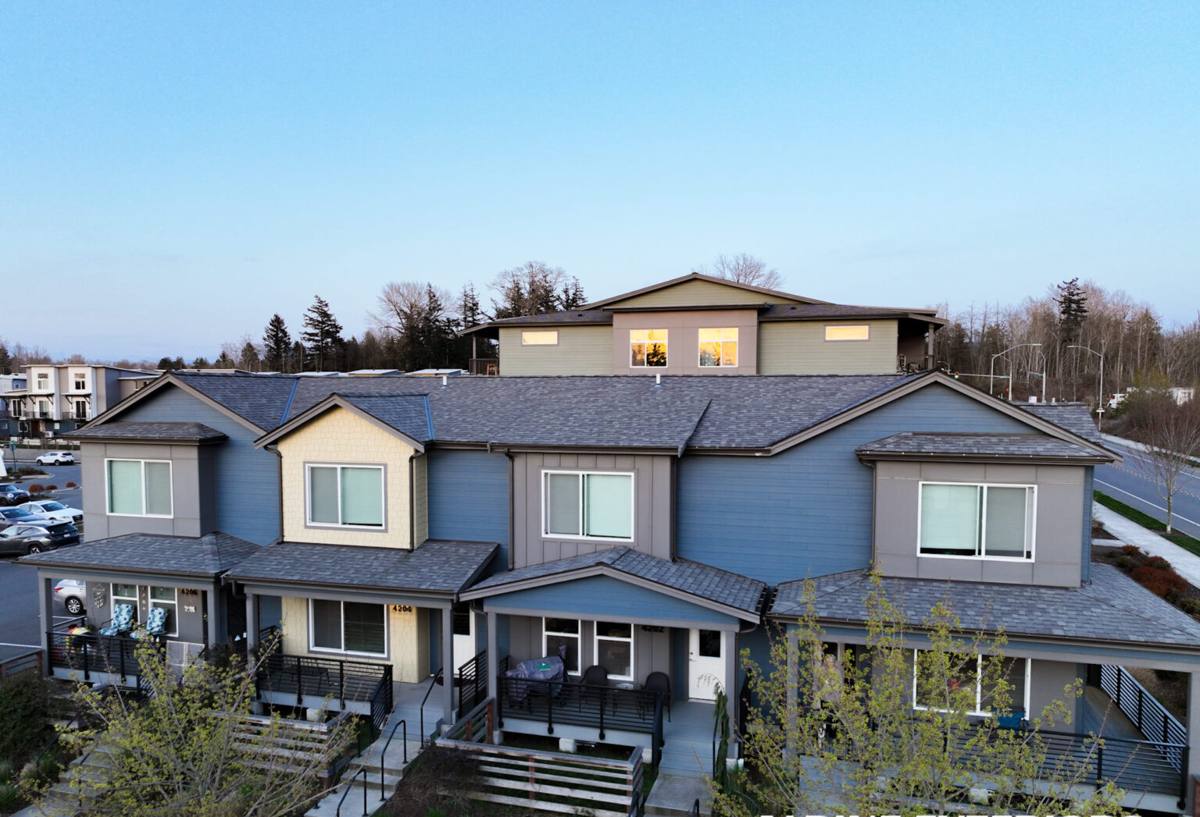
 Chuckanut Exterior
 Why Board & Batten Suits Bow's Coastal, Wooded Lots
Board and batten has become one of the most requested siding profiles in the Bow area, and it's easy to see why. The vertical lines read as clean and modern on newer builds, but the profile has deep roots in Pacific Northwest farmhouse and barn architecture, so it also looks right at home on the older properties scattered through this stretch of Whatcom County. Beyond looks, the vertical orientation genuinely sheds water differently than horizontal lap siding — a detail that matters more here than in drier parts of the state.
Bow sits close enough to the water that homes deal with salt-laden air, and close enough to heavy tree cover that shaded, moisture-holding wall sections are common. A siding profile that looks good is only half the job. It has to be installed with the right materials and details behind it, or the same features that make it attractive — deep shadow lines, exposed vertical seams, tight batten spacing — become the first places moisture finds a way in.
What Bow's Climate Does to Siding Over Time
Three regional conditions drive almost every siding failure we see on Bow homes:
Salt Air
Proximity to the Salish Sea means airborne salt settles on exterior surfaces year-round, not just in storms. Salt accelerates corrosion on any exposed metal — fasteners, flashing, trim screws — and it's especially hard on siding systems that rely on standard fasteners or untreated metal accessories. Corroded fasteners loosen panels, and loose panels let water behind the siding.
Driving Rain
Wind off the water pushes rain sideways, not straight down. That means water gets forced up under laps, into seams, and against vertical joints with real pressure behind it — not just gravity. Any siding system installed without proper flashing and a drainage path behind the cladding will eventually take on moisture in these conditions, regardless of how good the surface material is.
Moss Season
Long, wet winters combined with heavy tree canopy create ideal conditions for moss and algae growth on north-facing and shaded walls. Moss holds moisture against the siding surface far longer than open air would, which shortens the life of paint finishes and softens materials that aren't rot-resistant by nature.
None of these conditions are unique to Bow, but the combination — salt exposure plus dense tree cover plus wind-driven rain off the water — is a tougher environment than most of Whatcom County sees inland.
What James Hardie Board & Batten Actually Is
We install James Hardie fiber cement exclusively, and for board and batten projects that typically means one of two approaches: vertical HardiePanel with separate battens fastened over the seams, or Artisan V-Groove panel systems that give a more refined, tighter reveal. Both are fiber cement — a mix of cement, sand, and cellulose fiber that is non-combustible and dimensionally stable, meaning it doesn't expand and contract with moisture the way wood-based products do.
Why That Matters for This Profile Specifically
Board and batten depends on tight, consistent vertical joints for its look. Wood and wood-composite versions of this profile are prone to swelling, cupping, and gapping at those joints as they take on and release moisture — which is exactly the failure mode Bow's rain and humidity are set up to cause. Fiber cement holds its shape and its joint lines far more reliably over time.
ColorPlus Factory Finish
Hardie's ColorPlus finish is baked on at the factory under controlled conditions, which gives a more consistent, fade-resistant color than field-applied paint — and it matters more on a coastal job where UV, salt, and moisture all work against a finish simultaneously. It also means touch-up paint is matched and available, rather than guessing at a custom mix years later.
What Correct Installation Involves
Board and batten is less forgiving of installation shortcuts than standard lap siding, because every vertical joint and every batten fastener location is a potential water entry point. On a Bow project, we pay particular attention to:
- A drainage gap (rainscreen) behind the panels. This lets any water that does get past the surface drain and dry out instead of sitting against the sheathing — critical given the volume of driving rain this area gets.
- Corrosion-resistant fasteners. Given the salt air, we use fasteners rated for coastal or high-corrosion exposure rather than standard-grade options that can rust and stain the siding from behind.
- Correct batten spacing and fastening. Battens need to land over structural framing or proper blocking, not just cosmetically over the panel seam, so they hold long-term without pulling away.
- Flashing at every horizontal transition. Window heads, roof-to-wall intersections, and any horizontal trim need step or kickout flashing that directs water out and away from the wall assembly.
- Manufacturer-specified clearances. Hardie specifies minimum clearances from grade, roof lines, and decks — clearances that matter even more in a climate where standing moisture and moss have more time to work on a wall.
- Sealant only where Hardie calls for it. Over-caulking board and batten joints traps moisture rather than releasing it; correct installation uses sealant strategically, not as a substitute for proper flashing.
Comparing Board & Batten Materials for This Climate
| Material | Behavior in Salt Air / Driving Rain | Moss & Moisture Resistance | Typical Long-Term Maintenance |
|---|---|---|---|
| James Hardie Fiber Cement | Non-combustible, stable, holds joint lines under moisture cycling | Resists moisture absorption; ColorPlus resists mildew staining | Occasional wash; factory finish reduces repainting |
| Vinyl Board & Batten | Can warp or become brittle with UV and temperature swings | Doesn't rot, but moisture can collect behind panels unnoticed | Low, but panels crack and fade over time |
| LP SmartSide / Engineered Wood | Wood-based core is vulnerable to prolonged moisture exposure | More susceptible to swelling and edge damage in wet, shaded areas | Requires diligent caulking and finish upkeep |
| Cedar / Primed Spruce | Handsome but naturally moisture-sensitive; salt air accelerates weathering | Prone to moss growth and rot in shaded, damp wall sections | Regular refinishing and moisture monitoring needed |
This is why we standardized on James Hardie rather than offering all of the above. In a climate that combines salt exposure, wind-driven rain, and heavy moss pressure, the material itself needs to be doing a lot of the work — not just the paint or caulking on top of it.
Our Process for a Bow Board & Batten Project
- On-site assessment. We look at sun exposure, tree cover, wind direction relative to the water, and the current condition of the wall assembly before recommending anything.
- Tear-off and moisture check. Removing the old siding lets us inspect the sheathing for hidden rot or past water intrusion — common on shaded, moss-prone walls — before it gets covered up again.
- Weather-resistive barrier and rainscreen installation. This is the layer that does the real work of keeping water out long-term, and it's not visible once the job is done.
- Panel and batten installation to Hardie spec. Correct fastener placement, spacing, and clearances, with flashing integrated at every transition.
- Final inspection. We check joint lines, fastener finish, and clearances before calling the job complete.
Why a Crew That Already Works Bow Matters
A siding crew that mostly works inland doesn't necessarily think about corrosion-rated fasteners or shade-driven moss patterns as a default — because it hasn't had to. Working regularly in the Chuckanut-to-Bow corridor means we've seen which wall orientations hold moss longest, which fastener grades actually last near the water, and where driving rain tends to find weak flashing details on this type of coastline. That's not a marketing point — it changes concrete decisions on the job, like fastener selection and where extra flashing attention goes.
Maintenance & What to Expect After Installation
A correctly installed Hardie board and batten system is genuinely low-maintenance, but "low" doesn't mean "none" in this climate. Homeowners should expect to:
- Rinse off accumulated salt residue and moss spores periodically, especially on shaded and north-facing walls.
- Inspect caulked joints (where sealant is used) every year or two, since UV and moisture cycling can wear sealant faster near the water.
- Watch gutters and downspouts for proper function, since misdirected roof runoff is a common cause of localized siding damage regardless of material.
- Expect the ColorPlus finish to hold its color well beyond what field-applied paint typically manages in this climate.
Questions to Ask Before You Sign a Contract
- Will the installer include a rainscreen/drainage gap, or install panels directly against the barrier?
- What fastener type and corrosion rating will be used, given the salt air near the water?
- How will flashing be handled at windows, rooflines, and any horizontal trim breaks?
- Is the batten spacing tied to actual framing, or just placed for appearance?
- Does the quote specify James Hardie by product line, or just "fiber cement" generically?
If you're weighing board and batten for a home in Bow, we're happy to walk the property with you, point out what your specific sun exposure and tree cover mean for the job, and put together a clear, no-pressure estimate — just fill out the form below to get started.