 Chuckanut Exterior
 Roofing in Sehome: What the Climate Actually Demands
Sehome homes sit close enough to Bellingham Bay and the open water of Whatcom County that the roof over your head is doing more work than a roof would in a drier inland climate. It's absorbing salt-laden air, shedding months of driving rain, and fighting off moss that never really goes dormant. An asphalt shingle roof installed the way it's meant to be installed can handle all of that comfortably. One installed with shortcuts — thin underlayment, poor ventilation, flashing that was "close enough" — starts showing its age in half the time it should.
We work on asphalt shingle roofs in this part of Whatcom County regularly, and the failures we see are consistent: moss lifting shingle edges until wind gets underneath them, valleys that were never properly flashed backing up water during a heavy rain event, and attics that trap moisture because nobody accounted for ventilation when the roof went on. None of that is exotic. It's just what happens when a roofing job doesn't account for where it actually sits.
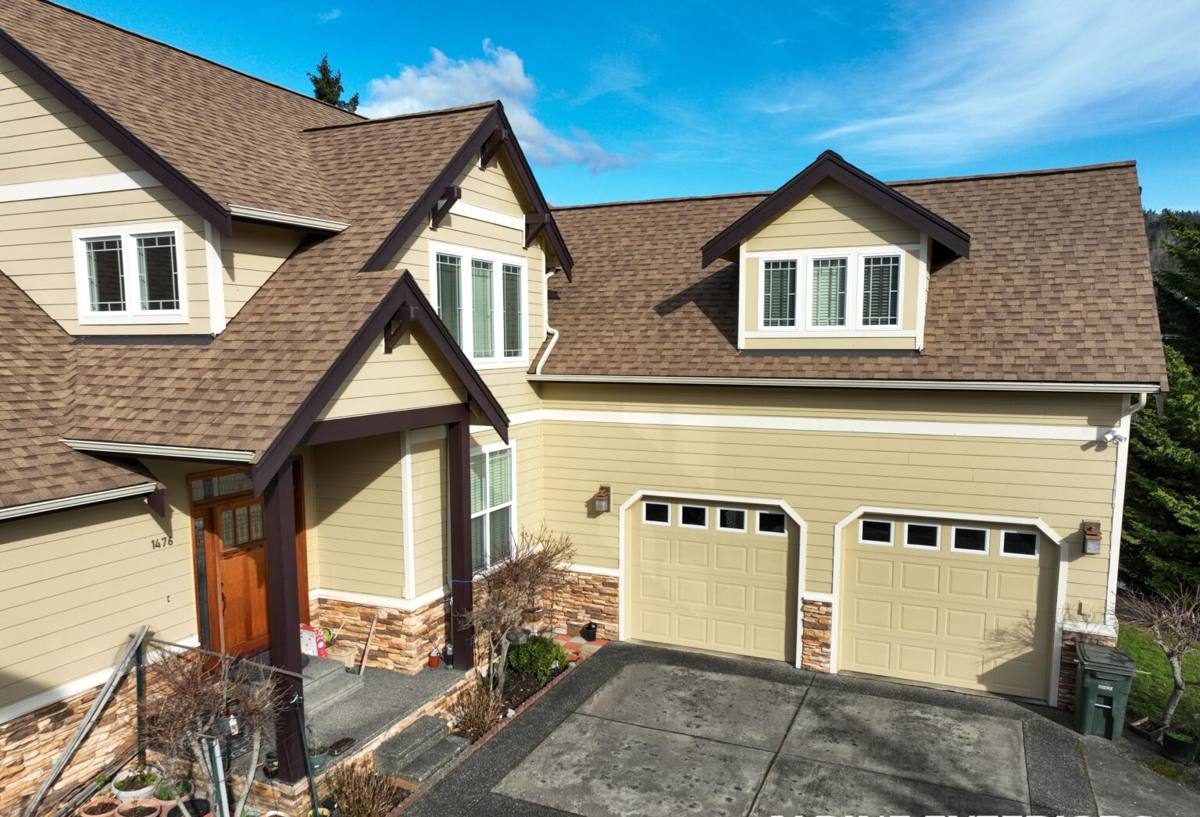
Why Asphalt Shingles Still Make Sense in Sehome
Asphalt shingles remain the most practical roofing material for the large majority of homes here, and for good reason. They're a known quantity — installers, inspectors, and insurance adjusters all understand them, warranty terms are standardized across manufacturers, and repairs down the road are straightforward because materials and matching shingles stay available for years. For a roof that has to shed a lot of rain and resist wind gusts off the water without demanding constant upkeep, a properly specified asphalt shingle system checks the boxes homeowners actually care about: cost, durability, and the ability to get a straightforward repair done later without a specialty contractor.
They're not the right fit for every roof — very low-slope sections, for instance, need a different approach entirely — but for the standard pitched roofs common on Sehome homes, asphalt shingles are a sound, defensible choice when the installation details are handled correctly.
Where Asphalt Shingles Fall Short — If You Skip the Details
The material itself isn't the weak point. The weak point is almost always installation quality: nailing pattern, underlayment coverage, and how the roofer handled transitions at valleys, chimneys, and sidewalls. A shingle roof installed to spec will outperform a "premium" material installed carelessly, every time.
The Moss, Algae, and Salt-Air Problem
This is the part of the job that's genuinely regional. Three things work against a roof here that don't show up nearly as much in drier climates:
- Moss and algae growth — persistent moisture and shaded northern exposures common on Sehome lots give moss a long growing season. Once moss takes hold at shingle edges and in valleys, it holds water against the shingle surface and can work granules and tabs loose over time.
- Salt-influenced air — proximity to the bay means metal components (flashing, fasteners, vents) are exposed to more corrosive air than an inland roof sees. Cheaper or mismatched metals corrode faster and fail at exactly the points where a roof is most vulnerable to leaks.
- Driving rain — wind-driven rain doesn't just run down a roof, it gets pushed sideways and upward under shingle tabs and around penetrations. A roof that only handles straight-down rain well will leak here eventually.
None of these is a reason to avoid asphalt shingles. They're reasons to install them with the right underlayment, the right metal, and the right detailing at every transition — which is exactly where a generic, one-size-fits-all roofing job tends to cut corners.
What a Correct Asphalt Shingle Installation Involves
A roof is a system, not a single layer of shingles. Every layer underneath the shingles matters as much as the shingles themselves, particularly in a climate like this one.
Underlayment and Ice-and-Water Barrier
We use synthetic underlayment as the primary water-resistive layer across the full roof deck, with self-adhered ice-and-water barrier at the eaves, valleys, and any low-slope transitions — the spots where wind-driven rain and standing water are most likely to find a way in. This is not optional upgrade material in a climate that sees this much rain; it's baseline correct practice.
Ventilation
A shingle roof that isn't ventilated correctly traps warm, moist attic air against the underside of the deck. Over a wet Whatcom County winter, that shows up as premature shingle deterioration from underneath, and sometimes as moisture problems in the attic itself. We balance intake (usually soffit vents) against exhaust (ridge or roof vents) so air actually moves through the attic space instead of stagnating.
Flashing and Metal Selection
Flashing at chimneys, sidewalls, valleys, and roof-to-wall transitions is where most leaks actually originate — not out in the open field of shingles. Given the salt-air exposure common to Sehome properties, we pay attention to flashing metal compatibility and fastener quality so corrosion doesn't become the reason a five-year-old roof starts leaking at a valley.
Starter Strips, Nailing Pattern, and Ridge
Proper starter shingles at eaves and rakes, manufacturer-specified nailing (not just "close enough" placement), and correctly capped ridges all affect wind resistance directly. This region gets enough wind off the water that skipping these details shows up as lifted or missing shingles after the first real storm.
Shingle Options and What Drives Cost
Most Sehome homeowners are choosing between a few tiers of asphalt shingle. Here's how they actually compare in this climate, not just on a spec sheet:
| Shingle Type | Typical Lifespan | Wind Resistance | Best Fit For |
|---|---|---|---|
| 3-Tab | Shorter end of the asphalt range | Lower — flatter profile catches less wind but has fewer attachment points | Budget-focused re-roofs, rental properties, simple roof lines |
| Architectural (Dimensional) | Mid-to-long range | Higher — thicker, layered construction resists uplift better | Most owner-occupied homes; the standard choice we recommend locally |
| Algae-Resistant / Premium Lines | Long end of the asphalt range | Highest available in asphalt | Shaded, moss-prone lots and homes closer to the water |
What actually drives the price on a given job is rarely the shingle line itself — it's roof complexity (number of valleys, penetrations, and roof planes), deck condition once the old roofing comes off, and how much of the underlayment and flashing system needs full replacement versus reuse. We break all of that out in writing before work starts so there's no guessing later.
Our Process, Start to Finish
- On-site inspection. We walk the roof (or use a ladder/drone where pitch or access makes that unsafe) and check the attic from inside, since ventilation and moisture problems usually show up there first.
- Written estimate. Scope, materials, and price broken down clearly — no vague allowances that turn into surprise add-ons mid-job.
- Tear-off and deck inspection. Old roofing comes off down to the deck, and we check for soft spots or rot before anything new goes down. Any deck repair needed is flagged and priced before we cover it up.
- Underlayment, ice-and-water barrier, and flashing. The system layers described above, installed to manufacturer and code specification, not shortcuts.
- Shingle installation. Correct nailing pattern, starter strips, and ridge caps — the details that determine wind performance for the life of the roof.
- Cleanup and magnetic sweep. Full site cleanup including a nail sweep of the yard and driveway.
- Final walkthrough. We go over the finished roof with you before calling the job done.
A Maintenance Checklist for Sehome Roofs
Asphalt shingle roofs are low-maintenance, not no-maintenance — especially with the moss pressure this area sees. A short annual routine catches most problems while they're still cheap to fix:
- Have moss and debris cleared from valleys and shaded roof sections before it builds up thick enough to hold moisture against shingles
- Check gutters are clear so water isn't backing up under the eave line during heavy rain
- Look for lifted, curling, or missing shingles after any significant windstorm
- Check attic insulation and ventilation aren't blocked, especially before the wettest months
- Have flashing around chimneys, vents, and skylights inspected every couple of years for corrosion or gaps
- Trim back overhanging branches that keep sections of the roof shaded and damp
Repair or Replace? How to Tell
Not every issue means a new roof. A cracked pipe boot, a handful of storm-damaged shingles, or a flashing leak at a chimney are typically straightforward repairs on an otherwise sound roof. What pushes a roof toward full replacement is usually a combination of factors: widespread granule loss, shingles that are brittle or cracking across multiple roof planes, decking that's shown soft spots in more than one area, or a roof that's simply reached the end of its expected service life and is starting to fail in more than one place at once. If you're not sure which category your roof falls into, an honest inspection should tell you plainly — not steer you toward the more expensive option by default.
Why It Matters That We Already Work in Sehome
A roofer who works this specific area regularly already knows what a Sehome roof is up against before they climb the ladder — the moss pressure on shaded, tree-covered lots, the corrosion concerns that come with proximity to the bay, and the wind-driven rain patterns that expose bad flashing work faster than a dry climate ever would. That local familiarity shows up in small decisions throughout a job: which underlayment to prioritize where, how much ventilation a given attic actually needs, which flashing metal makes sense for the exposure. It also matters for something more practical — permitting and code requirements specific to Whatcom County, and knowing which suppliers actually stock the materials that hold up here instead of ordering something that looks right on paper.
If your roof is showing moss buildup, missing shingles after a storm, or you're just past the point of trusting it through another wet season, we're happy to take a look and give you a straightforward, no-pressure estimate — fill out the form below and we'll get you scheduled.