 Chuckanut Exterior
 Building Decks in York That Actually Hold Up
York homes sit close enough to the water and the tree line that a deck here works harder than a deck almost anywhere else in Whatcom County. Salt-laden air corrodes hardware faster than it should, driving rain off Chuckanut's marine weather finds every gap in flashing and framing, and the long stretch of wet, shaded months each year gives moss and algae months to take hold on any surface that doesn't shed water and dry out fast. A deck built without those three things in mind will look fine for a year or two, then start showing rust streaks, soft spots, and green film that never fully goes away.
This page is specifically about custom deck construction for homes in York — not a generic overview of decking. If you're comparing options for a new deck, a full rebuild, or a repair-versus-replace decision, the details below are the ones that matter most for this particular stretch of Chuckanut.
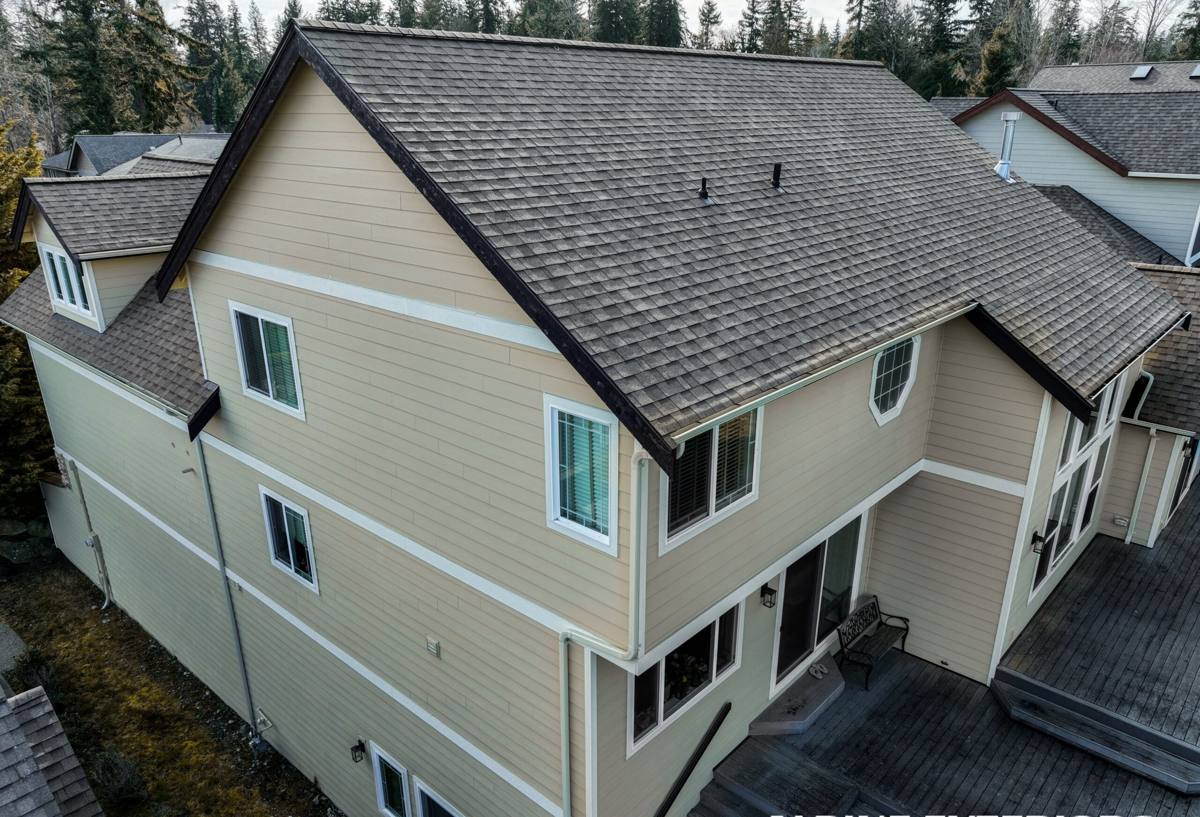
What York's Climate Does to a Deck
Salt Air and Corrosion
Homes closer to the water pick up airborne salt that settles on every exposed metal surface — screws, joist hangers, post bases, railing hardware. Standard zinc-coated fasteners can start corroding within a few seasons in this kind of exposure. Once a fastener rusts, it loses holding strength long before it looks obviously bad, which is part of why deck hardware deserves more attention here than in a drier inland town.
Driving Rain
Chuckanut's weather pattern brings rain that doesn't just fall straight down — wind-driven rain gets pushed sideways into ledger connections, under railing posts, and behind any trim that isn't properly flashed. A deck built to a minimum-code standard for a dry climate is not the same as one detailed for wind-driven moisture.
Moss and Algae
Shade from mature trees plus a long damp season means moss spores have plenty of time to establish on any decking surface that stays wet. Moss isn't just cosmetic — it holds moisture against the deck boards, and on wood decking that moisture retention accelerates rot from the top down instead of just from underneath.
What a Correctly Built Deck in York Needs
None of this is exotic — it's standard good practice applied consistently, instead of skipped to save time. The pieces that matter most:
- Stainless steel or heavy hot-dip galvanized fasteners and structural hardware, not the coated screws that come standard in a big-box framing kit
- Properly flashed ledger board connection where the deck meets the house, with a drainage gap or flashing tape system that routes water away from the rim joist
- Footings sized and set below frost depth with post bases that keep wood posts off standing water
- Decking material and gap spacing chosen to let the surface dry quickly between rain events
- Railing posts through-bolted rather than just lag-screwed into rim joists, since railing failure is one of the most common deck safety issues
- A slope built into the frame so water runs off the deck surface instead of pooling against the house
Choosing a Decking Material for This Climate
There's no single "best" decking material — there's a best fit for the maintenance level a homeowner actually wants to keep up with, and the budget. Here's how the common options compare for a York-style climate:
| Material | Moisture & Moss Behavior | Maintenance | Typical Lifespan |
|---|---|---|---|
| Pressure-treated wood | Absorbs water, holds moisture, needs sealing to resist moss | Annual cleaning and re-sealing recommended | 10-15 years with upkeep |
| Cedar | Naturally moderate rot resistance but still absorbs moisture without finish | Periodic cleaning and refinishing | 15-20 years with upkeep |
| Capped composite | Shell resists moisture absorption; still needs periodic washing to prevent surface algae film | Low — occasional wash, no sealing or staining | 25-30 years |
| PVC decking | Doesn't absorb moisture at all; most resistant to moss taking hold | Lowest — wash as needed | 25-30+ years |
We install wood, composite, and PVC decking. Our standard for wood decking is that we tell homeowners upfront what the sealing schedule looks like, because a wood deck that isn't re-sealed on time in this climate will show moss and gray weathering faster than most homeowners expect. Composite and PVC cost more upfront but trade that for far less time spent maintaining the surface — which matters most on decks that sit in shade for a good part of the day.
A Note on Fasteners and Hardware
Whatever decking material you choose, the hardware underneath it matters just as much. We spec stainless steel fasteners and corrosion-resistant structural connectors as our default for York builds, not as an upgrade. Using standard coated hardware here is a false economy — the labor cost to replace failed fasteners later is far higher than the small difference in hardware cost upfront.
The Ledger Connection: Where Most Deck Problems Start
If a deck attaches to the house, the ledger board connection is the single most important detail on the entire structure. This is the joint where the deck framing bolts into the house's rim joist, and it's also the joint most exposed to wind-driven rain working its way behind the ledger and into the house framing behind it.
A correct ledger installation includes flashing that directs water out and away from the house, a gap or drainage plane behind the ledger board itself, and lag bolts or through-bolts sized to the actual load — not just enough fasteners to hold the board up temporarily. Skipping or shortcutting this detail is invisible on installation day and can take years to show up as rot inside the wall behind the deck, by which point the repair is much larger than the deck itself.
Our Process for a Custom Deck in York
1. On-Site Visit and Design Conversation
We walk the actual site, check grade, sun and shade exposure, existing structure if there's a deck to replace, and talk through how the space will actually be used before anything gets drawn up.
2. Material and Layout Decisions
We go over decking material trade-offs, railing style, stairs, and any built-in features against your budget and how much upkeep you want to take on long-term.
3. Permitting
Deck permitting requirements depend on size, height, and whether the structure attaches to the house, and Whatcom County and local jurisdictions review these separately from general remodel permits. We handle the permit submission and inspections as part of the build rather than leaving that step to the homeowner.
4. Framing and Structural Work
Footings, posts, beams, ledger connection, and joists go in first, built to the standards above — this is the stage that determines how the deck performs in year ten, not just year one.
5. Decking, Railing, and Finish Work
Decking boards, railing systems, stairs, and any trim go on last, with attention to gap spacing and drainage so the finished surface sheds water correctly.
6. Final Walkthrough
We walk the finished deck with you, cover what maintenance (if any) the chosen material needs, and make sure everything is sound before we call the job done.
Why It Matters That We Already Work in York
A crew that's worked on other homes in this specific area already knows how the grade typically runs, what kind of soil and drainage conditions to expect when digging footings, and how much sun and shade a given lot layout gets through the seasons. That's not something you can fully substitute with a generic decking guide — it's local, and it's the difference between a deck designed for York's actual conditions and one designed for decking in general.
Working locally in Chuckanut also means we're not guessing at permitting timelines or inspection requirements — we've been through that process here before, which keeps a project moving instead of stalling on paperwork.
Questions to Ask Before You Sign a Deck Contract
Whether you hire us or someone else, these are the questions worth asking any deck contractor before work starts:
- Will the ledger connection be flashed, and how — get this described in writing, not just verbally
- What grade of fasteners and structural hardware will be used, and are they rated for the exposure this deck will actually see
- Are footings being set to the required depth for this area, and will that be inspected
- Is a permit required for this deck, and who is handling that submission
- What's the realistic maintenance schedule for the decking material being proposed
- Is the railing system through-bolted into structural framing, not just screwed into decking boards
If a contractor can't answer these clearly, that's worth noticing before the project starts, not after.
If you're planning a new deck or replacing one that's showing its age in York, we're happy to come take a look and walk through the options with you — no pressure, no obligation. Use the form below to request a free estimate.