 Chuckanut Exterior
 Storm Damage Roof Repair for Silver Beach Homes
Homes in and around Silver Beach take a specific kind of beating over the course of a Whatcom County winter. It isn't usually one dramatic event that does the damage — it's the accumulation of wind-driven rain, salt-laden air off the water, and long stretches of shade and moisture that keep moss working at a roof twelve months a year. When a storm finally does push a roof past its limit, the failure often started weeks or months earlier as a small, unnoticed weak point. Storm damage roof repair in this area isn't just about patching what broke; it's about figuring out why that spot broke first and making sure the fix holds up through the next storm, and the one after that.
This page covers what storm damage repair actually involves for homes in the Silver Beach area near Chuckanut, what to look for after a rough weather event, and how we approach the work so it's done right the first time.
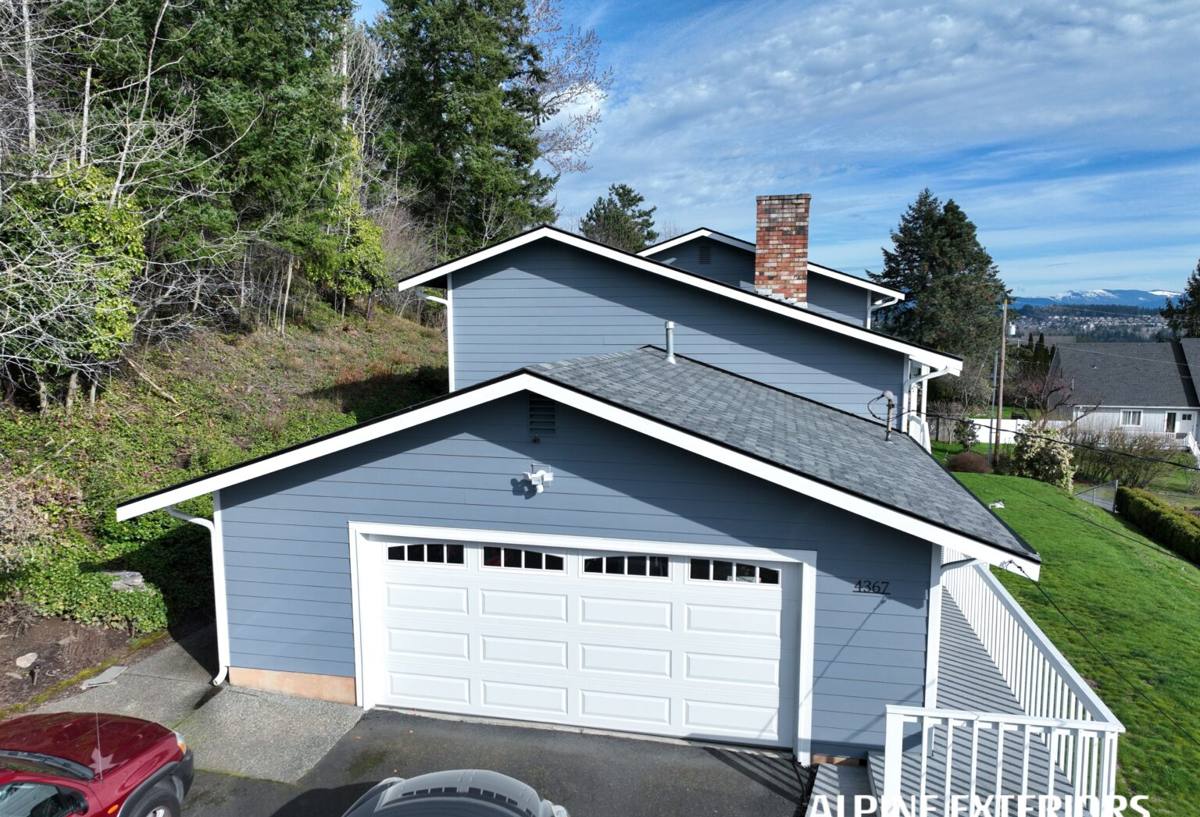
Why Storms Hit Roofs Differently Here
Wind-Driven Rain, Not Just Rain
A well-installed roof is designed to shed water moving straight down. Storms here rarely deliver water that way. Gusty, shifting wind pushes rain sideways and even upward under shingle edges, ridge caps, and flashing that would never see moisture in a calm downpour. Over time, and especially during a strong storm, that sideways-driven water finds every gap in the underlayment, every short nail, and every spot where flashing was cut a little too tight.
Salt Air and Slow Corrosion
Proximity to the water means metal roof components — flashing, fasteners, vent caps, gutter hardware — are exposed to salt-bearing air on a regular basis. That air doesn't cause dramatic failures on its own, but it accelerates corrosion in metal that isn't rated for a marine environment or that was installed without enough attention to galvanic compatibility. A flashing detail that would last decades inland can start showing pinholes and rust streaks years sooner out here, and a corroded flashing is exactly where storm water gets in.
Moss and Trapped Moisture
Whatcom County's long wet season and the shade cover common around Silver Beach properties add up to a moss season that runs most of the year. Moss doesn't just look bad — it holds water against the roofing material, lifts shingle edges as it grows, and works its way under laps and seams. A roof carrying a moss load going into a storm is already compromised before the wind even picks up, which is one reason storm damage in this area often looks worse than the storm itself would suggest.
Recognizing Storm Damage After the Weather Clears
Some storm damage is obvious. A lot of it isn't, and the roof can keep leaking quietly for weeks before it shows up as a stain on a ceiling. After any significant wind or rain event, it's worth doing a careful visual check — from the ground, not the roof itself — for the following:
- Shingles that look lifted, curled, cracked, or are missing outright, especially near ridges and edges
- Granules collecting in gutters or at downspout outlets, which points to shingle surface wear
- Visible gaps or bent sections in flashing around chimneys, skylights, and roof-to-wall transitions
- Dented or dislodged vent caps and ridge caps
- Sagging or discolored ceiling areas inside the house, which often trace back to a roof leak days after a storm
- Debris, branches, or heavy moss buildup concentrated in valleys and low-slope sections
- Gutters pulling away from the fascia or overflowing during rain, which points to blockage or damage above
None of these on their own guarantee a major problem, but any of them are worth a professional look before the next storm system moves through.
What a Correct Storm Damage Repair Actually Involves
Inspection Before Any Repair
We start on the roof, not the estimate. A proper storm damage assessment means walking the roof surface, checking flashing points, examining the underlayment where it's exposed, and looking at decking condition anywhere water may have gotten through. Skipping this step and just re-nailing a few visible shingles is how the same section ends up damaged again in the next storm.
Matching Materials, Not Just Patching
Repairs should match the existing roofing material in type, weight, and, where possible, color and age-appropriate appearance. A mismatched patch isn't just a cosmetic issue — different shingle profiles can create new water paths where the old and new material meet.
Flashing and Underlayment Get Priority
Given how much of our storm damage traces back to flashing and water intrusion at transitions rather than the field of the roof itself, we treat flashing repair or replacement as a core part of the job, not an afterthought. Underlayment in the affected area gets replaced with a synthetic or self-adhering product suited to wind-driven rain conditions, not just whatever was standard when the roof was first installed.
Ventilation and Moss Prevention Get Addressed
Where storm damage exposes an underlying ventilation problem or heavy moss growth, we point it out. A repair that ignores the conditions that weakened the roof in the first place is a repair that buys a shorter runway before the next issue.
Repair or Replace: What Actually Tips the Decision
Not every storm-damaged roof needs full replacement, and not every roof is worth repairing again. The honest answer depends on a handful of factors we walk through with the homeowner during inspection.
| Factor | Points Toward Repair | Points Toward Replacement |
|---|---|---|
| Roof age | Under roughly two-thirds of its expected lifespan | Near or past its expected lifespan |
| Extent of damage | Isolated to one section or feature | Spread across multiple roof planes |
| Decking condition | Solid, dry, no rot found | Soft spots or water-stained sheathing present |
| Repair history | First or second repair on this roof | Recurring repairs in the same or nearby areas |
| Moss/moisture load | Manageable with cleaning and treatment | Heavy, long-term buildup affecting large areas |
| Insurance coverage | Claim covers targeted repair scope | Claim or adjuster assessment supports full replacement |
We'll never push a full replacement when a targeted repair will genuinely hold up, and we'll never recommend a repair we don't believe will last through another storm season. That call gets made after the inspection, with the reasoning explained plainly.
Our Process, Start to Finish
- Contact and scheduling. We get basic details about the damage and the storm event, then schedule an inspection — often within a day or two, sooner if there's active leaking.
- On-roof inspection. We document the damage with photos, check flashing and decking, and identify the root cause, not just the visible symptom.
- Written estimate. You get a clear scope of work and price before anything is repaired, including whether we recommend repair or replacement and why.
- Repair work. Matched materials, proper flashing and underlayment work, and cleanup, done by people who work Whatcom County roofs regularly and know what wind-driven rain does to a repair that's cut corners.
- Final walkthrough. We show you what was done and flag anything worth watching, like a moss condition that will need periodic attention.
Storm Damage and Insurance Claims
Many storm damage repairs are covered in whole or part by homeowner's insurance, depending on your policy and the cause of damage. We can document the damage thoroughly with photos and a written assessment that you can submit with a claim, and we're glad to work alongside an adjuster's inspection. What we won't do is inflate a damage report or claim storm causation for damage that's clearly the result of age or deferred maintenance — that's a disservice to you and it's not how we operate.
Why a Crew That Already Works Silver Beach Matters
Storm damage repair isn't a generic skill applied the same way everywhere. A crew that regularly works roofs in the Silver Beach area near Chuckanut has already seen how salt air affects fastener choice, how the local wind patterns tend to attack roof edges and ridges, and how aggressive moss growth gets on shaded, moisture-heavy lots in this part of Whatcom County. That familiarity shows up in small decisions — which flashing detail to use, how much ventilation a roof actually needs, when a "small" repair is masking a bigger moisture problem — that a crew unfamiliar with this specific coastal, wet-climate environment can easily miss.
It also means a faster response. When a storm comes through, it tends to affect a lot of roofs in the same area at once. A local crew already scheduling work nearby can usually get to a leaking roof faster than one dispatching from farther away.
Get a Straightforward Estimate
If a recent storm has you wondering about your roof's condition, or you've already spotted signs of damage, we're happy to take a look and give you an honest read on what's going on and what it will take to fix it. There's no pressure and no obligation — just a clear inspection and a straight answer, using the form below to get started.