 Chuckanut Exterior
 Roof Replacement Built for South Hill's Weather, Not a Catalog Photo
South Hill homes sit close enough to the water and the tree line that the roof takes a beating most inland houses never see. Salt-laden air off the bay works on fasteners and flashing year-round. Driving rain, pushed sideways by wind off the water, finds every weak seam. And the shade from mature trees on the hillside keeps roofs damp long after a storm has passed, which is exactly what moss needs to take hold. A roof replacement here has to answer all three of those conditions at once, not just look good from the street.
We've replaced roofs across South Hill and the surrounding Chuckanut area long enough to know which details matter locally and which ones are just upsells. This page walks through what a correct roof replacement looks like for this specific neighborhood — the climate factors, the materials that hold up, and how our process works from first inspection to final cleanup.
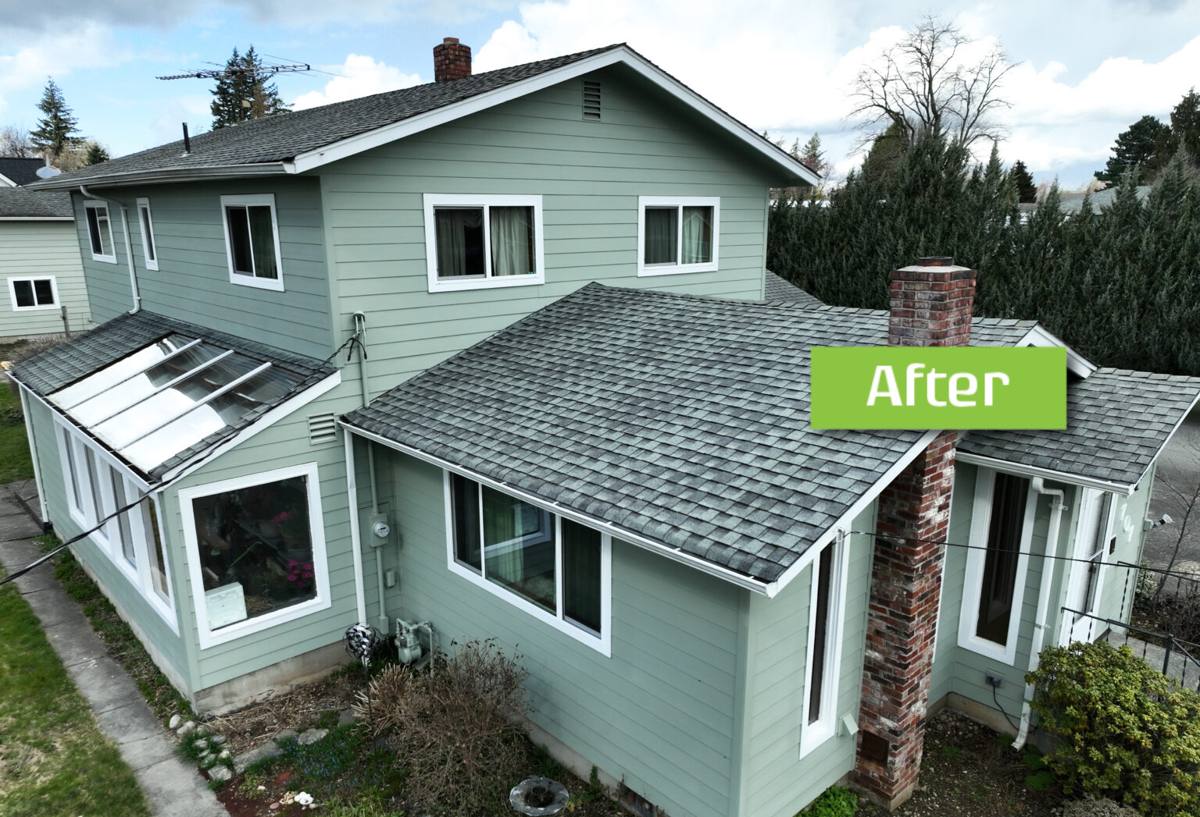
What Salt Air and Driving Rain Actually Do to a Roof
Salt air is corrosive to exposed metal. Nails, flashing, and fasteners that aren't rated for coastal exposure start losing their protective coating years before a homeowner ever sees a leak. By the time you can see rust staining on a fascia board or streaking down a wall, the fastener underneath has usually been compromised for a while. This is why we specify corrosion-resistant fasteners and flashing on every South Hill job, not just the ones facing the water directly — wind carries salt air further inland than most people expect.
Driving rain is a different problem. Whatcom County storms don't always fall straight down; wind pushes rain sideways and up under shingle tabs, around vent boots, and into any flashing joint that wasn't lapped correctly. A roof that would be fine in a calmer climate can leak here simply because the underlayment or flashing detail wasn't built for wind-driven water. Correct lap direction, sealed fastener penetrations, and properly integrated flashing at every valley, wall, and penetration aren't optional extras on a South Hill roof — they're the baseline.
Where Wind-Driven Rain Causes the Most Damage
- Valleys where two roof planes meet and water concentrates
- Flashing around chimneys, skylights, and roof-to-wall transitions
- Vent boots and pipe penetrations where rubber seals crack over time
- Eaves and low-slope sections where water has more time to work its way under shingles
- Any spot where a previous repair patched over a problem instead of solving it
Moss, Shade, and Roof Pitch in a Hillside Neighborhood
South Hill's tree cover and terrain mean a lot of roofs sit in partial shade for a large part of the day, especially on north-facing slopes. Shade plus regular rain equals a long moss season — moss doesn't just grow in a couple wet months here, it can be active nearly year-round on the roofs that stay damp longest. Moss isn't just cosmetic. As it spreads, it lifts shingle edges, holds moisture against the roof deck, and accelerates granule loss on asphalt shingles. Left unchecked, a mossy roof ages faster than a clean one, sometimes by years.
When we replace a roof in a shaded, moss-prone spot, we talk with homeowners about a few things a generic roofing job skips: zinc or copper strip options to slow future moss growth, ventilation that helps the deck dry out between rains, and, where it makes sense, trimming recommendations to get more sun and airflow onto the roof. None of that replaces a proper tear-off and reinstall, but it extends the life of the new roof considerably in a spot that will always be more moss-prone than a roof out in the open.
Signs a South Hill Roof Needs Replacement, Not Another Repair
Repairs make sense for isolated damage. Replacement makes sense when the roof's overall condition means repairs are just delaying the inevitable — or costing more over a few years than a new roof would. Here's how we tell the difference on an inspection:
| What We Find | Usually Means |
|---|---|
| One or two isolated leaks, roof otherwise sound | Repair |
| Widespread granule loss, curling shingles across multiple slopes | Replacement |
| Heavy moss coverage with lifted shingle edges underneath | Replacement |
| Soft or spongy spots on the deck when walked | Replacement, likely with deck repair |
| Roof is under 10 years old, isolated flashing failure | Repair |
| Roof is at or past its material's expected lifespan | Replacement |
If a roof is showing more than one of the "replacement" signs at once, patching it usually isn't a good use of money. We'll always tell you honestly if a repair will hold for a few more years — we'd rather earn the replacement job later than talk someone into one they don't need yet.
What a Correct Roof Replacement Involves
A roof replacement is more than swapping old shingles for new ones. The parts you don't see — deck condition, underlayment, flashing, and ventilation — determine whether the roof actually performs in this climate or just looks new for a season.
Tear-Off and Deck Inspection
We remove the old roofing down to the deck rather than layering over it. This lets us actually see the plywood or plank sheathing underneath, catch any soft or water-damaged sections, and replace only what needs it — not the whole deck, and not none of it.
Underlayment
Given how much wind-driven rain this area sees, we use synthetic or self-adhered underlayment in the areas most exposed to it — valleys, eaves, and low-slope sections — rather than relying on the roofing material alone to keep water out.
Flashing
New flashing at every valley, chimney, skylight, and wall intersection, properly lapped so water sheds outward at every layer. Reusing old flashing to save time is one of the most common shortcuts that leads to leaks two or three winters later.
Ventilation
Balanced intake and exhaust ventilation keeps the attic and deck drier, which matters directly for moss resistance and shingle lifespan in a shaded, damp climate like South Hill's.
Material Options and How They Handle This Climate
| Material | Typical Lifespan | How It Handles Rain & Moss | Relative Cost |
|---|---|---|---|
| Architectural asphalt shingle | 25–30 years | Good with proper underlayment and ventilation; moss-resistant options available | $ |
| Standing seam metal | 40–50+ years | Sheds water and moss very well due to smooth, steep-draining surface | $$$ |
| Synthetic/composite shingle | 30–40 years | Resists moisture absorption well; good moss resistance | $$ |
There's no single "correct" material for every South Hill roof — a heavily shaded, steep hillside home benefits differently from metal's clean water-shedding than a sunnier lot might. We'll walk through the honest trade-offs — upfront cost, maintenance, appearance, and how each option performs specifically on your roof's pitch and exposure — rather than pushing one product across the board.
Our Process, Start to Finish
- Inspection: We walk the roof (not just look from the ground) and check the deck, flashing, ventilation, and moss/moisture patterns specific to your property's shade and exposure.
- Written estimate: A clear scope of work and price — what's being torn off, what's being replaced, and why — no vague line items.
- Scheduling around weather: We plan tear-off days around Whatcom County's forecast, not just our calendar, so your roof isn't left exposed during a storm.
- Tear-off and deck repair: Full removal down to the deck, with any damaged sheathing replaced and documented.
- Underlayment, flashing, and material install: Installed to manufacturer spec, with extra attention to the wind-driven rain points covered above.
- Cleanup and magnetic nail sweep: Full site cleanup, including yard and driveway, before we consider the job done.
- Final walkthrough: We go over the finished roof with you before we call it complete.
Why Hiring a Crew That Already Works South Hill Matters
A crew that mostly works drier, inland climates doesn't always think about corrosion-resistant fasteners or extra underlayment at the eaves — because they don't need to where they usually work. A crew that already works South Hill knows the hillside exposure patterns, which slopes hold moss longest, and how local wind direction tends to drive rain during winter storms. That local knowledge shows up in the small decisions made on install day, and those small decisions are usually what separates a roof that lasts its full lifespan from one that starts leaking early.
We're also familiar with the permitting and inspection process in Whatcom County, which keeps the project moving instead of stalling on paperwork.
Maintaining a New Roof in a Moss-Prone, Salt-Air Climate
A new roof still needs some seasonal attention here. Keeping gutters clear so water doesn't back up under eaves, a light moss treatment or rinse where shade keeps a section damp, and an occasional visual check after major storms will go a long way toward getting the full lifespan out of the materials. We're happy to walk you through a simple maintenance schedule for your specific roof and exposure after the install.
If your roof is showing wear, moss, or signs of a leak, we'll come out and give you a straight, no-pressure look at what it actually needs — repair or replacement — and a clear estimate to go with it. Fill out the form below to get started.