 Chuckanut Exterior
 Why Alger Roofs Wear Differently Than Roofs Inland
A roof in Alger doesn't age the same way a roof twenty miles inland does. Sitting close to the water in this stretch of Washington means homes here deal with salt-laden air, wind-driven rain that doesn't just fall straight down but gets pushed sideways under laps and around fixtures, and a wet, shaded season that runs long enough for moss and algae to get a real foothold on north-facing slopes. None of these things individually would be unusual for a Pacific Northwest roof, but the combination is what separates a roof that holds up for its full expected life from one that starts showing granule loss, soft spots, and moss mats within a handful of years.
Asphalt shingles remain one of the most practical roofing choices for this climate when they're specified and installed correctly — but "correctly" here means something a little different than it does for a dry-climate installation. Fastener choice, underlayment coverage, flashing details, and attic ventilation all need to account for the fact that this roof will spend a lot of its life wet, shaded, and exposed to salt air moving in off the water.
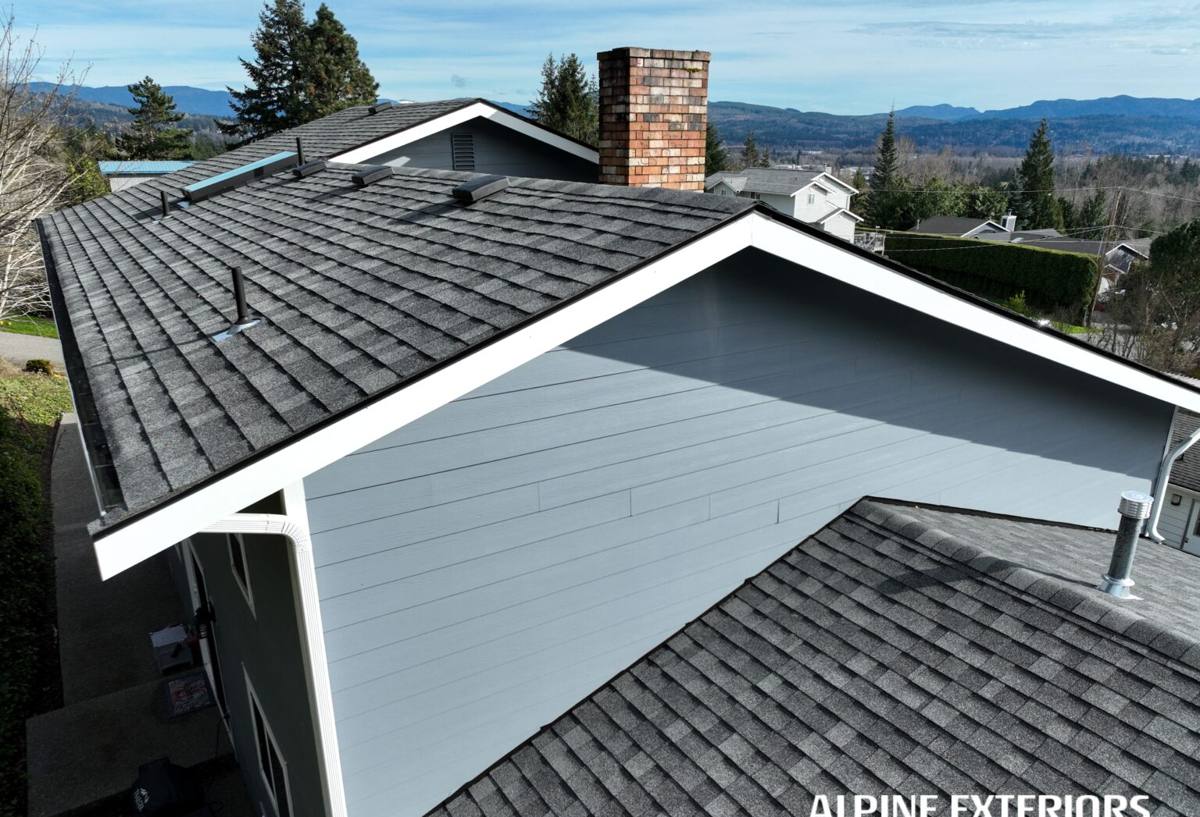
What a Correct Asphalt Shingle Roof Involves in This Climate
Underlayment and Water Barrier
In a region with this much sustained rainfall, the underlayment isn't a formality — it's the actual water barrier the shingles are protecting. We use synthetic underlayment with full coverage rather than the bare minimum, and we pay particular attention to self-adhered ice-and-water membrane at eaves, valleys, and any low-slope transitions where standing water or wind-driven rain is most likely to find a way in.
Flashing Details
Most leaks we're called out to investigate on older roofs trace back to flashing, not the shingles themselves — step flashing at walls and chimneys, valley metal, and pipe boots that have hardened or cracked from years of sun and salt exposure. Salt air accelerates corrosion on lower-grade metal flashing, so we specify flashing materials that hold up to that exposure rather than the cheapest option that happens to pass inspection.
Fastening for Wind-Driven Rain
Nailing pattern and fastener placement matter more here than in calmer climates. Correct nail placement — in the manufacturer's designated nailing zone, not high or low — is what keeps shingles sealed against wind uplift and prevents water from tracking sideways under a lap during a hard, sideways rain event.
Attic Ventilation
A roof deck that can't breathe stays damp longer after every rain, and a damp deck under damp shingles is exactly the environment moss and algae need to spread. Balanced intake and exhaust ventilation isn't just an energy-efficiency detail — in this climate it's part of what keeps the roof surface drying out between storms instead of staying perpetually wet.
Choosing the Right Shingle for a Marine Climate
Not every asphalt shingle product is built with the same priorities, and for a home exposed to salt air and long wet seasons, some tradeoffs matter more than others. Here's how the main categories compare for this specific environment:
| Shingle Type | Algae/Moss Resistance | Wind Performance | Typical Lifespan Here |
|---|---|---|---|
| Standard 3-tab | Lower — no algae-resistant granules | Adequate in sheltered areas, marginal in exposed spots | Shorter end of the range in this climate |
| Architectural/laminate | Better mat structure, often paired with algae-resistant granules | Higher wind ratings, better performance in gusty, exposed sites | Longer service life with proper ventilation |
| Algae-resistant, impact-rated | Best — copper or zinc-infused granules actively resist growth | High, with reinforced mats | Longest, especially on shaded or north-facing slopes |
For homes in Alger with mature tree cover or north-facing roof planes — where moss has the best conditions to establish itself — we usually recommend algae-resistant shingles as our standard, not as an upsell. The small difference in material cost is easy to justify against the labor cost of re-treating or replacing a moss-damaged roof section years earlier than expected.
Our Asphalt Shingle Roofing Process
- On-site inspection. We look at the existing roof, decking condition, ventilation setup, and any moss or algae staining before quoting anything.
- Tear-off. Old shingles and underlayment come off down to the deck so we can actually see what's underneath rather than layering over hidden problems.
- Deck inspection and repair. Any soft, rotted, or delaminated decking gets replaced before anything new goes down — this is the step that gets skipped by crews trying to move fast, and it's the one that determines whether the new roof actually lasts.
- Underlayment and ice-and-water membrane. Full coverage synthetic underlayment, with membrane at vulnerable points like eaves and valleys.
- Flashing installation. New flashing at all walls, chimneys, and penetrations — matched to the exposure the roof will actually see.
- Shingle installation. Installed to manufacturer nailing specs, with attention to exposure and alignment on every course.
- Ventilation check. We confirm intake and exhaust are balanced for the attic space, adjusting as needed rather than assuming the old setup was adequate.
- Cleanup and walkthrough. Site cleared of debris and nails, with a walkthrough so you understand what was done and what to watch for going forward.
Signs an Alger Roof Needs Attention
Because moss and salt-related wear can develop gradually, a lot of homeowners don't notice a problem until it's already affecting the interior. Worth checking for:
- Moss mats or dark streaking, especially on north-facing or shaded slopes
- Granules collecting in gutters or at downspout outlets
- Shingles that look cupped, curled, or lifted at the edges
- Rust staining or visible corrosion around flashing and pipe boots
- Daylight visible through the attic roof deck
- Soft spots when walking the roof, or sagging visible from the ground
- Interior ceiling stains, especially after a stretch of heavy rain
Moss, Algae, and Long-Term Maintenance
Moss doesn't just sit on top of a roof — its root structure holds moisture against the shingle surface and works into the granule layer, which shortens the life of even a good roof if left unmanaged. Our standard is to avoid pressure washing, which strips granules and does real damage to the shingle mat; instead we recommend gentle, low-pressure cleaning methods and, where appropriate, zinc or copper strips near the ridge that let rainwater carry naturally occurring metal ions down the roof slope to inhibit regrowth.
A once- or twice-a-year visual check — clearing debris from valleys, keeping gutters flowing, and trimming back branches that keep a section of roof shaded and damp — does more to extend a shingle roof's life in this climate than almost anything else a homeowner can do.
Cost Factors for an Asphalt Shingle Roof in Alger
Every roof is different, but the same handful of factors drive most of the cost variation we see on jobs in this area:
| Factor | Why It Matters Here |
|---|---|
| Roof size and pitch | Steeper pitches and larger areas mean more material and labor time |
| Tear-off layers | Removing multiple existing layers adds disposal and labor cost |
| Decking repair | Rot from long-term moisture exposure isn't visible until tear-off, and needs replacing before shingles go down |
| Shingle tier | Algae-resistant and higher-wind-rated products cost more upfront but reduce moss and wind-related repairs later |
| Site accessibility | Steep driveways, mature trees, or tight lot access can affect setup and staging time |
We give straightforward, itemized quotes rather than a single flat number, so you can see exactly what's driving the cost and where there's room to make choices.
Why a Crew That Already Works in Alger Matters
A contractor who works this part of Whatcom County regularly already knows which roof orientations tend to hold moss, how far the salt-air corrosion effect extends from the water, and which flashing and fastener choices actually hold up here versus in a drier inland climate. That local pattern recognition shortens the inspection process and helps catch problems — like a slowly failing valley or a ventilation setup that was never adequate for the site — before they become interior damage.
It also means faster response when weather causes damage. A crew already working in the area isn't scheduling around a long drive, which matters when a windstorm off the water has lifted shingles or a tree limb has come down during a heavy rain event.
If you'd like a straightforward look at what your roof actually needs, we're glad to come take a look. There's no pressure and no obligation — just a clear, honest assessment and a written estimate you can use to make your decision, using the form below.