 Chuckanut Exterior
 South Hill's Climate Is Hard on Siding — Here's Why
South Hill sits close enough to the water and the tree line that its homes take on a specific combination of weather stress most siding products were never engineered to handle well. Salt-laden air drifting in off the bay corrodes fasteners, dulls paint finishes, and accelerates the breakdown of anything that isn't built to resist it. Add in driving, wind-pushed rain — the kind that hits a wall sideways instead of falling straight down — and you get moisture forced into laps, seams, and trim joints that would stay dry in a calmer climate.
Then there's the moss. Whatcom County's long, wet stretch of the year, combined with shaded lots and mature tree cover common around South Hill, keeps exterior walls damp for months at a time. That's ideal growing conditions for moss and algae, and it means siding here spends far more of the year wet than siding in a drier, sunnier part of the state. Any material that swells, delaminates, or holds moisture against the wall assembly under those conditions is going to show problems years before it should.
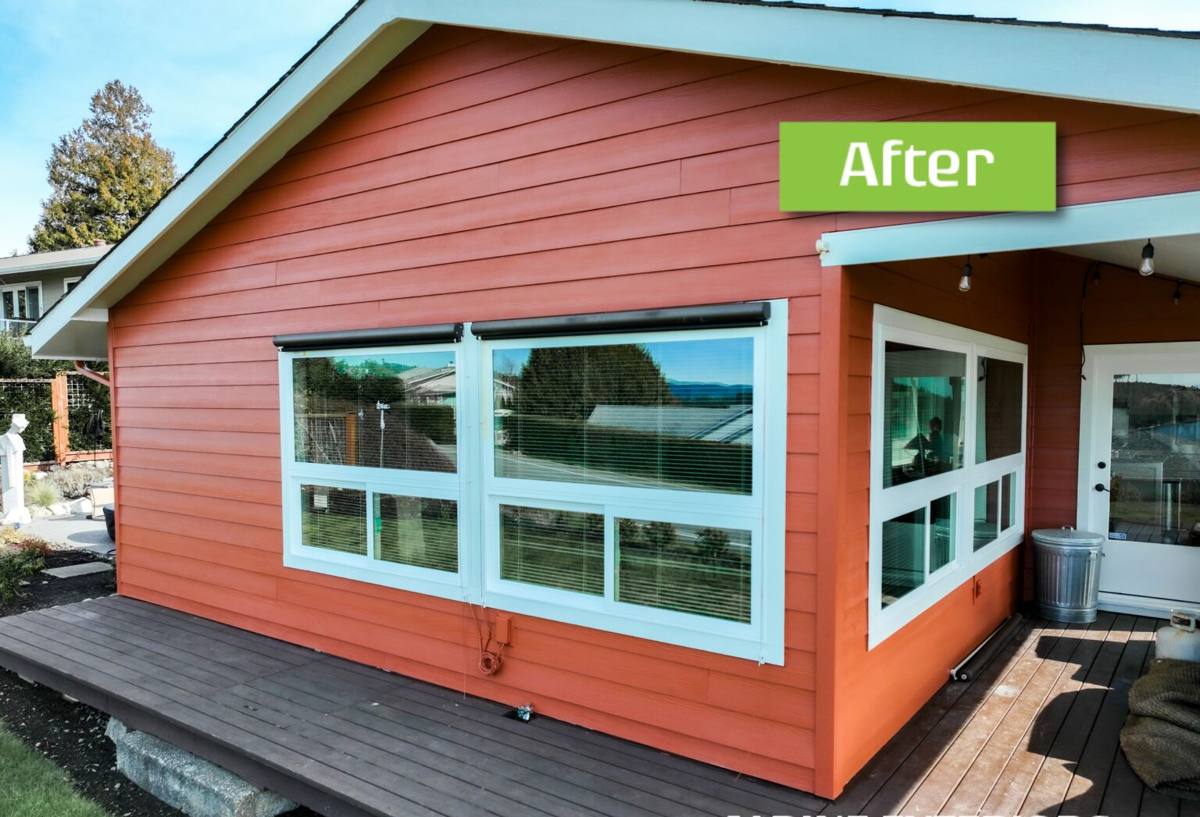
What Fiber Cement Siding Needs to Do on a South Hill Home
Given that climate profile, the siding on a South Hill home has a short list of non-negotiable jobs:
- Shrug off repeated wet-dry cycling without swelling, cupping, or losing its shape
- Keep salt-laden moisture out of seams, laps, and fastener points
- Hold its paint or factory finish through UV exposure combined with near-constant dampness
- Resist moss and algae growth on shaded elevations and horizontal trim surfaces
- Stay dimensionally stable enough that caulked joints don't crack open every winter
This is exactly the profile fiber cement siding was developed to handle, which is why it's become the standard replacement material for wood and vinyl siding in wet coastal climates across the Pacific Northwest.
Why We Install Only James Hardie Fiber Cement
We don't install vinyl siding, LP SmartSide, Cemplank, Allura, primed spruce, or cedar. We install James Hardie fiber cement exclusively, and on a home in this neighborhood, that's a climate decision as much as a quality one. Hardie's fiber cement is non-combustible, dimensionally stable when properly acclimated and installed, and available in HZ product lines that are formulated for specific climate zones rather than a single one-size-fits-all formula. The factory-applied ColorPlus finish is baked on under controlled conditions, which gives it a level of adhesion and UV resistance that field-applied paint on wood or engineered wood products struggles to match over time — a real advantage when a home is absorbing both salt air and long stretches of damp shade.
Hardie also backs its siding with a strong, transferable product warranty, which matters more in a hard climate than a mild one, since the materials are working harder every year they're on the wall. We'd rather stand behind one product system we trust completely than offer a menu of options with different failure points and different maintenance demands.
What a Correct Installation Involves
Fiber cement siding performs the way it's supposed to only when it's installed to spec. In a climate like South Hill's, the installation details matter even more than usual, because there's less margin for water to find its way in and dry back out before it causes damage.
Rainscreen and Drainage Plane
Every correct installation starts with a proper water-resistive barrier and a drainage gap behind the siding — a rainscreen. This gives any moisture that does get past the cladding a clear path down and out, instead of trapping it against the sheathing. On a home exposed to driving rain and salt air, skipping this step is one of the fastest ways to end up with hidden rot behind siding that still looks fine from the street.
Fastening and Clearances
Fiber cement has to be fastened correctly — proper nail type, spacing, and depth — or it won't perform as engineered and the warranty can be compromised. Clearances matter just as much: siding needs adequate separation from grade, roof lines, decks, and patios so splash-back and standing water don't sit against the bottom edge of the boards.
Trim, Flashing, and Joints
Cut edges need to be sealed and primed, flashing needs to be integrated at every window, door, and penetration, and caulking belongs only at the joints Hardie specifies — not smeared across every seam as a substitute for proper flashing. Get this wrong and a home in a wet climate will show staining and moisture damage at exactly those joints within a few seasons.
Our Process for a South Hill Siding Job
Assessment and Moisture Check
We start by walking the home and checking the condition of the sheathing and framing underneath the existing siding, particularly on shaded and north-facing walls where moisture tends to linger longest. Any rot or hidden damage gets identified before a single board goes up, not discovered halfway through the job.
Tear-Off and Prep
Old siding comes off, damaged sheathing gets repaired or replaced, and the water-resistive barrier and rainscreen system go on correctly the first time. This is the stage that determines how the finished siding will perform for the next several decades, so we don't rush it.
Installation
Hardie boards go up to manufacturer spec — correct fastening, correct clearances, correct overlaps — with trim and flashing detailed at every transition, corner, and penetration.
Final Detailing and Cleanup
Caulking, touch-up, and a full site cleanup finish the job. We walk the exterior with the homeowner before we consider it done.
Living With Fiber Cement in a Moss-Prone, Salt-Air Neighborhood
Correctly installed fiber cement is genuinely low-maintenance compared to wood or engineered wood siding, but "low-maintenance" doesn't mean "no maintenance" in a climate like this one. A little seasonal attention goes a long way toward protecting the investment:
- Rinse siding annually to clear salt residue and organic buildup, especially on shaded walls
- Keep gutters clear so overflow doesn't run down and pool against the siding's bottom edge
- Trim back tree branches and shrubs that keep walls shaded and slow to dry
- Inspect caulked joints and trim every year or two and re-seal anything that's cracked or pulled away
- Address any paint chips or damage promptly so bare edges aren't left exposed to moisture
- Watch for moss or algae buildup on horizontal trim and address it early with a gentle wash
Cost Factors for South Hill Siding Projects
Every home is different, but the same handful of factors tend to drive the price range on jobs in this neighborhood:
| Factor | Why It Matters Here |
|---|---|
| Sheathing condition | Homes with hidden moisture damage from past siding failures often need sheathing repair before new siding can go on |
| Home size and complexity | More corners, dormers, and trim detail mean more labor and material for proper flashing |
| Existing siding removal | Tear-off of old material adds time, especially with multiple layers or trapped moisture |
| Siding profile and finish | Lap width, texture, and ColorPlus color selection affect material cost |
| Access and site conditions | Sloped lots, mature landscaping, and limited access common on wooded properties can add labor time |
We provide a detailed, itemized estimate after an in-person assessment rather than a ballpark number over the phone — the condition of what's under the existing siding has too much influence on the real cost to guess at it.
Why Hiring a Crew That Already Works This Neighborhood Matters
A siding crew that's already worked on South Hill homes has seen firsthand how the salt air, wind exposure, and shaded, moss-prone lots in this part of Whatcom County actually affect a wall assembly over time — not just in a manual, but on real houses a few streets apart. That translates into better judgment calls on site: knowing which elevations need extra attention to drainage detailing, recognizing early signs of moisture damage before they're taken as normal, and building in the clearances and flashing details this specific climate demands rather than the bare minimum a spec sheet allows.
It also means straightforward, local accountability — a crew that plans to keep working in this neighborhood has every reason to get the details right the first time.
If you're planning a siding project on South Hill, we're happy to take a look at your home and walk you through what correct installation looks like for your specific exposure and layout. Reach out for a free, no-pressure estimate using the form below.