 Chuckanut Exterior
 Why Decks in Silver Beach Take a Harder Beating
Silver Beach sits close enough to the water that salt-laden air is part of daily life here, and it doesn't play well with wood, fasteners, or finishes. Add in the driving rain that comes off Puget Sound through the fall and winter, plus a moss season that can stretch from October into April, and you've got a combination that ages an outdoor deck faster than almost anywhere else in Whatcom County. We've replaced decks all over the Chuckanut area, and the ones that fail early almost always have the same story: they were built for a drier climate, or built correctly once but never maintained against what this specific stretch of coastline throws at them.
That's the frame for everything on this page. A deck replacement here isn't just swapping old boards for new ones — it's rebuilding the structure to actually handle salt exposure, sustained moisture, and the shade and dampness that let moss and algae take hold.
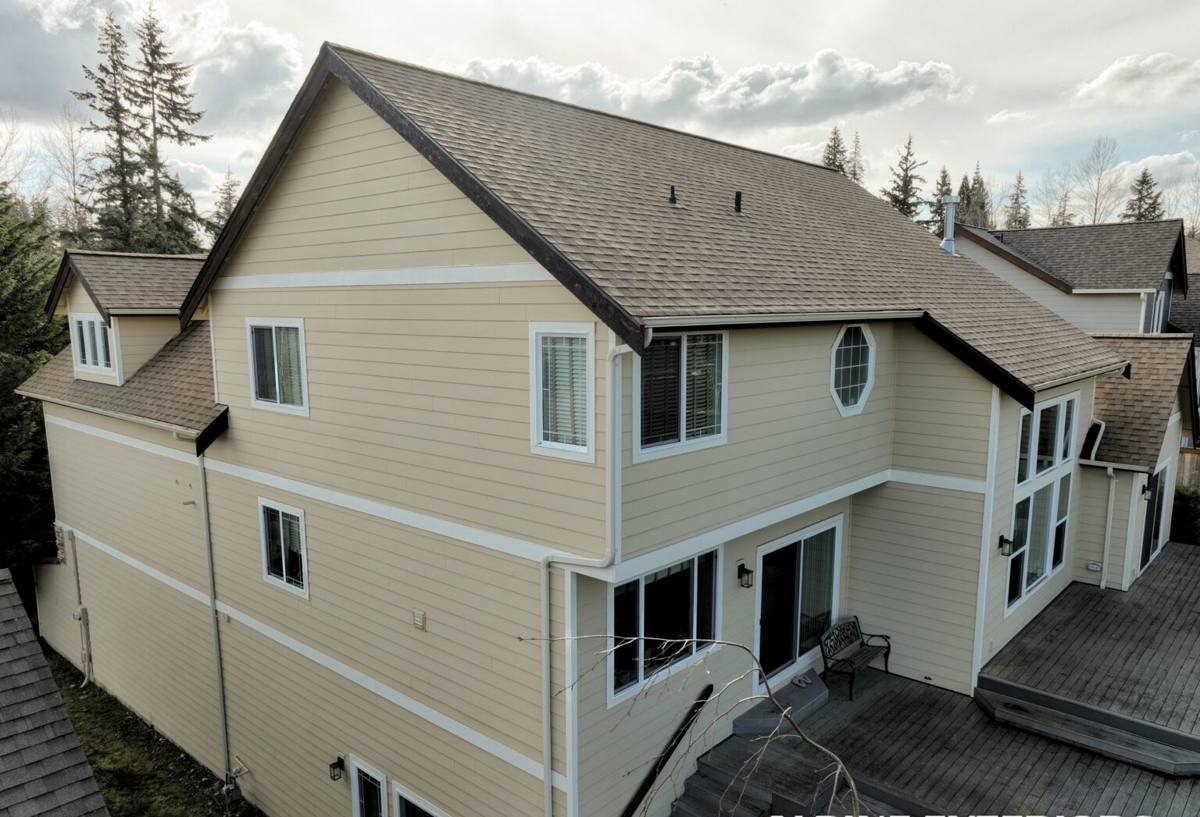
Repair or Replace? Signs It's Time
Not every tired-looking deck needs a full replacement. But there's a point where patching individual boards or sistering a joist is just delaying the inevitable — and spending money that won't carry forward into the next fix. Signs we look for during an assessment:
- Soft, spongy, or spring-y decking boards, especially near the house or in shaded corners
- Rot or discoloration at the ledger board where the deck attaches to the house — often the first place driving rain does damage
- Posts or footings that show rot, movement, or gaps at the base
- Fasteners that have popped, rusted, or streaked the wood with corrosion stains
- Persistent moss or algae growth that comes back within weeks of cleaning, even after a wash
- Cupping, checking, or splintering across most of the deck surface rather than isolated boards
If the problems are limited to a handful of boards and the framing underneath is sound, repair can make sense. Once the ledger, joists, or multiple posts are compromised, replacement is usually the more honest recommendation — patchwork on a failing structure just means another call in a year or two.
What a Proper Deck Replacement Includes
Framing and Ledger Attachment
The ledger board — where the deck ties into the house — is the single most important detail on any deck replacement in a climate like ours. It has to be flashed correctly so driving rain doesn't get behind it and rot the rim joist or sill plate. This is the spot we see cut corners most often on older decks, and it's usually the reason a deck fails from the house outward rather than from the outside in.
Footings and Posts
Footings need to sit below frost depth and be set on stable, well-draining soil, with post bases that keep the wood up off standing water rather than buried in concrete or dirt. We use ground-contact-rated lumber or approved post materials at every point that touches soil or sits low to grade, since that's where sustained moisture does the most damage over time.
Decking Surface and Fastening
Board spacing matters more here than in a dry climate — enough gap for water to drain and air to move underneath discourages the moss and algae that thrive in trapped moisture. Fastener choice matters too: hidden fastener systems give a clean look and avoid the face screws that loosen and streak over time, but they need to be installed correctly to allow that same drainage and airflow, or they can trap moisture against the board.
Choosing Decking Material for This Climate
There's no single "best" decking material — it depends on how much maintenance you want to take on and what look you're after. Here's how the common options actually perform under salt air, driving rain, and a long moss season:
| Material | Moisture & Salt Air Behavior | Moss/Algae Resistance | Maintenance | Typical Lifespan |
|---|---|---|---|---|
| Pressure-treated wood | Good if properly sealed; end cuts need re-treating | Low — needs regular cleaning | Annual cleaning and re-sealing | 10-15 years |
| Cedar | Naturally moisture-resistant, but softens over time near salt air | Moderate — better than treated pine, still needs care | Cleaning and staining every 1-2 years | 15-20 years |
| Composite decking | Excellent — doesn't absorb water or rot | Moderate to good, varies by capped vs. uncapped product | Periodic washing, no sealing or staining | 25-30+ years |
| PVC decking | Excellent — fully non-organic, won't rot or swell | Good — least organic material for growth to grip | Occasional washing only | 30+ years |
We don't push one product over another as a blanket rule — we walk through the trade-offs with you. Wood costs less up front but asks for real annual upkeep in a climate that doesn't give it a break. Composite and PVC cost more initially but hold up with far less intervention, which matters if you'd rather spend a Saturday doing something other than scrubbing a deck.
Our Deck Replacement Process
- On-site assessment — we inspect the existing deck, framing, ledger, and footings to confirm replacement is the right call and identify any hidden damage to the house structure behind it
- Design and material walkthrough — we talk through decking material, railing style, and layout, with honest pros and cons for each given the site's exposure
- Permitting — we handle the permit application where one's required, based on deck size, height, and location
- Removal — full demo of the old deck, checking the ledger attachment point and framing underneath for rot or damage before rebuilding
- Framing and structure — new footings, posts, joists, and properly flashed ledger board built to current code
- Decking and railing installation — surface material and railing system installed with attention to drainage and airflow underneath
- Final walkthrough — we go over the finished deck with you, including basic care guidance specific to the material you chose
Permits and Code Considerations in Whatcom County
Most deck replacements that involve new footings, structural framing, or a change in size or height will need a permit through the local building department. Guardrail height, baluster spacing, and stair requirements are set by code and aren't optional details — they're there because a deck failure or a fall is one of the more serious things that can go wrong with home construction. Footing depth also has to account for frost, which the building department will specify for our area. We pull permits and handle inspections as part of the job rather than leaving that step to the homeowner.
Living With Moss Season: A Maintenance Checklist
A well-built deck still needs some seasonal attention in a climate that stays damp and shaded for months at a time. This isn't a heavy list — it's the difference between a deck that looks good for decades and one that starts showing algae streaks and soft spots within a few years:
- Sweep debris and fallen leaves off the deck regularly through fall — trapped organic matter feeds moss growth
- Rinse or wash the surface a couple times a year, more often in shaded or low-airflow areas
- Check gaps between boards periodically to make sure they haven't filled with debris that blocks drainage
- Inspect the ledger board area and any spots where the deck meets the house for signs of moisture staining
- For wood decks, plan on re-sealing or staining on the schedule appropriate to the product — skipping a cycle in this climate shows up fast
- Trim back overhanging vegetation that keeps sections of the deck shaded and damp longer than the rest
Why Hiring a Crew That Already Works Silver Beach Matters
A deck replacement done by a crew unfamiliar with this stretch of Whatcom County can look fine on the day it's finished and still be fighting the wrong battle. General deck-building knowledge doesn't automatically account for how salt air accelerates fastener corrosion, or how a shaded, damp corner of a Silver Beach lot will grow moss faster than the same design would ten miles inland. We work in this area regularly, which means we've already seen how different framing details, fastener choices, and decking materials actually hold up here — not just how they're rated on a spec sheet. That local track record shapes the recommendations we make, from footing placement to the gap we leave between boards.
It also means a shorter distance between your call and someone showing up to look at the job, and a contractor who's still around and reachable if a question comes up after the work is done.
Get a Straight Answer on Your Deck
If your deck is showing its age or you're just planning ahead, we're glad to come take a look and give you an honest read on repair versus replacement — no pressure, no inflated quote to scare you into a bigger job than you need. Use the form below to request a free estimate for deck replacement in Silver Beach.