 Chuckanut Exterior
 South Hill Homes Face a Tougher Climate Than Most of Whatcom County
South Hill sits up on a bluff, which means more exposure than homes tucked into a sheltered valley elsewhere in Whatcom County. That elevation buys the view, but it also buys wind-driven rain that hits siding sideways instead of straight down, salt-laden air rolling in off the water, and deep tree canopy on many lots that keeps north- and east-facing walls shaded and damp for weeks at a time. Add in the older housing stock common to this neighborhood — a lot of homes here were built well before modern water-management details were standard practice — and you get siding that's working harder than it was ever designed to.
We've replaced siding on enough South Hill homes to know the failure patterns aren't random. They cluster on the same walls, around the same details, for the same reasons every time. Understanding those patterns is the difference between a replacement that lasts and one that's just a fresh coat of paint on the same underlying problem.
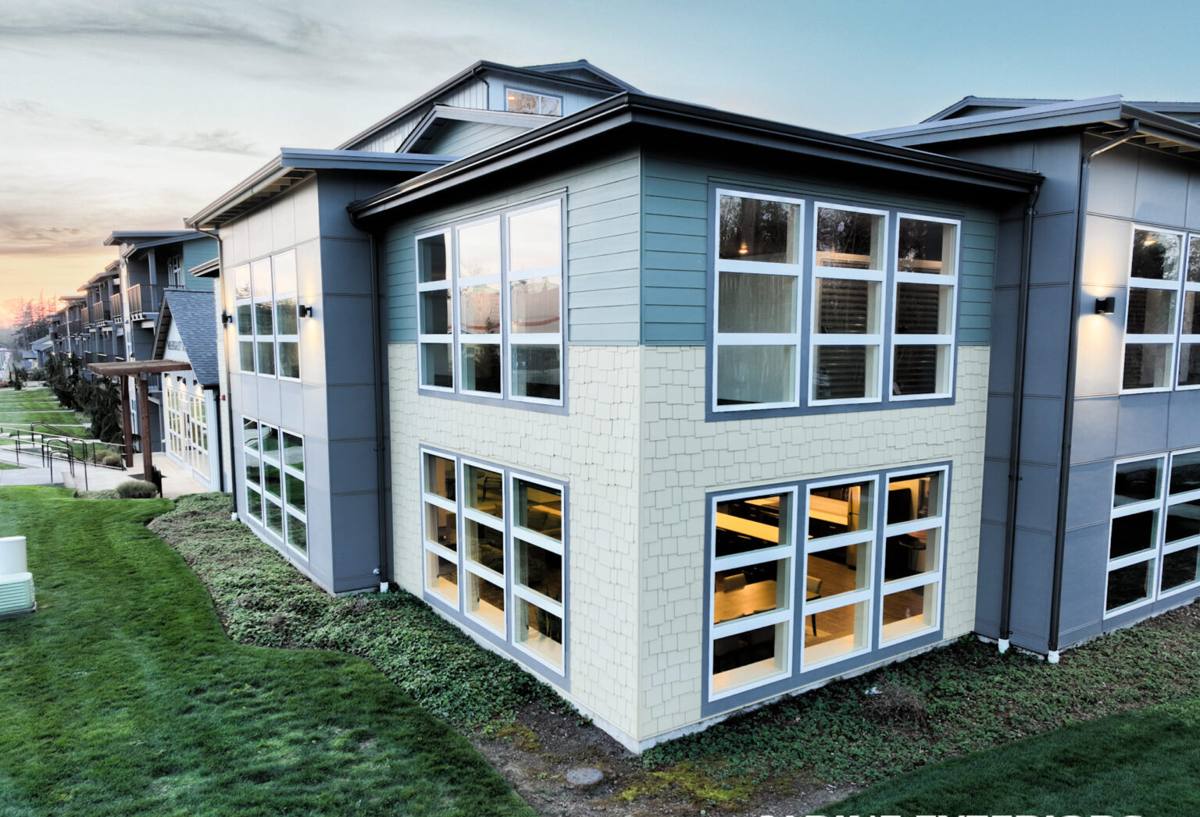
What Salt Air, Driving Rain, and Moss Actually Do to Siding
Salt Air
Salt in the air isn't just corrosive to metal — it's hygroscopic, meaning it pulls moisture out of the atmosphere and holds it against whatever surface it lands on. On wood-based siding, that translates to swelling, splitting, and paint failure well ahead of schedule. On fasteners and flashing that aren't rated for coastal exposure, it accelerates rust, which stains siding and eventually compromises the connection holding panels to the wall.
Driving Rain
Wind-driven rain doesn't behave like ordinary rainfall. It gets pushed sideways and upward into laps, seams, and butt joints that were only ever designed to shed water moving straight down. Over years, that means moisture works its way behind the siding through gaps that would be a non-issue in a calmer climate. Once water gets behind the cladding, it's the water-resistive barrier and flashing details — not the siding face itself — that determine whether your sheathing and framing stay dry.
Moss and Algae
Whatcom County's long wet season, combined with shaded lots common on South Hill, creates ideal conditions for moss and algae growth on siding, especially on north-facing walls and anywhere overhanging branches keep a surface from drying out between storms. Beyond the cosmetic issue, moss holds moisture against the siding surface for extended periods, which shortens the service life of any material that isn't engineered to resist it.
Signs Your South Hill Home Needs Replacement, Not Just Repair
Repair makes sense when a problem is isolated. Replacement becomes the right call when the damage reflects a systemic issue — old materials, failed water management, or a siding type that was never suited to this exposure in the first place. Watch for:
- Soft or spongy spots when you press on siding, especially near the bottom courses and around window and door trim
- Persistent moss or algae staining that returns within a season or two of cleaning
- Paint that's bubbling, peeling, or failing faster than a normal repaint cycle would suggest
- Visible warping, cupping, or separation at seams and butt joints
- Rust streaking from fasteners or flashing
- A musty smell or visible staining on interior walls that share an exterior wall with problem siding
- Siding that's original to a home built decades ago and has never been fully replaced
If you're seeing two or more of these, it's worth having someone look at what's happening behind the siding, not just at the surface.
What a Correct Siding Replacement Actually Involves
Replacing siding is not a cosmetic swap — done right, it's a water-management project that happens to end with new siding on the wall. For a South Hill home, that means:
Full Tear-Off and Sheathing Inspection
Old siding comes off completely so the sheathing underneath can be inspected for rot, soft spots, or prior water damage. This step matters more here than in a drier climate — if moisture has been getting behind old siding for years, patching over hidden damage just locks the problem inside the wall.
New Water-Resistive Barrier
A continuous, properly lapped weather barrier goes down before any new siding is installed. This is the layer that actually keeps a home dry — the siding is the first line of defense, the barrier is the backup that matters when wind-driven rain gets past it.
Correct Flashing at Every Penetration
Windows, doors, vents, hose bibs, and any other wall penetration need flashing detailed to shed water outward, not trap it. This is one of the most commonly shortcut steps in lower-quality siding jobs, and it's usually where failures start.
Proper Fastening and Clearances
Siding needs the right fastener type and spacing for the exposure, and it needs proper clearance from grade, roofing, and decks so water has somewhere to go instead of wicking up into the bottom courses.
Why We Install Only James Hardie Fiber Cement
We've made a deliberate call to install James Hardie fiber cement siding exclusively, and a neighborhood like South Hill is exactly why. Fiber cement doesn't swell, rot, or provide an organic food source for moss and algae the way wood-based products can. Hardie's HZ product lines are engineered around specific climate zones, including the wetter, milder exposure typical of the Pacific Northwest, so the product arriving on the truck is already matched to what your walls actually deal with.
The ColorPlus factory finish is baked on under controlled conditions rather than field-applied, which means better adhesion and a finish that holds up to sun and salt exposure longer than most site-applied paint jobs. Hardie is also non-combustible, which matters more every year as wildfire smoke seasons stretch further into the Pacific Northwest calendar. And because Hardie backs its siding with a strong, transferable warranty when installed to their specifications, homeowners get a level of long-term protection that vinyl and wood-based alternatives generally can't match.
We don't install LP SmartSide, vinyl, Cemplank, Allura, primed spruce, or cedar. Each of those has legitimate uses in the right setting, but for the exposure South Hill homes deal with, we've seen enough of how they perform over time to know we'd rather stand behind one product we trust completely than offer several we'd have reservations about.
How Common Siding Materials Hold Up in This Climate
| Material | Moisture Behavior | Moss/Algae Resistance | Salt Air Durability | Maintenance |
|---|---|---|---|---|
| James Hardie Fiber Cement | Does not swell or rot; engineered for wet climates | Resists organic growth; factory finish holds up to cleaning | Strong; non-organic material with corrosion-resistant fastening specs | Low — periodic cleaning, no repainting for years |
| Vinyl | Doesn't rot, but can warp or crack under wind and temperature swings | Prone to algae staining, especially on shaded walls | Can become brittle over time with UV and salt exposure | Low, but replacement panels can be hard to color-match later |
| Cedar / Wood | Absorbs moisture; prone to swelling, cupping, and rot without diligent upkeep | Organic material — highly susceptible to moss and mildew | Salt accelerates weathering and finish breakdown | High — regular refinishing and inspection required |
| LP SmartSide | Engineered wood strand product; performs best with strict install and maintenance practices | More resistant than raw wood, but still an organic substrate | Edge sealing and caulking require ongoing attention in salt exposure | Moderate — edge and seam maintenance matters |
Our Process for South Hill Siding Replacement Projects
- On-site assessment: We walk the exterior, check for hidden moisture damage, and look at how sun, shade, and prevailing wind hit each wall of your specific home.
- Product and color selection: We help you choose the right Hardie line and ColorPlus finish for your home's exposure and style.
- Full tear-off: Old siding comes off and sheathing is inspected before anything new goes up.
- Water management installation: New weather barrier and flashing go in at every penetration, correctly lapped and sealed.
- Siding installation: Hardie panels or lap siding are installed to manufacturer spec, with correct fastening and clearances.
- Final walkthrough: We review the finished work with you before calling the job done.
What Drives the Cost of a South Hill Siding Replacement
Every home is different, but a few factors consistently move the price on projects in this neighborhood:
| Cost Factor | Why It Matters |
|---|---|
| Extent of hidden damage | Homes with long-standing moisture intrusion often need sheathing repair before new siding goes on |
| Home size and wall complexity | More corners, dormers, and trim detail mean more labor and material |
| Access and site conditions | Bluff-top lots and mature landscaping can affect staging and scaffolding needs |
| Hardie product line chosen | HZ5 panels, plank profiles, and Statement Collection colors carry different material costs |
| Number of siding layers to remove | Older homes sometimes have more than one layer of prior siding to strip before starting fresh |
We give straightforward, itemized estimates so you know exactly what you're paying for and why — no vague lump sums.
Why a Crew That Already Works South Hill Matters
Every neighborhood in Whatcom County has its own quirks, and South Hill's are shaped by its elevation, tree cover, and older housing stock. A crew that's worked this neighborhood before knows to expect layered old siding on pre-war homes, knows which walls take the worst of the wind-driven rain off the bay, and knows how to plan around mature trees and tighter lot access without surprises mid-project. That familiarity shows up in fewer change orders, more accurate initial estimates, and a finished job that's actually built for the conditions your specific wall faces — not a generic install.
If your South Hill home is showing signs of siding failure, or you're simply planning ahead for a replacement done right, we'd be glad to take a look. Reach out for a free, no-pressure estimate using the form below.