 Chuckanut Exterior
 Why Siding Installation in Sehome Is a Different Job Than Siding Installation Anywhere Else
Every siding job is governed by the same basic physics — water has to be kept out, and whatever's behind the cladding has to be able to dry if a little gets in anyway. But the specifics of how a wall assembly gets tested change block by block. In Sehome, the test is a combination that's harder on siding than most inland Washington neighborhoods ever see: salt-bearing air off the water, driving rain that comes in sideways instead of straight down, and a long stretch of the year when north- and shade-facing walls simply don't dry out. A siding installation that ignores any one of those three factors will look fine for a year or two and then start failing exactly where you'd expect — at the bottom courses, around windows, and on the shaded side of the house.
This page is specifically about installing new siding on homes in Sehome, not siding in general. If you're comparing materials or trying to decide whether repair or replacement makes sense, that's a separate conversation. Here we're talking about what actually has to happen — product choice, prep, flashing, fastening, and finish work — to get a siding installation right on a Whatcom County home exposed to this particular mix of weather.
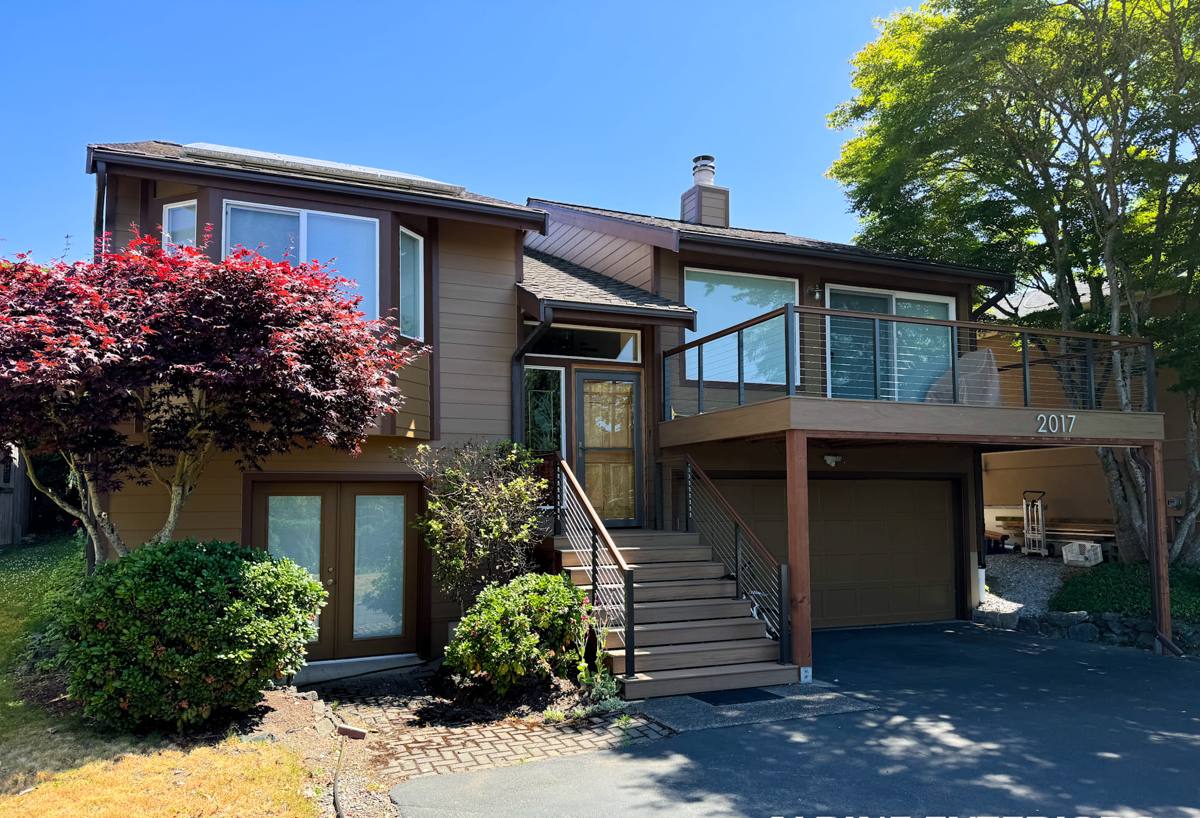
What Salt Air, Driving Rain, and Moss Season Actually Do to Siding
Salt Air
Proximity to Puget Sound and Bellingham Bay means airborne salt is a constant, low-grade presence on exterior surfaces in and around Sehome. Salt is hygroscopic — it pulls moisture out of the air and holds it against whatever surface it lands on. On siding, that means longer periods of surface dampness than a homeowner further inland would ever see, plus accelerated corrosion of any exposed metal fasteners, flashing, or trim that isn't rated for it.
Driving Rain
Wind off the water doesn't just add rainfall totals, it changes the angle rain hits the house. Driving rain pushes water into laps, seams, and butt joints that would stay dry in a calm, straight-down rain. This is why the quality of flashing and the overlap at every horizontal joint matters more here than it would in a sheltered inland lot — the water pressure at those joints is genuinely higher.
Moss Season
Whatcom County's wet season runs long, and shaded or north-facing walls in tree-lined neighborhoods like Sehome can stay damp for months at a stretch. That's exactly the environment moss and algae need. Moss holds moisture against the siding surface, and on materials that aren't dimensionally stable or properly finished, sustained damp contact is where rot, delamination, or paint failure starts.
Signs a Sehome Home Is Overdue for Siding Replacement
- Soft or spongy spots when you press on the siding, especially near the bottom courses or below windows
- Paint that's peeling, bubbling, or needs recoating far more often than it used to
- Visible gaps, warping, or cupping in individual boards or panels
- Persistent moss or algae growth that comes back within a season of cleaning
- Rising energy bills with no other explanation, which can point to a failing weather barrier behind the siding
- Visible rust streaking from fasteners or trim
- Siding that's original to a home built more than 20-25 years ago and has never been replaced
Any one of these on its own might just mean a repair. Several at once, especially combined with an older install, usually means the underlying wall assembly has been compromised and a full siding installation is the honest recommendation.
Why We Install Only James Hardie Fiber Cement
We made a decision as a company to install one siding system: James Hardie fiber cement. We don't install vinyl, LP SmartSide, or other fiber cement alternatives, and we're upfront about why. Fiber cement is non-combustible, dimensionally stable, and doesn't feed moss and algae the way wood-based products can. James Hardie backs its ColorPlus factory-finished products with a strong, transferable finish warranty, and the company engineers specific product lines — HardieZone HZ5 among them — for the wet, mixed marine climate that covers Whatcom County. For a Sehome home dealing with salt air, driving rain, and a long moss season every year, that combination of stability and climate-specific engineering is what actually holds up. We'd rather install one product correctly, every time, than offer a menu of options with different failure modes we'd have to explain later.
What a Correct Siding Installation Actually Involves
The material is only part of the equation. A James Hardie siding installation that will actually perform in this climate requires the same discipline at every step:
Tear-Off and Sheathing Inspection
Old siding comes off and the sheathing underneath gets inspected before anything new goes up. This is the point where hidden rot, past water intrusion, or damaged framing gets caught — covering it up with new siding instead of fixing it is how homes end up with expensive surprises five years later.
Weather-Resistive Barrier
A continuous, properly lapped weather-resistive barrier goes over the sheathing before siding starts. Every seam is lapped shingle-style, top over bottom, so water is always directed outward and down, never trapped behind the barrier.
Flashing at Every Penetration
Windows, doors, hose bibs, vents, and any other wall penetration get properly flashed and integrated with the weather barrier. This is the single most common place a siding job fails when it's rushed, and it's exactly where driving rain off the water puts the most pressure on a wall.
Fastening to Hardie's Specification
James Hardie siding has specific fastening requirements — nail type, placement, and spacing — that vary by product line and exposure. Following the manufacturer's spec isn't optional if you want the warranty to mean anything, and it's also what keeps boards from cupping or working loose under wind and moisture cycling.
Proper Clearance and Gaps
Siding needs clearance above rooflines, decks, and grade, and gaps at trim and corners sized correctly for caulking or left open per Hardie's ventilated-gap details. Installers who don't respect these clearances create the exact damp, hard-to-dry conditions that invite the moss and rot problems common on shaded Sehome lots.
Finish Work
Caulking, touch-up paint at cut edges, and trim details are what make an installation look finished and also what seal out the last points of water entry. This is often the step that gets rushed on a bid to save time — it shouldn't be.
Our Installation Process
| Step | What Happens |
|---|---|
| On-site assessment | Walk the home, check existing siding and sheathing condition, note problem areas specific to sun/shade exposure and drainage |
| Written estimate | Product line, color, scope of tear-off, and price laid out clearly before any work starts |
| Tear-off and inspection | Remove old siding, inspect sheathing, repair or replace any damaged material found |
| Weather barrier and flashing | Install continuous weather-resistive barrier and flash all penetrations before siding goes up |
| James Hardie installation | Install siding to manufacturer fastening and clearance specifications |
| Finish and walkthrough | Caulk, touch-up paint, clean up job site, walk the finished job with the homeowner |
Cost Factors for a Sehome Siding Installation
Every home is different, and we don't quote a project without seeing it, but the factors that actually move the price are consistent:
| Factor | Why It Matters |
|---|---|
| Home size and wall complexity | More square footage and more corners, gables, and trim details mean more labor and material |
| Condition of existing sheathing | Hidden rot found during tear-off adds repair scope that can't be priced until the old siding is off |
| Product line and profile | James Hardie offers multiple plank widths, textures, and colors at different price points |
| Site access | Steep lots, limited driveway access, or tight setbacks common on some Sehome properties can add labor time |
| Trim and detail work | Homes with more windows, dormers, and architectural detail take longer to flash and finish correctly |
Why a Crew That Already Works Sehome Matters
There's a real advantage to hiring a crew that's already familiar with this specific pocket of Whatcom County rather than one that treats every job as a blank slate. A crew that regularly works Sehome and the surrounding Chuckanut area already has a feel for which lots hold moisture longest through the wet season, which orientations take the worst of the driving rain, and how much of a head start salt exposure gives moss and algae compared to a more sheltered inland job. That local pattern recognition shows up in small decisions — where to pay extra attention during tear-off, how much clearance to leave at grade, which walls need the most disciplined flashing — that a generic install wouldn't necessarily catch until something failed.
It also means straightforward accountability. A local crew is going to be around to answer questions, address a callback, or walk you through a warranty claim, not a name on an invoice from a company that worked the area once and moved on.
Maintenance After Installation
A correctly installed James Hardie siding job is genuinely low-maintenance compared to wood-based alternatives, but "low-maintenance" isn't "no-maintenance," especially in this climate:
- Rinse siding periodically to keep salt residue and organic buildup from accumulating, especially on walls exposed to prevailing wind off the water
- Check caulking at trim, windows, and corners annually and touch up any that's cracked or pulled away
- Keep gutters clear so water isn't overflowing directly onto siding below
- Trim back vegetation and tree limbs that keep a wall shaded and damp longer than necessary through moss season
- Address any soft spots, cracks, or damage promptly rather than waiting for the next scheduled maintenance
Questions to Ask Before Hiring Anyone to Install Your Siding
Whether you hire us or someone else, these are the questions that separate a careful installer from a fast one:
- Will you inspect and, if needed, repair sheathing before installing new siding, and how is that priced?
- What weather-resistive barrier and flashing details will you use at windows, doors, and penetrations?
- Will fastening follow the manufacturer's published specification for this specific product line?
- What clearance will be left at grade, decks, and rooflines?
- What's covered under warranty, and is it transferable if you sell the home?
- Do you carry current licensing and insurance, and can you provide proof?
If a contractor can't answer these clearly and specifically before work starts, that's worth taking seriously.
Ready to Talk About Your Sehome Home
If your siding is showing its age, or you just want an honest read on whether repair or full replacement makes more sense for your home, we're happy to take a look. We'll walk the property, point out what we actually see, and give you a straightforward estimate for a James Hardie siding installation built for what a Sehome home has to deal with year-round. There's no pressure and no obligation — just a clear picture of where things stand and what your options are.