 Chuckanut Exterior
 Why Sehome Siding Wears Out Faster Than People Expect
Sehome sits close enough to the water and open weather systems that homes here take a harder beating than the square footage or age of the house would suggest. Salt-laden air works into seams and fastener heads. Driving rain, pushed sideways by wind off the water, finds every gap in flashing and caulking that a calmer climate would never test. And Whatcom County's long, damp shoulder seasons mean moss and algae have months at a time to establish themselves on north-facing walls and anything shaded by trees or a neighboring roofline.
None of that is unusual for this part of Washington. But it does mean that siding decisions made for a drier, milder climate — thin coatings, absorbent substrates, minimal flashing detail — show their weaknesses here years before they would somewhere else. When we're called out to look at failing siding in Sehome, the pattern is almost always the same: moisture got behind the cladding at a joint, corner, or penetration, and it had nowhere to go and no way to dry out before the next rain arrived.
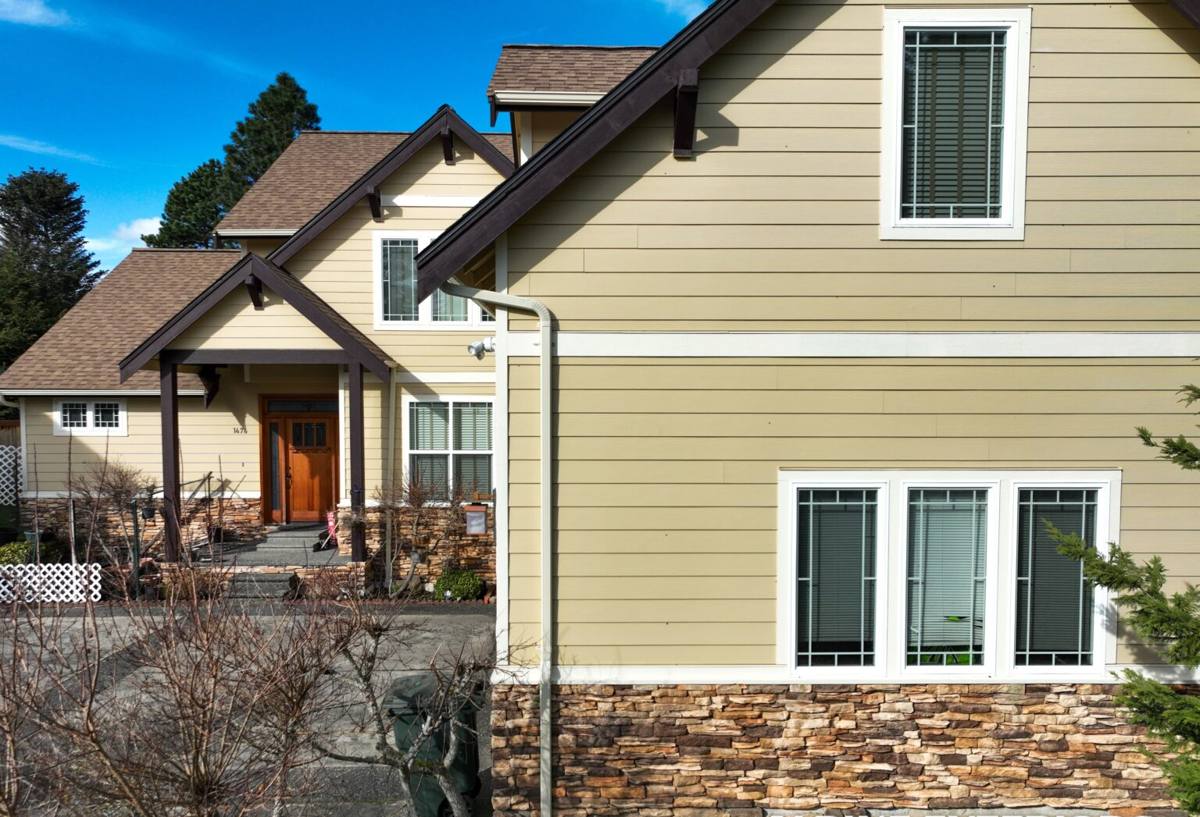
Signs a Sehome Home Needs Siding Replacement, Not Just Repair
Not every siding problem calls for a full tear-off. But there's a point where patching stops being a good use of money. Some of the more reliable signs we look for during an inspection:
- Soft, spongy, or crumbling spots when you press on the siding, especially near the bottom courses and around window trim
- Paint that keeps failing in the same spots within a year or two of repainting
- Visible gaps, warping, or buckling panels, particularly on walls that face prevailing wind and rain
- Persistent moss or algae growth that returns quickly after cleaning, especially on shaded or north-facing walls
- Rising interior heating costs or drafts near exterior walls, which can point to a compromised water-resistive barrier behind the siding
- Visible rot at corner boards, trim, or anywhere two materials meet
If you're seeing one or two of these in isolated spots, targeted repair may still make sense. If you're seeing several, or the same failure keeps reappearing after repair, that's usually a sign the underlying moisture management has broken down across the wall system — and that's a replacement conversation, not a patch conversation.
What a Correct Siding Replacement Actually Involves
Siding replacement is easy to underestimate from the outside. The cladding itself — the boards or panels you see — is the last layer installed and the least important part of keeping water out. What actually protects a Sehome home is everything underneath it, done in the right order.
Tear-off and inspection
We remove the old siding and trim down to the sheathing, then inspect for hidden rot, soft spots, or prior water damage. This is the point where problems that caused the original failure — bad flashing, missing kick-out flashing at roof-to-wall intersections, gaps around windows — actually get found and fixed, rather than covered back up.
Water-resistive barrier and flashing
A new weather-resistive barrier goes on the sheathing, lapped correctly from bottom to top so water sheds outward and down, never inward. Flashing gets installed or replaced at every window, door, deck ledger, and roof intersection. This detail work is what determines whether a house stays dry through a Whatcom County winter — it matters more than the brand of siding going over it.
Siding installation
Panels or boards go on with correct fastening, clearances, and joint treatment. Proper gaps at the bottom of the wall and around penetrations let any incidental moisture drain and let the wall assembly breathe and dry, rather than trapping water against the sheathing.
Trim, caulking, and finish work
Corner boards, trim, and caulking are finished last, using materials and joint details built for the coastal Pacific Northwest environment rather than a one-size-fits-all national spec.
Why We Install James Hardie Fiber Cement Only
We don't install vinyl, LP SmartSide, primed wood, or other fiber cement brands. That's a deliberate standard, not an oversight. In a climate like Sehome's — salt air, sustained rain, and long stretches of damp shade — the material behind the paint matters as much as the installation. Vinyl can warp and fade under UV and temperature swings, and it doesn't hold paint if you ever want to change the color. Wood-based products, even engineered ones, depend on an intact coating to keep moisture out; once that coating is compromised, the substrate is vulnerable in exactly the wet conditions this area sees for months at a time.
James Hardie fiber cement is non-combustible, dimensionally stable in wet-dry cycling, and finished at the factory with ColorPlus coating rather than field-applied paint — which matters a lot in a climate where field-applied finishes get less cure time between rain events. It holds up to moss and algae pressure better than porous substrates, and it carries a strong, transferable manufacturer warranty. We'd rather install one product correctly and stand behind it than offer a menu of options with different long-term outcomes.
Choosing the Right Hardie Product for Sehome's Exposure
James Hardie's product lines are engineered for specific climate zones, and Whatcom County falls into the wetter, harsher end of that spectrum. For most Sehome homes, that means specifying the HZ5 product line, which is built for regions with significant moisture exposure and freeze-thaw cycling. Within that, homeowners typically choose between lap siding, panel siding, and shingle-style siding, plus matching trim — the right mix depends on the home's architecture and how much of the exterior is exposed to direct wind-driven rain versus more sheltered walls.
ColorPlus finishes are worth strong consideration on a home like this. Because the coating is baked on at the factory under controlled conditions, it resists fading and chipping better than site-applied paint, and it removes one more variable from a job where getting the finish right the first time matters.
Cost Factors in a Sehome Siding Replacement
Every home is different, and we won't quote a number without seeing the house, but these are the factors that most affect the final cost of a project in this area:
| Factor | Why It Affects Cost |
|---|---|
| Home size and wall complexity | More square footage and more corners, gables, and trim detail mean more material and labor |
| Condition of the sheathing underneath | Hidden rot found during tear-off requires repair before new siding can go on |
| Number of stories and access | Multi-story walls and limited access require additional staging and time |
| Product line and profile chosen | HZ5 lap, panel, and shingle-style siding carry different material costs |
| Amount of trim and detail work | Window and door surrounds, corner boards, and fascia detail add labor |
| Site conditions | Landscaping, fencing, or limited driveway access can affect staging and cleanup time |
Our Process, From Estimate to Final Walkthrough
We start with an on-site inspection, not a phone estimate, because so much of the cost and scope depends on what we find once we're actually looking at the walls. From there:
- We walk the exterior with you, point out what we're seeing, and explain what's driving the recommendation
- We provide a written estimate that spells out product line, scope, and what's included
- Once scheduled, we handle tear-off, sheathing repair as needed, water-resistive barrier, flashing, and installation in that order — never skipping steps to save time
- We walk the finished job with you before calling it done, and explain the warranty coverage that applies
Why a Crew That Already Works in Sehome Matters
Siding installation isn't just a product spec — it's a set of judgment calls about flashing details, drainage, and where a house is most exposed to weather. A crew that's already worked on homes in Sehome and the surrounding Chuckanut area has seen how this specific coastline treats siding: which wall orientations take the worst of the wind-driven rain, where moss tends to establish first, and what kind of wear shows up on homes of a given age here versus inland. That local pattern recognition doesn't replace a proper inspection, but it does mean fewer surprises and a job specified correctly the first time.
After Installation: What Sehome Homeowners Should Expect
Correctly installed Hardie siding with a ColorPlus finish is low-maintenance, but "low-maintenance" doesn't mean "no maintenance" in this climate. A periodic gentle wash to keep moss and algae from establishing, and an annual look at caulking around windows and trim, go a long way toward getting the full service life out of the installation. If you ever notice a soft spot, a gap opening up, or a joint that looks off, it's worth a call before the next wet season rather than after.
If your Sehome home's siding is showing its age, or you just want an honest read on whether repair or replacement makes sense, we're happy to take a look. Reach out using the form below for a free, no-pressure estimate.