 Chuckanut Exterior
 Siding Built for What Sehome Weather Actually Does
Homes in Sehome sit close enough to Bellingham Bay and the broader Whatcom County coastline that siding takes on a specific combination of stress: salt-laden air moving in off the water, wind-driven rain that gets pushed sideways into wall assemblies, and a wet season long enough for moss and algae to get a real foothold on north-facing walls and anything shaded by mature trees. Any siding product can look good in a showroom. What matters in Sehome is how it holds up after its fifth or tenth winter of that combination working on it at once.
Chuckanut Exterior Company installs James Hardie fiber cement siding exclusively. This page focuses on one job: a correct Hardie installation on a Sehome home, why the product is engineered for this specific climate, and what our process looks like from the first visit to the final walkthrough.
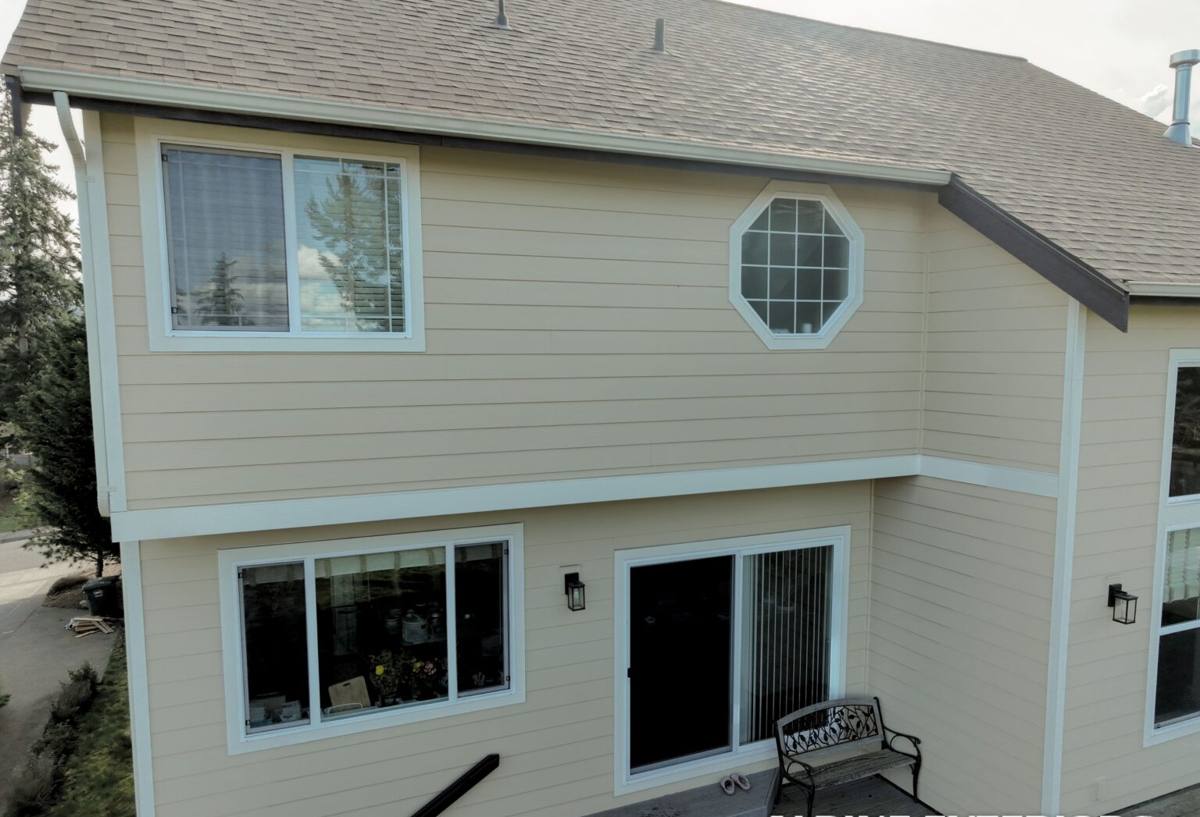
What Salt Air, Driving Rain, and Moss Do to Siding Over Time
Salt Air and Coastal Moisture
Salt in the air accelerates corrosion on fasteners, flashing, and exposed metal trim, and it speeds up the breakdown of paint films and caulk joints. Siding that relies on a surface coat of paint for protection tends to show fading, chalking, and adhesion failure sooner near the water than it would further inland.
Wind-Driven Rain
Rain in this part of Whatcom County rarely falls straight down. Wind pushes it sideways and upward, under laps, around trim, and into any gap where a seam wasn't sealed or a fastener wasn't set correctly. Over years, that moisture finds its way behind the cladding, and what happens next depends on whether the siding material and the water-resistive barrier behind it were built to handle repeated wetting.
Moss and Algae
Shaded, north-facing, and tree-covered walls in Sehome stay damp for long stretches during the wet season. Moss and algae growth on siding is mostly cosmetic on a dense, factory-finished product, but on materials that absorb moisture or hold organic growth against a porous surface, it can contribute to premature coating failure and, in wood-based products, rot.
Why We Standardized on James Hardie Fiber Cement
We used to get asked why we don't also offer vinyl, LP SmartSide, or cedar. The honest answer is that after years of servicing homes in this climate, we stopped seeing a reason to install anything else. Fiber cement is non-combustible, dimensionally stable through wet-dry cycles, and holds a factory-applied finish far longer than field-painted alternatives — which matters directly here, where a finish is under constant pressure from salt, rain, and moisture-loving organic growth.
That's not a knock on every other product's engineering. Vinyl is inexpensive and easy to install, but it expands and contracts with temperature swings and can crack in cold snaps or bow away from the wall. Engineered wood products like LP SmartSide use a wood-strand core that performs well when installation and maintenance stay perfect, but any breach at a cut edge or fastener hole gives moisture a path into the core. Cedar is genuinely attractive and has real fans, but it's also a maintenance commitment — refinishing, caulking, moisture monitoring — that most homeowners underestimate until year eight or nine.
| Material | How it handles wind-driven rain | How it handles salt air | Maintenance load |
|---|---|---|---|
| James Hardie fiber cement | Dense, engineered for wet climates; factory finish sheds water | Non-combustible core resists moisture damage; factory finish holds up under salt exposure | Low — occasional wash, no repainting for years |
| Vinyl siding | Can allow water behind panels at seams and penetrations | Color can fade faster under coastal UV and salt exposure | Low, but limited lifespan through temperature swings |
| LP SmartSide | Performs well if sealed correctly; vulnerable at breached edges | Salt accelerates fastener and edge deterioration if not maintained | Moderate — edge sealing and repainting on a cycle |
| Cedar | Absorbs and releases moisture; needs to breathe and drain properly | Salt speeds finish breakdown, requiring more frequent refinishing | High — refinishing and caulk maintenance on a regular schedule |
The James Hardie Product Lines That Make Sense for Sehome
James Hardie engineers its siding by climate zone, and the Pacific Northwest falls under the HZ5 designation — the version built for wetter, milder regions rather than the HZ10 formulation sold into hot, dry climates. That distinction affects the moisture-management engineering built into the product itself, not just the color options.
- HardiePlank lap siding — the most common choice for Sehome homes, available in multiple exposure widths and textures, including smooth and cedarmill
- HardiePanel vertical siding — used for board-and-batten looks or as an accent on gables and entry features
- HardieTrim — matched trim boards for corners, window and door surrounds, and fascia, keeping the whole envelope in one moisture-engineered system
- ColorPlus Technology finishes — factory-baked, multi-coat color that resists fading and chalking far longer than field-applied paint, backed by its own finish warranty
What a Correct Installation Actually Involves
James Hardie siding is only as good as the installation behind it. In a climate where wind-driven rain is routine, the details that get skipped on a rushed job are exactly the ones that cause callbacks two or three winters later.
Moisture Management First
Before any siding goes up, the wall needs a continuous water-resistive barrier, correctly lapped and taped, with flashing integrated at every window, door, and penetration so water is directed out and down instead of trapped behind the cladding.
Fastening and Gapping to Spec
James Hardie publishes specific fastener spacing, nailing patterns, and gap requirements at butt joints, trim, and penetrations. Gaps that are too tight don't allow for the material's normal movement and can cause buckling; gaps sealed the wrong way become entry points for water instead of drainage paths.
Starter Strips and Clearances
Correct starter strip installation at the base of the wall, along with proper clearance from grade, roof lines, and decking, protects the bottom edge of the siding — the part most exposed to splash-back and standing moisture.
Our Process for a Sehome Siding Project
- On-site assessment — we look at existing siding condition, moisture readings where relevant, sun and shade exposure on each wall, and drainage around the foundation
- Tear-off or overlay decision — most re-sides in this climate call for full tear-off so we can inspect and repair the sheathing and water-resistive barrier underneath, rather than sealing existing problems behind new material
- Product and color selection — matching HardiePlank exposure, texture, and ColorPlus color to the home and any neighborhood expectations
- Installation to Hardie's published specifications — fastening, flashing, gapping, and trim detail done to manufacturer spec so the transferable warranty stays intact
- Final walkthrough — checking caulk lines, trim, and touch-up work before we call the job finished
Because we work in this area regularly, we already know which details tend to get missed on homes exposed to bay winds versus more sheltered, tree-covered lots, and we adjust flashing and drainage detailing accordingly rather than treating every wall the same.
Maintenance and Long-Term Care in This Climate
James Hardie siding, correctly installed, is genuinely low-maintenance — but low doesn't mean none, especially here.
- Rinse siding periodically to remove salt residue and organic buildup, particularly on shaded or north-facing walls prone to moss
- Keep gutters clear and downspouts directed away from the foundation so splash-back doesn't repeatedly wet the base of the siding
- Trim back vegetation that keeps walls shaded and damp — this does more to prevent moss than any coating can
- Re-caulk joints if gaps start opening around trim or penetrations, and address it before the next wet season
- Have caulking and flashing checked every few years, especially after a hard windstorm off the water
What Drives the Cost of a Sehome Siding Project
| Cost factor | Why it matters |
|---|---|
| Tear-off vs. new construction | Removing existing siding and repairing sheathing adds labor and material cost but is usually the right call on a re-side |
| Home size and wall complexity | More corners, gables, and dormers mean more cutting, trim work, and flashing detail |
| Product line and texture | HardiePanel, different HardiePlank exposures, and specialty textures vary in material cost |
| ColorPlus color selection | Standard colors versus premium or custom finishes can shift pricing |
| Trim and accent work | HardieTrim at corners, windows, and gables adds cost but keeps the whole system consistent and warrantied |
| Site access and hidden damage | Difficult access, or rot and moisture damage discovered during tear-off, affects labor time and material needs |
Signs a Sehome Home May Need New Siding Soon
- Persistent moss or algae staining that returns quickly after cleaning
- Visible cracking, warping, or buckling in current siding panels
- Paint that's chalking, peeling, or fading unevenly, especially on walls facing prevailing wind and rain
- Soft spots, discoloration, or a hollow sound when tapping near the base of walls or under windows
- Rising energy bills that may point to a compromised wall assembly letting in drafts and moisture
If any of this sounds familiar, or you'd just like an honest read on your current siding's condition, we're glad to walk your Sehome home and give you a straightforward assessment. The estimate is free, there's no pressure, and you'll get a clear picture of what correct James Hardie installation would look like on your specific house.