 Chuckanut Exterior
 Board & Batten Siding in Sehome: A Style That Has to Earn Its Keep Here
Board and batten has a clean, vertical look that suits a lot of the homes around Sehome — craftsman-style houses, updated ranches, newer infill builds that want a more modern facade. It's a good-looking profile. But in this part of Whatcom County, a siding choice isn't just about how it looks going up. It's about how it holds up through another wet fall, another winter of driving rain off the water, and the long stretch of gray months where moss and mildew get a head start on anything that can't shed water properly.
We install board and batten siding for homeowners in and around Sehome using James Hardie fiber cement exclusively. That's not a marketing line — it's a decision we made after years of watching which siding materials actually perform in this climate and which ones need constant attention to look decent five years in. This page covers what board and batten does well, what a correct installation actually requires, and why the local climate should shape how you plan the project.
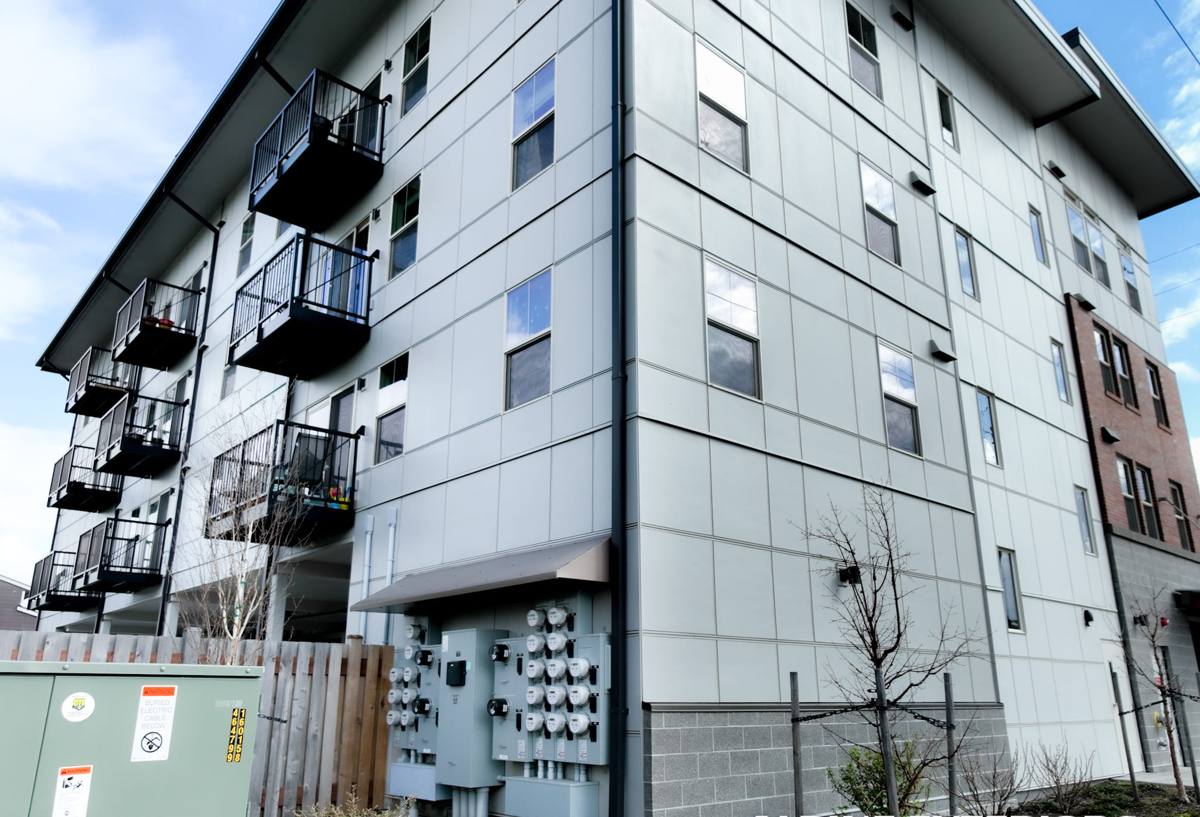
What Local Weather Does to Vertical Siding
Salt air, driving rain, and a long moss season all take their toll on a home's exterior here, and vertical siding profiles like board and batten are affected a little differently than horizontal lap siding.
Salt Air and Moisture
Homes closer to the water deal with airborne salt that accelerates corrosion on fasteners, trim flashing, and any exposed metal. Over time, that corrosion can telegraph through paint as staining or bleed marks, and it weakens the connection points that hold siding tight to the wall. Material and fastener choice matter more here than in a dry inland climate.
Driving Rain
Wind-driven rain doesn't just fall straight down — it gets pushed sideways into vertical seams, batten joints, and anything with a horizontal ledge. Board and batten has more vertical seam length per square foot of wall than lap siding does, which means more places for water to find a way behind the cladding if the underlying water-resistive barrier and flashing details aren't done right.
Moss and Organic Growth
Whatcom County's long stretch of cool, damp weather is ideal for moss, algae, and mildew. Materials that hold moisture — or paint films that trap it against the substrate — end up feeding that growth instead of shedding it. A siding system needs to dry out between rain events, not just resist water on the surface.
Why We Only Install James Hardie for This
Board and batten shows up in a few different materials: vinyl, engineered wood, primed cedar, and fiber cement. We don't install vinyl or engineered wood board and batten, and here's the honest reasoning, not a sales pitch.
- Vinyl board and batten is inexpensive and low-maintenance in mild climates, but it's a plastic product that expands and contracts significantly with temperature swings, and its seams and battens are typically snapped or nailed on in ways that aren't built to shrug off decades of driving rain and salt exposure the way fiber cement does.
- Primed wood or engineered wood board and batten looks great initially but is organic material at its core — it's exactly the kind of surface moss and mildew colonize fastest, and it needs a repaint and recaulk cycle to stay ahead of moisture intrusion.
- James Hardie fiber cement is cement, sand, and cellulose fiber — it doesn't rot, it isn't a food source for moss the way wood is, and it holds paint and factory finish far longer because it doesn't move with humidity the way wood-based products do.
For a climate that stacks salt air, driving rain, and moss season on top of each other, we standardized on Hardie because it's the product we're comfortable standing behind for the long term, not just for the first few years.
The HardiePanel System
Board and batten from James Hardie is built from HardiePanel vertical siding with HardieTrim battens installed over the seams. It's manufactured with James Hardie's ColorPlus factory finish, which is baked on in a controlled environment rather than field-applied — that matters in a climate where field-painted surfaces don't always get ideal drying conditions between coats. For homes in this region, we spec Hardie's HZ5 product line, engineered for climates with more freeze-thaw cycling and moisture exposure than the milder HZ10 zone product.
What a Correct Board & Batten Installation Actually Involves
The material is only half the equation. Board and batten fails early almost exclusively because of installation shortcuts, not because the panel itself was bad. Here's what has to happen underneath and around the panels:
Drainage Plane and Water-Resistive Barrier
Every wall needs a continuous water-resistive barrier with a drainage gap behind the siding so any moisture that does get past the surface has somewhere to go besides the sheathing. This is invisible once the job is done, which is exactly why it's the step that gets skipped by crews trying to save time.
Flashing at Every Penetration
Windows, doors, hose bibs, light fixtures, and roof-to-wall transitions all need proper flashing integrated with the water-resistive barrier — not just caulk over the top. Caulk is a maintenance item, not a waterproofing strategy, and in a climate with this much driving rain, it fails first.
Panel and Batten Gaps
Fiber cement expands and contracts with temperature and moisture, just far less than wood. Manufacturer-specified gaps at panel joints, corners, and trim need to be maintained and properly caulked with a flexible, paintable sealant rated for the exposure — tight-fitted, gap-free installations are a common cause of cracking and buckling down the road.
Fastening
Corrosion-resistant fasteners, driven to the correct depth and spacing, matter even more near salt air. Overdriven or underdriven fasteners are one of the most common defects we see on inspections of other crews' work — either one compromises the panel's hold or its water-shedding ability.
Board & Batten vs. Other Siding Profiles
| Profile | Look | Seam Exposure to Driving Rain | Best Fit |
|---|---|---|---|
| Board & Batten (vertical) | Clean, modern, farmhouse/craftsman | More vertical seams, needs careful flashing | Accent walls, gables, full facades on styles that call for it |
| Lap Siding (horizontal) | Traditional, widely used | Overlapping courses naturally shed water | Most standard elevations |
| Shingle/Shake Panel | Textured, cottage-style | More surface detail to maintain | Accent areas, period-style homes |
None of these are wrong choices — board and batten is simply a look that requires more disciplined water management to perform as well as lap siding does over the long run, which is why installation quality matters even more with this profile.
Cost Factors for a Sehome Board & Batten Project
| Factor | Why It Affects Price |
|---|---|
| Full facade vs. accent application | Board and batten on an entire home costs more than using it as a gable or entry accent over lap siding |
| Wall height and access | Two-story walls and steep or limited-access lots need more scaffolding and labor time |
| Removal of existing siding | Tear-off, disposal, and sheathing repair add cost if the substrate underneath needs attention |
| Trim and batten spacing complexity | Tighter batten spacing means more material and more labor hours per wall |
| Color and finish selection | Factory ColorPlus finishes vs. field-painted Hardie panels affect both cost and long-term touch-up needs |
We don't publish blanket per-square-foot pricing because every home's access, condition, and scope is different — but we'll walk your specific project with you and give you a straight number, not a rough guess that changes later.
Our Process, Start to Finish
- On-site assessment — we look at your existing siding, sheathing condition, and the specific exposure your walls get from wind and rain direction.
- Scope and product plan — we spec HardiePanel and HardieTrim to your home's style and confirm color, whether factory ColorPlus or a field-applied option.
- Tear-off and prep — old siding comes off, sheathing is inspected and repaired as needed, and a continuous water-resistive barrier goes down correctly the first time.
- Flashing and installation — every window, door, and penetration gets flashed before panels go up, with fastening and gap spacing to manufacturer spec.
- Final detailing — caulking, touch-up, and a walkthrough so you know exactly what was done and what maintenance, if any, to expect.
Why Hiring a Crew That Already Works Sehome Matters
A lot of siding problems in this region trace back to installers applying a technique that works fine somewhere drier and assuming it'll hold up here too. It usually doesn't. Whatcom County's combination of coastal moisture, driving rain, and a moss season that runs longer than most of the country's means the flashing details, drainage plane, and fastening tolerances all need to be treated as non-negotiable, not optional upgrades.
Chuckanut Exterior Company works this area regularly, which means we're not guessing at how a wall assembly needs to perform here — we're building to what actually holds up through repeated wet seasons, not just what passes inspection on a dry install day.
Questions Worth Asking Any Contractor Before You Sign
- Do you install a continuous water-resistive barrier with a drainage gap behind the siding, or just wrap and go?
- How do you flash windows, doors, and penetrations — integrated flashing, or caulk over the top?
- What fastener type and spacing do you use, and is it rated for coastal/salt exposure?
- Are you following the manufacturer's specified gap and caulking requirements at seams and trim?
- Is your installation covered by both a workmanship warranty and the manufacturer's product warranty?
Is Board & Batten the Right Call for Your Home?
Board and batten isn't automatically the right choice for every home or every wall — sometimes it makes more sense as an accent on a gable or entry feature than a full facade, especially on homes with a lot of complex trim or window detailing where the extra seams add up. Part of our estimate visit is an honest read on where this profile will look right and perform well on your specific house, not just where you asked for it.
If you're weighing board and batten siding for a home in Sehome, we're glad to walk the property, look at your current siding's condition, and put together a straightforward, no-pressure estimate using James Hardie's fiber cement system built for this climate. There's no obligation — just a clear look at what the job actually involves and what it would cost.