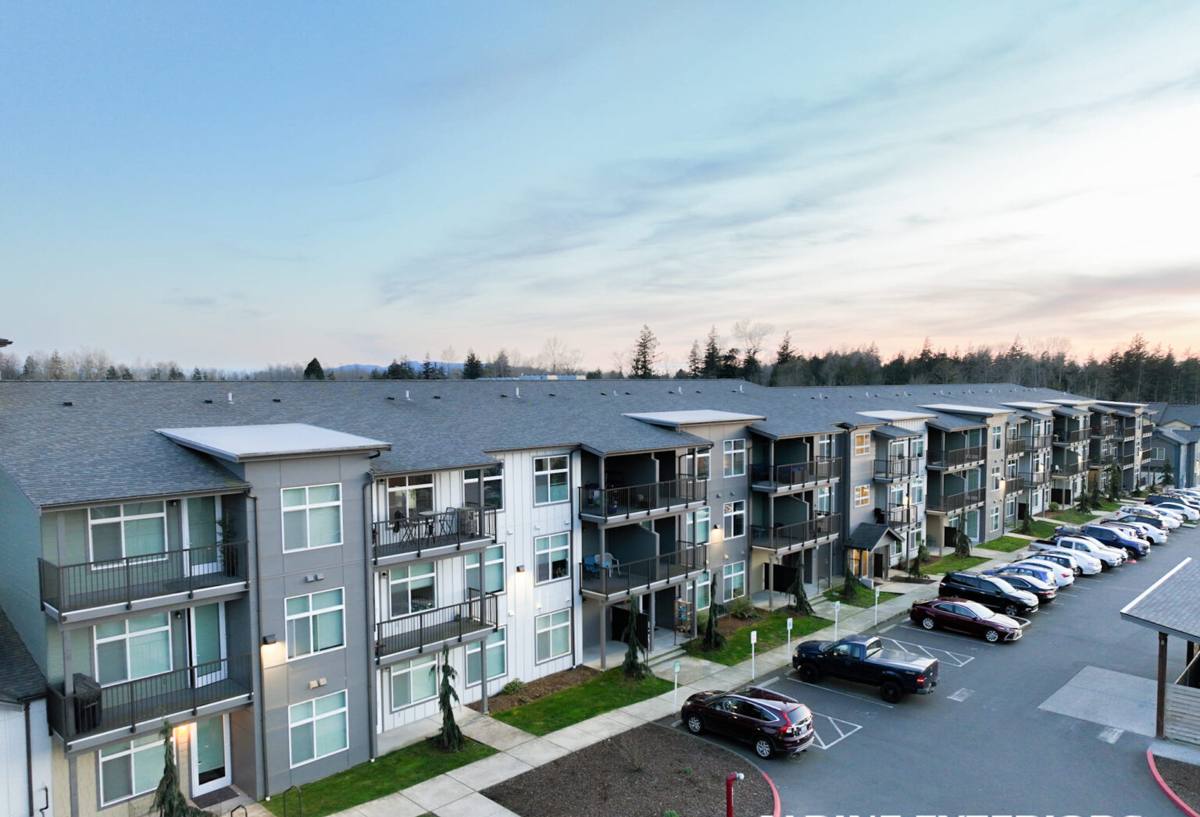
 Chuckanut Exterior
 Board & Batten Siding, Built for Sedro-Woolley's Weather
Board and batten keeps showing up on remodel wish lists and new-build plans around Sedro-Woolley, and it's easy to see why. The vertical lines give a farmhouse a look that feels grounded and traditional, and they give a newer build a clean, modern edge — the same profile reads two different ways depending on the trim and color around it. What doesn't change from house to house is the physics of the wall behind it. Board and batten is a joint-heavy profile: every place a batten laps a board seam is a place water can try to work its way behind the siding, and Sedro-Woolley's weather gives it plenty of chances to try.
Salt-tinged air moving in off the water, driving rain that gets pushed sideways instead of falling straight down, and a moss season that runs most of the year on shaded walls all take a toll on exterior materials here. None of that makes board and batten a bad choice — it just means the profile has to be built correctly, with the right material, or those seams become the weak point in an otherwise good-looking wall.
What Local Conditions Ask of a Vertical Siding Profile
Driving Rain Against Every Seam
Rain in this part of Washington rarely falls straight down. Wind pushes it sideways, and a board and batten wall — with battens running the full height of the house — gives that wind-driven rain a long run of vertical joints to test. A batten that's caulked tight instead of properly lapped, or fastened without the clearance the material needs to move and drain, turns from a decorative detail into a place moisture collects instead of sheds.
Salt Air and Fastener Wear
The steady salt exposure common to this area is hard on any exposed metal, and board and batten uses more fasteners per square foot than a standard horizontal lap profile, since both the boards and the battens over them need to be secured. That means the fastener spec — corrosion resistance, size, spacing — carries more weight on this profile than on most others. Get it wrong and streaking or fastener failure shows up years before it should.
A Moss Season That Doesn't Really End
Shaded walls, tree cover, and north-facing exposures around Sedro-Woolley hold moisture longer than sun-exposed ones, and that lingering dampness is exactly what moss and mildew need to establish. A batten set tight against a board with no room to breathe traps that moisture right at the seam, which is a slow, steady path toward staining, soft substrate, and paint failure right where the wall is hardest to inspect from the ground.
Seasonal Temperature Swings
Sedro-Woolley sees a wider daily temperature swing than towns sitting right on the water, and materials that absorb moisture and then go through repeated freeze-thaw cycling are prone to cracking and surface breakdown over time. It's a slower failure mode than storm damage, which is exactly why it's easy to miss until a wall has already been quietly deteriorating for a few seasons.
Why the Profile Raises the Stakes on Material Choice
Board and batten doesn't create new problems — it amplifies whatever weaknesses a siding material already has, because there's more seam length and more exposed edge per square foot of wall than on a standard lap profile. That's the main reason we don't offer LP SmartSide, vinyl, Cemplank, Allura, primed spruce, or cedar board and batten. Those are legitimate products, and other contractors install them competently. But on a profile with this many joints, in a climate this consistently wet, we settled on one system we trust to hold up without a maintenance schedule the homeowner has to babysit.
| Material | Behavior at Batten Seams | Maintenance Locally | Realistic Lifespan |
|---|---|---|---|
| James Hardie fiber cement | Dimensionally stable; doesn't swell, cup, or shrink at the joint | Low; factory finish resists moss growth and fading | 30+ years with correct install |
| LP SmartSide (engineered wood) | More sensitive to moisture at cut edges and fastener holes | Moderate; edge sealing needs ongoing upkeep | 15-25 years, climate-dependent |
| Vinyl | Seams and battens can gap or warp with heat and cold cycling | Low visible upkeep, but hidden moisture issues are hard to catch | 20-30 years, variable |
| Cedar | Absorbs moisture readily at every seam without regular sealing | High; recurring repainting or resealing | 15-25 years with consistent care |
Fiber cement's core doesn't expand and contract with moisture the way wood-based products do, which matters most on a profile built almost entirely out of vertical seams. James Hardie's factory-applied ColorPlus finish also means the field-primed cut edges we handle on site are the exception rather than the rule — unlike materials where the paint job's long-term performance depends on every board face holding up outdoors, year after year, on its own.
What a Correct Board & Batten Install Actually Involves
The finished look of board and batten is simple: vertical boards with battens over the seams. What's happening behind that surface, on a job done right, is a lot more involved than most homeowners expect:
- House wrap or weather-resistive barrier installed and properly lapped before any siding goes up
- A drainage gap or rainscreen behind the siding so moisture that does get past the surface has somewhere to go instead of sitting against the wall
- Corrosion-resistant fasteners at the spacing the manufacturer specifies, not just "enough to hold it up"
- Battens set with the clearance Hardie's installation instructions call for, not caulked tight, so the wall can shed water instead of trapping it
- Correctly flashed and lapped transitions at windows, doors, corners, and the base of the wall, where a vertical run meets a horizontal surface
- Field-cut edges primed before installation, so the factory finish isn't the only thing standing between the material and the weather
Skip any one of these steps and the wall can still look right for a year or two. The problems that come from cutting a corner here — staining at seams, soft spots near the base, paint failure along a batten line — take a few wet seasons to show themselves, which is exactly why a rushed install can get away with it right up until it's the homeowner's problem to fix.
How We Handle a Board & Batten Project in Sedro-Woolley
- On-site assessment. We look at the existing wall assembly, check for moisture damage or soft sheathing behind the current siding, and evaluate sun exposure and shading, since those change how we detail specific walls.
- Material and layout plan. We spec board width, batten spacing, and reveal to match the home's proportions, then confirm the ColorPlus finish and trim details before ordering.
- Tear-off and inspection. Removing the old siding gives us a direct look at the sheathing and framing underneath — this is where hidden moisture damage from a previous install usually turns up, and it gets addressed before anything new goes on.
- Weather barrier and drainage plane. House wrap, flashing at every penetration, and a drainage gap go in first, since this layer does more long-term work than the siding itself.
- Board and batten installation. Boards and battens go up to spec — correct fastener type and spacing, proper batten clearance, primed field cuts, and flashed transitions at every window, door, and corner.
- Final walkthrough. We check reveal consistency, seam lines, and finish quality before calling the job done, and we go over basic care so the homeowner knows what normal weathering looks like versus something worth a call.
Why a Crew That Already Works This Area Matters
Board and batten installed to a generic national spec doesn't automatically account for what this specific stretch of Washington throws at a wall. A crew that regularly works Sedro-Woolley and the surrounding area has already seen where local moisture problems tend to start — which wall orientations hold shade and dampness longest, how far salt-laden air reaches inland on a windy week, and which fastener and flashing choices actually hold up through a full wet season here rather than just on paper. That local repetition is what turns a correct installation manual into a wall that's still performing the way it should ten and twenty years out.
It also means someone is nearby if a question comes up after the job is done — not a call center, but a crew that knows the house and the wall assembly because they built it.
Maintenance Expectations for a Board & Batten Home
Fiber cement board and batten with a factory finish isn't maintenance-free, but it asks a lot less than most alternatives:
- Rinse the exterior periodically, especially shaded and north-facing walls where moss and mildew are most likely to establish
- Keep gutters clear and downspouts directed away from the wall so runoff isn't concentrating at any one section of siding
- Trim back vegetation and tree cover that keeps a wall damp and shaded longer than it needs to be
- Have caulking at trim and penetration points checked periodically — caulk fails well before the siding does, and it's a lot cheaper to catch early
- Watch for any signs of staining or soft spots at batten seams and the base of the wall, and have them looked at before they spread
None of that is a heavy lift compared to the recurring sealing, repainting, or edge-touch-up schedule that wood-based or field-painted siding options ask for in this climate. It's the difference between occasional upkeep and an ongoing project.
Getting Started
If you're weighing board and batten for a home in Sedro-Woolley, we're glad to walk the property, look at the existing siding and wall condition, and put together a straightforward plan and estimate — no pressure, no sales script. Use the form below to get started.