 Chuckanut Exterior
 Storm Damage Roof Repair Built for Samish's Coastal Weather
A roof in Samish works harder than a roof almost anywhere else in Whatcom County. It sits close enough to the water to take on salt-laden air, it gets hit by wind-driven rain coming off the Sound during winter storms, and it spends a good chunk of the year under a canopy of Douglas fir and cedar that keeps everything shaded, damp, and slow to dry. That combination shortens the life of roofing materials faster than most manufacturers' warranties assume, and it means storm damage here doesn't always look dramatic. Sometimes it's a handful of lifted shingle tabs. Sometimes it's a section of flashing that worked loose in a windstorm and has been letting water in quietly for weeks before anyone notices a stain on the ceiling.
This page is about one job: repairing storm-damaged roofs for homes in and around Samish. Not a full re-roof pitch, not a general maintenance page — the specific work of assessing what a storm did to your roof and fixing it correctly the first time.
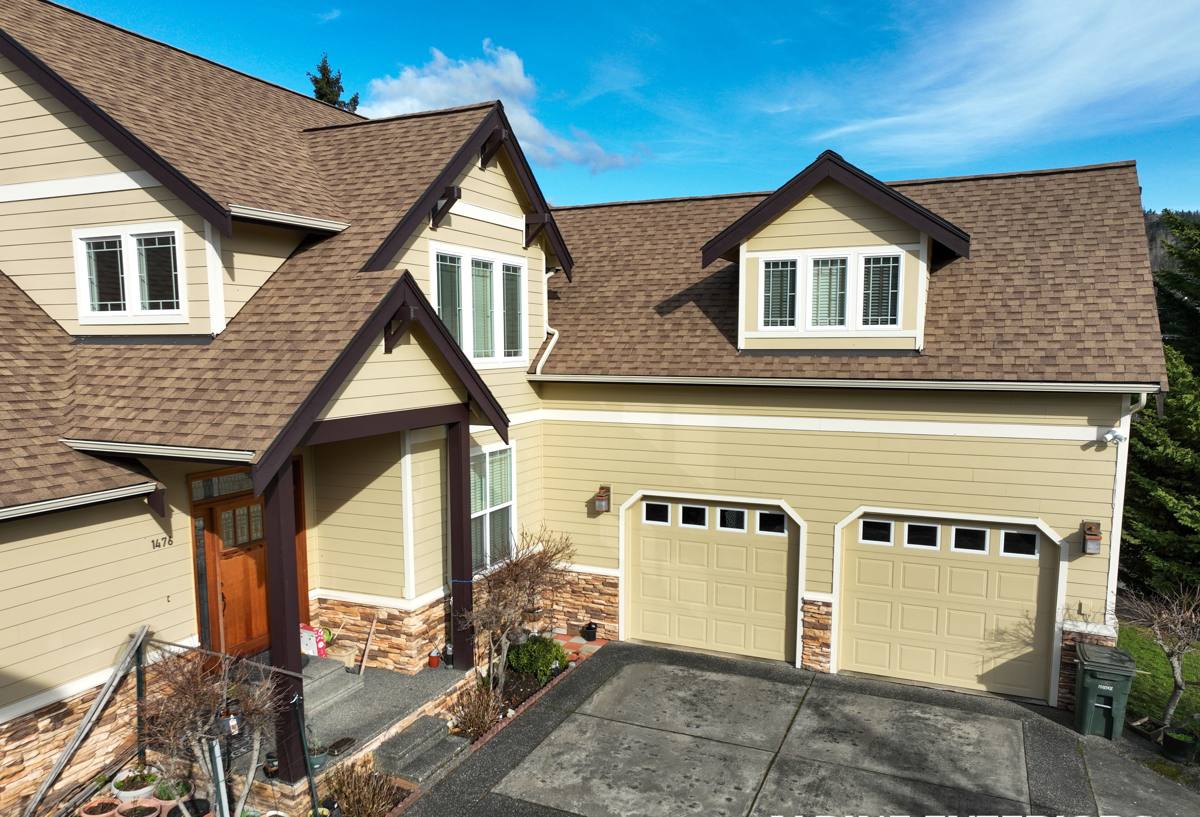
What Samish Roofs Face Each Year
Three things drive most of the storm-related roof repair calls we see in this area, and they compound each other.
Salt Air and Corrosion
Proximity to the water means metal components — flashing, fasteners, vent caps, gutter hardware — corrode faster than they would further inland. Corroded fasteners back out or shear off in high wind, which is often the actual mechanical reason a shingle or ridge cap failed during a storm rather than the wind alone being "too strong."
Driving, Wind-Driven Rain
Whatcom County storms rarely deliver rain straight down. Wind pushes it sideways and up under laps, edges, and flashing that would shed a normal vertical rain just fine. Roofs here need every seam, valley, and penetration sealed with that sideways-rain scenario in mind, which is a different standard than what a roof needs in a drier climate.
A Long Moss Season
Heavy tree cover keeps shaded roof sections damp for extended stretches, and moss takes hold in that dampness. Moss doesn't just look bad — it lifts shingle edges as it grows, holds water against the roofing material, and gives wind something to catch during a storm. A roof with an established moss problem is more vulnerable to storm damage than a clean one, and storm damage often shows up first in the same shaded, moss-prone areas.
Signs Your Roof Took Storm Damage
Most homeowners don't get on a ladder after every windstorm, and they shouldn't have to. Here's what's worth checking from the ground or noticing indoors after a rough weather system comes through:
- Shingle pieces or granules collecting in gutters or on the ground near the foundation
- Shingles that look curled, lifted, or visibly out of alignment from the ground
- A new or growing water stain on an interior ceiling or upper wall
- Daylight visible through the attic roof deck (check with a flashlight, not by climbing)
- Gutters pulling away from the fascia or hanging unevenly
- Visible dents or damage on vents, flashing, or skylights
- A sudden increase in moss or dark streaking in one section after a storm knocked debris loose
- Any musty smell in the attic that wasn't there before
None of these guarantee major damage, but any of them is a reasonable trigger for a professional look before the next storm makes it worse.
What a Proper Storm Damage Repair Actually Involves
A quality storm repair is more than swapping out the shingles that are obviously missing. Wind and driving rain damage a roof system, not just its surface, and repairing only what's visible is how the same section fails again in the next storm.
A Full Assessment, Not Just a Patch
We look at the deck underneath the damaged area, the underlayment, the flashing at nearby penetrations, and the surrounding shingles — not just the spot that's obviously torn up. Wind damage often extends past what's visible from the ground, and rain that got in during the storm may have already reached the underlayment or deck even if the shingles look mostly intact.
Matching Materials Correctly
Repairs need to match the existing roof's shingle type, profile, and as close to color as reasonably available so the patch doesn't stand out or perform differently than the surrounding material. Mismatched granule wear or a different shingle profile in a repaired section can also create a spot where water behaves differently than the rest of the roof.
Flashing and Underlayment First
Given how much of Samish's storm damage traces back to wind-driven rain finding a gap, we treat flashing and underlayment repair as the priority — not an afterthought behind reshingling. A new shingle over failed flashing just hides the problem for a while.
Addressing the Cause, Not Just the Symptom
If moss contributed to the failure, or if corroded fasteners let go under wind load, fixing only the surface damage without addressing that underlying cause means you're likely to be back in the same spot after the next storm.
Our Process, From Call to Completed Repair
- Initial call or form submission. Tell us what you're seeing — visible damage, a leak, or just concern after a storm — and we'll get a sense of urgency and scope before we arrive.
- On-site inspection. We check the roof surface, flashing, penetrations, and — where accessible — the attic side of the affected area, so we're diagnosing the whole system, not guessing from the ground.
- Clear explanation and a written estimate. You get a plain-English explanation of what happened, what needs to be repaired, and what it will cost — no pressure, no scare tactics.
- Repair work. We use materials matched to your existing roof and prioritize weatherproofing (flashing, underlayment, sealing) as much as visible shingle work.
- Final walkthrough. Before we call the job done, we walk the repair with you so you know exactly what was fixed and what to watch for going forward.
If a storm has left standing damage that's actively letting water into the house, we treat that as urgent and prioritize getting the leak stopped even if the full repair takes a bit longer to complete properly.
Repair or Replace? What Determines the Right Call
Not every storm-damaged roof needs a full replacement, and not every roof that looks fine after a storm is actually fine underneath. Here's how we think through it:
| Factor | Leans Toward Repair | Leans Toward Replacement |
|---|---|---|
| Extent of damage | Localized to one section or a few spots | Widespread across multiple roof planes |
| Roof age | Well within expected material lifespan | Already near or past typical service life |
| Underlying deck condition | Solid, dry decking under the damaged area | Soft, rotted, or water-stained decking found during inspection |
| Moss/moisture history | Isolated issue, otherwise well-maintained roof | Long-term moss damage across multiple sections |
| Storm severity | One isolated wind event | Repeated storm damage over recent seasons |
We'll always tell you honestly which side of that line your roof falls on, including when a repair is genuinely the right call rather than pushing for a bigger job.
Why Local Experience in Samish Matters
A roofing crew that mostly works drier, less coastal areas doesn't always plan for the sideways rain and salt exposure that Samish roofs deal with regularly. We work this specific stretch of Whatcom County, so we're used to sizing up how a storm actually moved through a property — which side of the roof caught the worst of the wind, where driving rain tends to find gaps, and which sections are shaded enough to have an existing moss problem that made things worse. That local read on a roof matters as much as the repair technique itself.
We're also familiar with Whatcom County permitting requirements where a repair scope crosses into work that needs one, and we carry the licensing and insurance you should expect from any contractor working on your roof.
Working With Your Insurance Claim
Many storm damage repairs are covered, in whole or in part, by homeowners insurance — but coverage depends on your specific policy and the cause of damage, so we're not going to promise a number before your carrier reviews the claim. What we can do is document the damage clearly with photos and a written scope of work, which is what most adjusters need to evaluate a claim. We're happy to walk you through what we found and answer an adjuster's questions about the scope of the repair, but the claim decision itself is always between you and your insurer.
Get an Honest Look Before the Next Storm
If a recent storm has you wondering whether your roof took damage, or you've noticed something that doesn't look right, it's worth getting a straightforward assessment before the next system rolls through. We offer free, no-pressure estimates for storm damage roof repair in Samish and the surrounding area — fill out the form below and we'll take a look.