 Chuckanut Exterior
 Why Roofs in Samish Wear Out Differently
Samish sits close enough to the water that homes here deal with a combination of stresses most inland Whatcom County properties don't see at the same intensity: salt-laden air, wind-driven rain that gets pushed sideways into laps and flashings, and long stretches of shaded, damp conditions that keep moss and algae active for most of the year. None of these on their own is unusual for Western Washington. Together, and applied year after year, they shorten the useful life of a roof that wasn't built or installed with them in mind.
Salt air accelerates corrosion on exposed metal fasteners, flashing, and vent components. Driving rain finds the weak points in a roof system that would never leak in calmer weather — a slightly short flashing lap, an underlayment seam that isn't sealed, a nail popped just enough to let water track sideways. Moss and algae hold moisture against the roof surface long after a storm has passed, which softens shingle mat over time and rots decking from the top down. A roof replacement in Samish needs to account for all three, not just meet the minimum code requirement for the area.
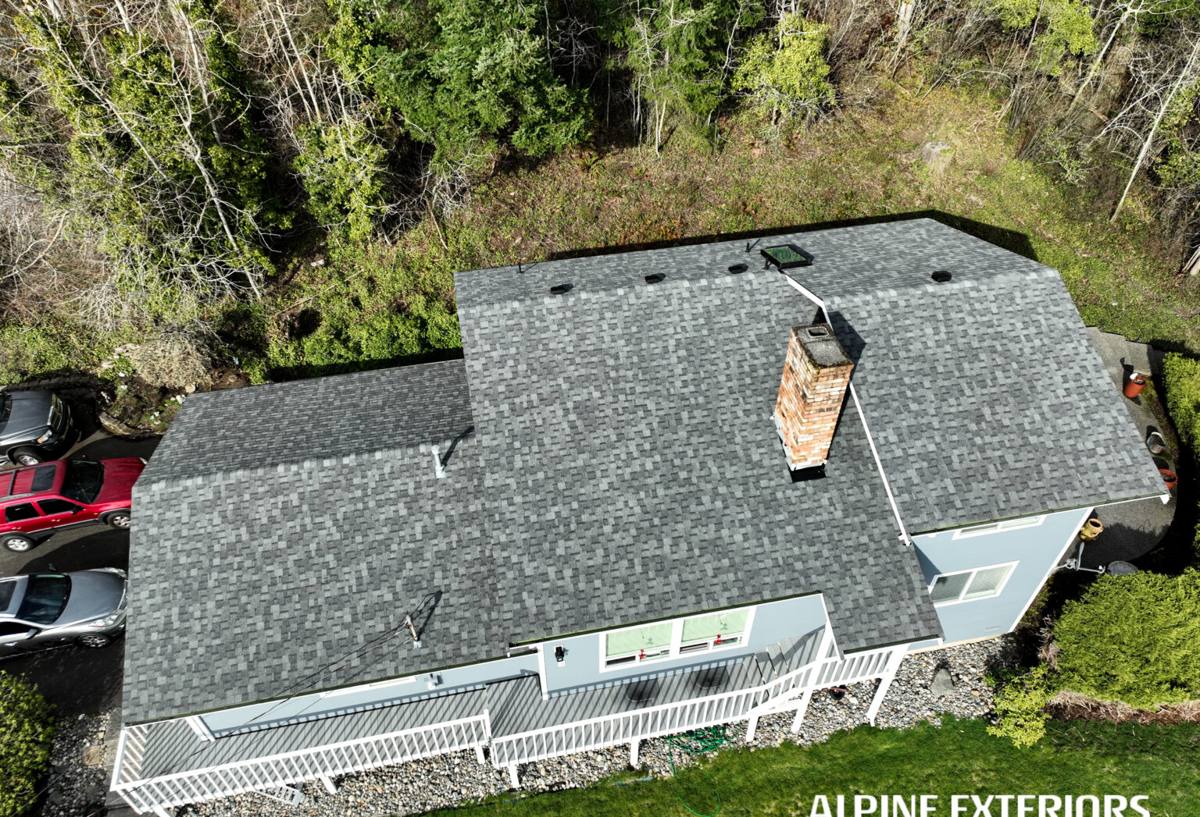
Signs a Samish Roof Has Reached Replacement Age
Repair makes sense when a roof has isolated damage on an otherwise sound system. Replacement becomes the honest recommendation once the underlying materials — decking, underlayment, and the shingles themselves — have aged past the point where patching one area just shifts the problem somewhere else. Common signs we look for on Samish homes include:
- Granule loss heavy enough to expose the shingle mat, especially on south- and west-facing slopes that take the most sun and wind
- Moss colonies that have lifted shingle edges rather than just staining the surface
- Soft or spongy decking felt underfoot during inspection, usually near valleys or eaves
- Rusted or failing metal flashing around chimneys, skylights, and roof-wall intersections
- Daylight or water staining visible in the attic along the roofline
- A roof already past 20-25 years old for asphalt composition, regardless of how it looks from the ground
A roof can look fine from the driveway and still be failing underneath. That's why we walk the roof and check the attic before recommending replacement over repair — not the other way around.
What a Correct Roof Replacement Actually Involves
A roof replacement is more than swapping old shingles for new ones. The parts of the system homeowners don't see are what determine whether the new roof actually performs better in Samish's climate than the one it replaces.
Full Tear-Off and Deck Inspection
We remove the existing roofing down to the deck rather than layering over it. This lets us inspect the plywood or plank decking directly, replace any sections that have softened from long-term moisture exposure, and confirm the deck is properly fastened before anything new goes down. Roofing over rotten decking just hides a problem that will resurface as a leak within a few years.
Underlayment Built for Wind-Driven Rain
In a location exposed to driving rain off the water, the underlayment matters as much as the shingle. We use synthetic underlayment with properly lapped and sealed seams, and add self-adhering membrane at eaves, valleys, and other vulnerable transitions where wind can force water uphill under the shingles. This is the layer that actually keeps a home dry during a sideways rainstorm — the shingles are the first line of defense, not the only one.
Flashing Details That Actually Hold Up
Chimneys, skylights, sidewalls, and any roof-to-wall intersection are where most leaks originate, and where salt air does the most damage to unprotected metal over time. We install new flashing at every one of these points rather than reusing old pieces, and we choose flashing metal and fastener types that resist corrosion in a coastal-influenced environment.
Ventilation That Fights Moss and Moisture
A roof that can't breathe traps moisture underneath the shingles, which accelerates decking rot and gives moss more to feed on. We check intake and exhaust ventilation balance as part of every replacement and correct it where it's inadequate — this is often the difference between a roof that stays dry inside and one that develops hidden damage within a few winters.
Material Options for Samish's Climate
There's no single "best" roofing material for every home — the right choice depends on budget, roof pitch, how much shade and moss exposure the property gets, and how long the homeowner plans to stay in the house. Here's how the common options compare for a coastal Whatcom County property like those in Samish:
| Material | Moss/Algae Resistance | Wind & Rain Performance | Typical Lifespan Here |
|---|---|---|---|
| Architectural asphalt shingle | Moderate — improves with algae-resistant granules | Good when properly installed and fastened | 20-30 years |
| Standing seam metal | Strong — sheds moss and debris | Excellent in wind and driving rain | 40-50+ years |
| Cedar shake | Weak without diligent maintenance | Fair — vulnerable to moisture retention | 15-25 years, shorter near salt air |
| Synthetic composite shingle | Good | Good | 30-40 years |
We're honest with homeowners about the trade-offs. Cedar shake has appeal, but in a shaded, damp, salt-air location it demands more upkeep than most owners want to commit to, and moisture retention is a real long-term concern regardless of maintenance. Metal costs more upfront but shrugs off moss and wind in a way asphalt can't fully match. Architectural asphalt remains the most common choice because it balances cost, appearance, and performance reasonably well — provided the installation details underneath it are done correctly.
Our Replacement Process, Start to Finish
- On-site inspection — we walk the roof and check the attic to confirm replacement is the right call, not just an upsell
- Written estimate — clear scope, material options, and pricing, no vague allowances
- Material selection — we walk through the trade-offs above so the decision fits the home and the budget
- Full tear-off — old roofing removed and disposed of, deck exposed for inspection
- Deck repair — any soft or damaged sheathing replaced before moving forward
- Underlayment and flashing installation — sealed, lapped correctly for wind-driven rain
- New roofing installed — per manufacturer specifications, which is also what keeps the warranty valid
- Ventilation check and correction — intake and exhaust balanced for the attic and roof design
- Final walkthrough — cleanup, debris check with a magnetic sweep for nails, and a review of the completed work with the homeowner
Keeping a New Roof Healthy in Samish
A correctly installed roof still benefits from basic upkeep in this climate. Homeowners who stay ahead of a few simple things get noticeably more life out of their roof:
- Clear gutters and downspouts at least twice a year so water isn't backing up under the roof edge
- Have moss treated or gently removed before it establishes and lifts shingle edges — don't pressure wash, which can strip granules
- Trim back overhanging branches that keep sections of the roof shaded and damp longer than necessary
- Schedule a walk-through inspection after any major windstorm to check for lifted or missing shingles
- Watch the attic for any signs of daylight, staining, or musty odor between inspections
Cost Factors Homeowners Should Understand
Every roof replacement estimate is specific to the home, but the factors that move the price are consistent. Understanding them helps homeowners evaluate quotes honestly rather than comparing bottom-line numbers that may not reflect the same scope of work.
| Cost Factor | Why It Matters |
|---|---|
| Roof size and number of facets | More square footage and more valleys/hips mean more material and labor time |
| Deck condition | Rotted sheathing found during tear-off adds material and labor to replace it properly |
| Material choice | Metal and composite systems cost more upfront than asphalt but last considerably longer |
| Roof pitch and access | Steep or hard-to-access roofs require more safety equipment and time |
| Flashing and ventilation scope | Homes with more chimneys, skylights, or inadequate existing ventilation need more detail work |
We'd rather walk a homeowner through where their money is actually going than quote a number that leaves out the details that determine how the roof performs five or ten years down the road.
Why It Matters to Hire a Crew That Already Works in Samish
Roofing crews that mainly work inland don't always account for the added corrosion resistance, sealing detail, and moss-conscious ventilation choices that a home exposed to coastal air and heavy shade actually needs. A crew familiar with Samish and the surrounding Chuckanut area already knows which flashing and fastener choices hold up here, how local wind patterns push rain into specific parts of a roof, and how to sequence a tear-off around the area's unpredictable rain windows so a home isn't left exposed longer than necessary. That local familiarity shows up in fewer callbacks and a roof that performs the way it's supposed to in year eight, not just year one.
Timing a Replacement Around Whatcom County Weather
Roof replacements can be done for most of the year here, but scheduling around Whatcom County's wetter months reduces risk and keeps the project moving efficiently. Drier stretches allow decking to be inspected and repaired without added moisture complications, and shorten the window a home's interior is exposed during tear-off. If a roof is showing clear signs of failure, though, waiting for ideal weather isn't worth the risk of ongoing water intrusion — we'll work with the conditions available rather than let a failing roof sit through another storm season.
If you're seeing granule loss, moss buildup, or signs of a leak on a Samish home, we're glad to take a look and give you a straightforward assessment — no pressure, no inflated scope. Use the form below to request a free estimate and we'll schedule a time to walk the roof with you.