 Chuckanut Exterior
 Why Samish Roofs Wear Differently Than Roofs Inland
Homes in the Samish area, tucked along the water and tree line near Chuckanut, deal with a roofing environment that inland Whatcom County properties simply don't face. The combination of salt-laden air off the bay, wind-driven rain that comes at the roof sideways instead of straight down, and a shaded, moisture-heavy tree canopy adds up to a much harder job for a roof than most manufacturers' warranty literature assumes. A shingle roof rated for a dry, sunny climate is being asked to do something different here, and the installation has to account for that from day one.
We're not talking about exotic conditions — just a longer wet season, more standing moisture, and more organic growth pressure than a roof fifteen miles inland ever sees. Over a few years, that difference shows up as premature granule loss, soft moss mats holding water against the shingle surface, and corrosion at fasteners and flashings that should have another decade of life left in them. None of that is inevitable. It's a function of whether the roof was built and maintained for this specific climate or just built to a generic spec.
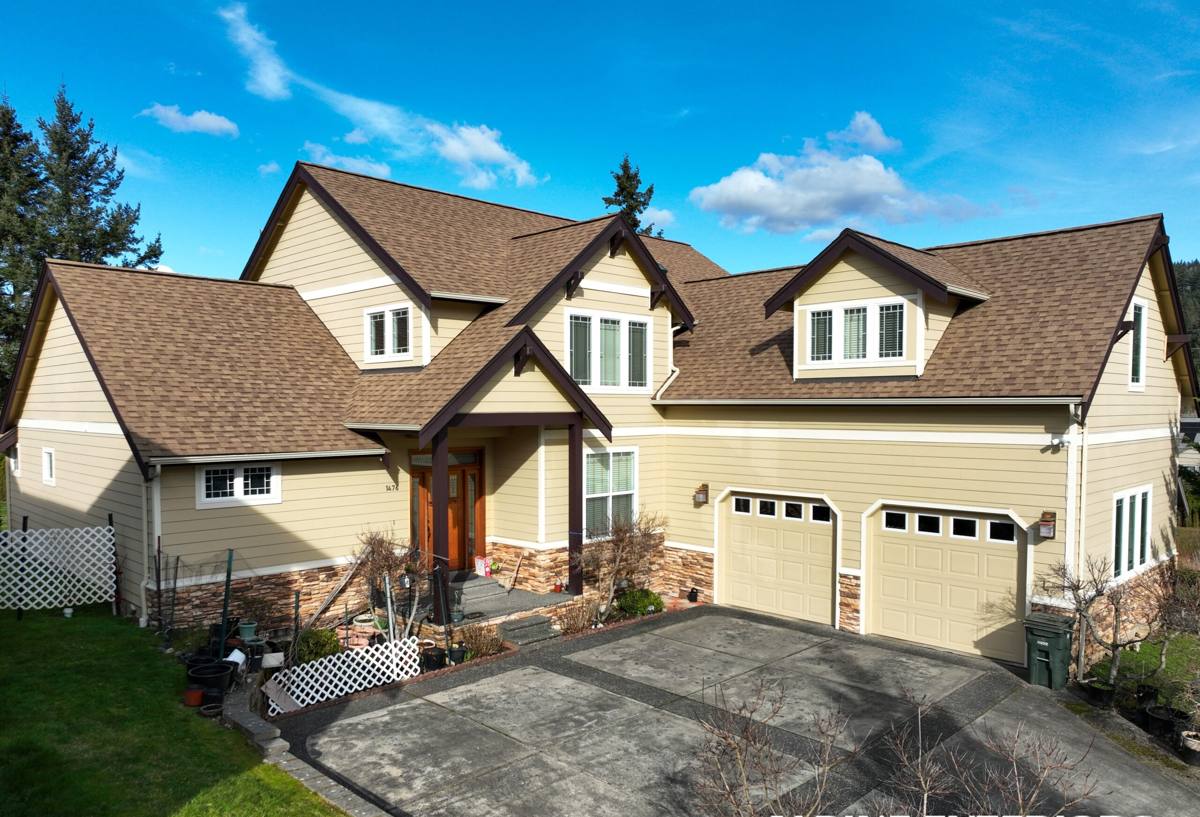
What Salt Air, Driving Rain, and Moss Actually Do to a Shingle Roof
Salt Air and Metal Fatigue
Airborne salt from the bay settles on every exposed surface, including roof metal. Galvanized nails, plain steel flashing, and lower-grade drip edge corrode faster here than they would twenty miles inland. Once a fastener head starts to rust, it loses holding power and can eventually let a shingle tab lift in wind — which is exactly when wind-driven rain finds its way underneath.
Driving Rain and Wind-Driven Water
Rain that comes in at an angle behaves differently than straight-down rain. It can work its way under shingle tabs, around chimney and skylight flashing, and along valleys and wall-to-roof transitions that a dry-climate roof would never test. This is why underlayment coverage, flashing laps, and nailing patterns matter more here than the shingle brand printed on the wrapper.
Moss and Algae Growth
Shaded, north-facing slopes and roofs under tree cover stay damp far longer after a storm than open, sun-exposed roofs. That extended dampness is exactly what moss and algae need to take hold. Once moss establishes itself, it holds water against the shingle mat, lifts tabs at the edges, and accelerates granule loss — turning what should be a cosmetic issue into a structural one if it's left alone for years.
What a Correctly Installed Asphalt Shingle Roof Includes Here
A shingle roof built for Samish's climate isn't a different product — it's the same asphalt shingle system installed with the right details underneath it. The parts that don't show after the job is done are the parts that determine whether the roof holds up.
- Ice and water shield at eaves, valleys, and around all penetrations — not just the code minimum, but full coverage anywhere wind-driven rain is likely to test the deck
- Synthetic underlayment across the full field, lapped and fastened to shed water even if a shingle is ever compromised
- Corrosion-resistant fasteners and flashing suited to salt-air exposure, not the lowest-cost galvanized option
- Algae-resistant shingle granules on shaded or tree-covered slopes, where standard granules give up years sooner
- Proper nailing pattern — correct nail count, placement, and depth, which affects wind performance far more than most homeowners realize
- Balanced attic ventilation so moisture from inside the home doesn't add to the moisture load already coming from outside
- Detailed flashing work at chimneys, skylights, and wall intersections, where the vast majority of roof leaks actually originate
Shingle Options for the Samish Climate
Not every asphalt shingle is a good fit for a shaded, salt-air, high-rainfall property. The table below compares the common options we discuss with homeowners in this area.
| Shingle Type | Moss/Algae Resistance | Wind Performance | Typical Lifespan Here | Best For |
|---|---|---|---|---|
| Standard 3-tab | Low unless treated | Adequate on sheltered roofs | Shorter under tree cover | Budget projects on open, sunny slopes |
| Architectural/laminate | Moderate to good with algae-resistant granules | Stronger due to added weight and lamination | Longer, more consistent | Most Samish homes, especially exposed to weather |
| Algae-resistant laminate | Best available in asphalt | Same as standard laminate | Longest before moss staining returns | Shaded, north-facing, or tree-covered roofs |
| Impact-rated laminate | Good with algae-resistant option | Highest, plus better resistance to debris | Long, with added durability | Roofs under mature trees or exposed to falling limbs |
We steer most Samish homeowners toward algae-resistant architectural shingles as the practical baseline, not because standard shingles are a bad product, but because the maintenance burden and appearance issues of untreated granules on a shaded roof aren't worth the modest upfront savings. Where a property sits directly under conifers or gets regular debris, impact-rated shingles earn their keep.
A Note on Warranty Structure
Manufacturer warranties on algae resistance are usually prorated and tied to specific installation requirements — proper ventilation, correct fastening, and sometimes specific underlayment. A warranty is only as good as the installation behind it, which is part of why we document our installation details on every job.
Our Process From First Call to Final Walkthrough
The process for a Samish re-roof or repair follows the same sequence on every job, adjusted for what we find once we're actually on the roof.
- On-site inspection. We walk the roof, check the attic for ventilation and moisture signs, and note existing moss, flashing condition, and deck soundness.
- Written scope and materials. You get a clear breakdown of what's being replaced, what underlayment and flashing package is included, and which shingle line fits your roof's exposure.
- Tear-off and deck inspection. Old material comes off down to the deck so we can actually see the sheathing — this is where hidden moisture damage from years of moss or leaks gets caught before it's covered back up.
- Deck repair as needed. Any soft or delaminated sheathing gets replaced before anything goes back down; we don't install new shingles over a compromised deck.
- Underlayment, ice and water shield, and flashing. This is the layer that actually keeps water out long-term, installed before a single shingle goes down.
- Shingle installation. Correct nailing pattern, proper exposure, and attention to valleys, hips, and ridge.
- Ventilation check. We confirm intake and exhaust venting are balanced so the new roof isn't fighting trapped attic moisture from day one.
- Cleanup and magnetic sweep. Full site cleanup, including a magnetic sweep for stray nails around the house, driveway, and yard.
- Final walkthrough. We go over the finished roof with you, answer questions, and provide documentation for warranty registration.
What Drives the Cost of a Samish Re-Roof
Costs on any shingle roof vary by size and pitch, but a few factors matter more here than elsewhere because of the local conditions.
| Cost Factor | Why It Matters in Samish |
|---|---|
| Roof pitch and access | Steeper or tree-obstructed roofs take longer and require more safety setup |
| Number of existing layers | Older roofs with more than one layer require full tear-off, which adds labor |
| Deck condition | Moss and long-term moisture exposure sometimes mean sheathing repair once the old roof is off |
| Flashing complexity | Chimneys, skylights, and multiple roof planes all add detail work that protects against wind-driven rain |
| Ventilation upgrades | Homes with inadequate original venting often need intake or exhaust vents added |
| Shingle tier | Standard, architectural, and algae-resistant or impact-rated products carry different material costs |
We give a written, itemized estimate before any work starts, so you know exactly what you're paying for and why — no vague lump-sum numbers.
Keeping a Shingle Roof Going Longer in This Climate
Maintenance matters more here than in a drier climate, and most of it is simple and infrequent.
- Clear gutters and downspouts at least twice a year so water isn't backing up under the shingle edge
- Have moss and algae growth treated before it forms thick mats — early treatment is far cheaper than the granule loss that follows neglect
- Trim back overhanging branches to reduce shade, debris, and the abrasion of limbs against the roof surface
- Check attic ventilation periodically, especially after any insulation or HVAC work that could block vents
- Have flashing and roof penetrations inspected after major windstorms, since that's where wind-driven rain finds its way in first
- Avoid pressure washing shingles — it strips granules and shortens roof life; soft, low-pressure treatments are the safe option
Signs Your Samish Roof Needs Attention Soon
A few warning signs are worth acting on before they become a bigger repair. Granules collecting in gutters in larger-than-usual amounts, dark streaking or thick moss mats on shaded slopes, curling or lifting shingle edges, soft spots underfoot, and daylight visible through the attic roof deck are all reasons to get a professional look sooner rather than later. Catching these early is almost always cheaper than waiting for an active leak.
Why a Crew That Already Works Samish and Chuckanut Matters
A roofing crew that works this area regularly already knows which slopes hold moss longest, which details actually hold up against salt air and driving rain, and how local permitting and inspection work in Whatcom County. That familiarity shows up in fewer surprises during tear-off, materials chosen for the right reasons instead of the cheapest markup, and a crew that shows up when they say they will because the job site is close to home, not a long drive from somewhere else.
If your roof is showing its age, dealing with persistent moss, or you're just planning ahead, we're happy to take a look and give you a straightforward, no-pressure estimate. Use the form below to get started.