 Chuckanut Exterior
 Why Lake Samish Roofs Wear Differently
Lake Samish sits in a pocket of Whatcom County where the roofing challenges are a step beyond what you'll find on a typical open-lot subdivision closer to Bellingham. Homes here are often tucked under a heavy evergreen canopy, sitting close to the water, and exposed to the moist, salt-tinged air that moves through the Chuckanut corridor off nearby Samish Bay. That combination — shade, standing moisture, and salt exposure — is hard on a roof in ways that don't always show up until the damage is already done underneath the shingles.
A new roof installation out here isn't just "put shingles on a house." It's a decision about materials, ventilation, and detailing that has to account for a roof that will spend more days per year wet, shaded, and collecting debris than a roof five miles away in full sun. We install new roofs specifically with that in mind, because we've been doing it in this neighborhood long enough to know where the shortcuts show up ten years later.
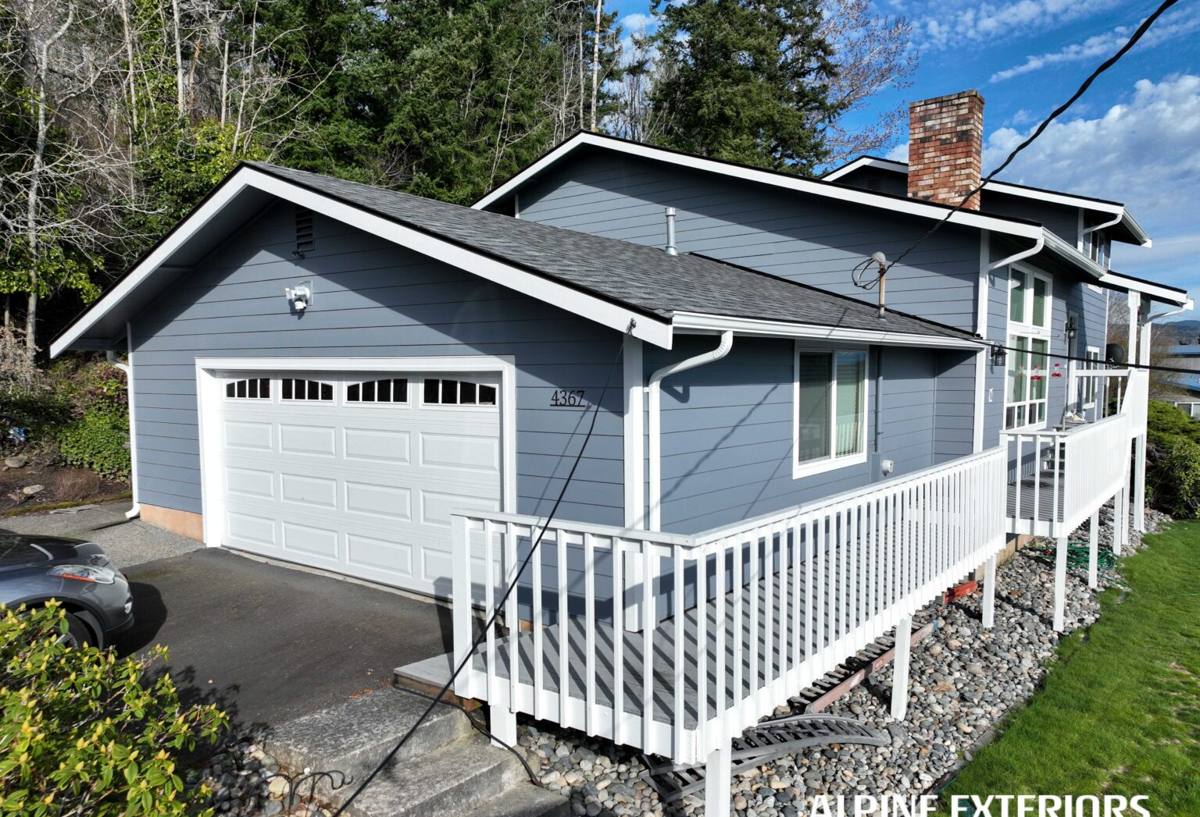
What the Local Climate Actually Does to a Roof
Driving Rain and Wind-Driven Water
Whatcom County gets plenty of straight-down rain, but the storms that roll through the lake basin often come with real wind behind them. Wind-driven rain doesn't just fall on a roof — it gets pushed sideways and upward under shingle tabs, around chimney flashing, and into any gap in the underlayment that a calmer climate could get away with ignoring. A roof built for this area needs sealed laps, properly lapped flashing, and underlayment that's rated for more than incidental moisture.
A Long Moss Season
Shade plus moisture is exactly the recipe moss needs, and Lake Samish properties under tree cover get a moss season that runs much longer than roofs out in the open. Moss isn't just cosmetic — it holds water against the roof surface, lifts shingle edges as it grows, and accelerates granule loss. A roof installed without moss-resistant materials or without attention to drainage in shaded valleys is signing up for algae and moss problems within a few years, no matter how good the shingle brand is.
Salt-Influenced Air
Being close to Samish Bay means the air here carries more salt content than roofs further inland. Salt exposure speeds up corrosion on exposed metal — fasteners, flashing, drip edge, and any hardware that isn't rated for it. We don't treat that as an edge case; it's a standard part of how we spec metal components on every roof we install in this area.
Tree Debris and Trapped Moisture
Needles, cones, and leaf litter collect in valleys and behind chimneys faster here than in open neighborhoods, and that debris holds moisture against the roofing material. Roof geometry that doesn't shed debris well, or valley flashing that isn't built to handle a steady load of organic material, turns into a maintenance headache and, eventually, a rot problem in the decking underneath.
What a Correct New Roof Installation Involves
A new roof is only as good as what happens before the first shingle goes down. On every Lake Samish install, our process includes:
- Full tear-off to bare decking — never an overlay — so we can actually see the condition of the roof deck
- Deck inspection and replacement of any soft, delaminated, or water-stained sheathing before anything else is installed
- Ice-and-water shield in valleys, around chimneys and skylights, and along eaves where wind-driven rain and debris collection are worst
- Synthetic underlayment across the full field, rated for extended exposure to moisture
- Corrosion-resistant flashing and fasteners appropriate for a near-coastal, salt-influenced environment
- Balanced intake and exhaust ventilation so the attic isn't trapping the moisture this climate already throws at the roof from outside
- Valley and drainage detailing sized for a heavier-than-average debris load
Skipping any one of these doesn't fail immediately — it fails quietly, two to five years in, as a leak that traces back to a decision made on install day.
Choosing the Right Roofing Material for a Shaded, Wet Lot
Material choice matters more here than it does on a dry, open lot. The table below reflects how common roofing materials actually perform under Lake Samish conditions specifically — shade, moss pressure, and salt-influenced air — rather than generic manufacturer claims.
| Material | Moss/Algae Resistance | Salt-Air Durability | Best Fit |
|---|---|---|---|
| Standard architectural asphalt shingle | Moderate — improves with algae-resistant granules | Good with corrosion-rated flashing and fasteners | Most homes; best value with correct detailing |
| Algae-resistant ("AR") asphalt shingle | Higher — copper- or zinc-infused granules slow growth | Good with corrosion-rated hardware | Heavily shaded lots close to the lake |
| Standing-seam metal | High — sheds moss and debris more easily due to slope surface | Requires marine-grade coatings/fasteners to hold up long-term | Steep, tree-shaded roofs with heavy debris load |
| Cedar shake | Low without diligent maintenance — retains moisture | Variable — fasteners are the weak point | Only with a real maintenance commitment; higher upkeep in this climate |
We're upfront that cedar shake, while attractive, is a harder sell on a shaded Lake Samish lot — it holds moisture longer than other materials and needs consistent upkeep to avoid moss and rot, which is more maintenance burden than most homeowners want to sign up for on a lake property. That's a maintenance and moisture-behavior tradeoff, not a knock on the material itself; it just needs an owner who's ready for the upkeep.
Our Installation Process
- On-site assessment — we walk the roof, check the attic, and note tree cover, drainage paths, and existing damage before quoting anything
- Material and ventilation plan — we recommend a shingle or metal system and ventilation layout matched to your roof's actual sun/shade exposure
- Tear-off and deck inspection — full removal of old roofing, with any compromised decking replaced and documented
- Underlayment and flashing — ice-and-water membrane in vulnerable zones, synthetic underlayment field-wide, corrosion-resistant flashing throughout
- Roofing installation — installed to manufacturer spec, with attention to valley and eave detailing for this area's debris and rain patterns
- Ventilation and cleanup — intake/exhaust balance confirmed, site cleared of debris and fasteners, gutters checked for clear flow
- Final walkthrough — we review the finished roof with you before calling the job done
Ventilation and Moisture Control Matter More Here
An attic that can't properly exhaust warm, moist air is a problem everywhere, but it's a bigger problem on a shaded lake lot where the roof surface itself is already staying wetter longer. Poor ventilation traps condensation against the underside of the decking, which speeds up rot from the inside while moss works on it from the outside. Every new roof we install here gets a ventilation check as part of the plan — not an afterthought — because on this kind of lot, ventilation is doing real work to protect the investment in the roofing material above it.
Why Hiring a Crew That Already Works Lake Samish Matters
Lake Samish properties come with practical realities that a crew unfamiliar with the area can miss: narrower access roads for material delivery and dump trailers, homes set among mature trees that require care during tear-off and disposal, and roof lines designed around lake views rather than simple gable shapes. A crew that's worked this neighborhood before knows how to stage a job here without unnecessary damage to landscaping, how to plan around tree limbs and drop zones, and what drainage and moss issues to expect before they even get on the roof.
There's also a simple accountability argument: a contractor based in and around Chuckanut and Whatcom County has a reputation in this community to protect, and is going to be reachable if something needs attention after the job is done — not a crew that worked the area once and moved on.
Signs Your Lake Samish Home May Need a New Roof
- Shingles that are cupping, curling, or losing granules faster than the roof's age would suggest
- Moss or dark algae streaking that keeps returning within a season or two of cleaning
- Soft spots, sagging, or visible daylight in the attic near valleys or chimneys
- Rusted or deteriorating flashing around penetrations and chimneys
- Interior water stains on ceilings, especially after wind-driven storms
- A roof approaching or past its expected material lifespan with no recent major repairs
Any one of these on its own might be a repair. Several together, especially on an older roof, usually means it's time to talk about replacement before a small problem becomes a decking or interior repair.
Get a Straightforward Estimate
If you're weighing a new roof for a Lake Samish property, we're happy to take a look and give you an honest read on condition, materials, and cost — no pressure, no inflated urgency. Use the form below to request a free estimate and we'll walk the roof with your home's actual exposure and tree cover in mind, not a generic checklist.