 Chuckanut Exterior
 Roof Repair Built for What Mount Vernon Weather Actually Does
Homes in Mount Vernon deal with a specific combination of stress that a lot of roofing work doesn't account for. Salt-laden air moving in off the water accelerates corrosion on exposed metal — flashing, fasteners, vent caps — long before it would wear out somewhere inland. Driving rain, often pushed sideways by wind rather than falling straight down, finds its way into laps and seams that would stay dry in a calmer climate. And a moss season that stretches across most of the year keeps roof surfaces damp and shaded for weeks at a stretch, which is exactly the environment moss and lichen need to take hold. None of this is unique to any one house — it's the baseline every roof in this part of Washington has to survive, year after year.
A roof repair that ignores these conditions tends to fail again within a season or two. One that accounts for them — using the right materials, sealing the right details, and understanding how water actually moves across a roof in this climate — holds up the way it should.
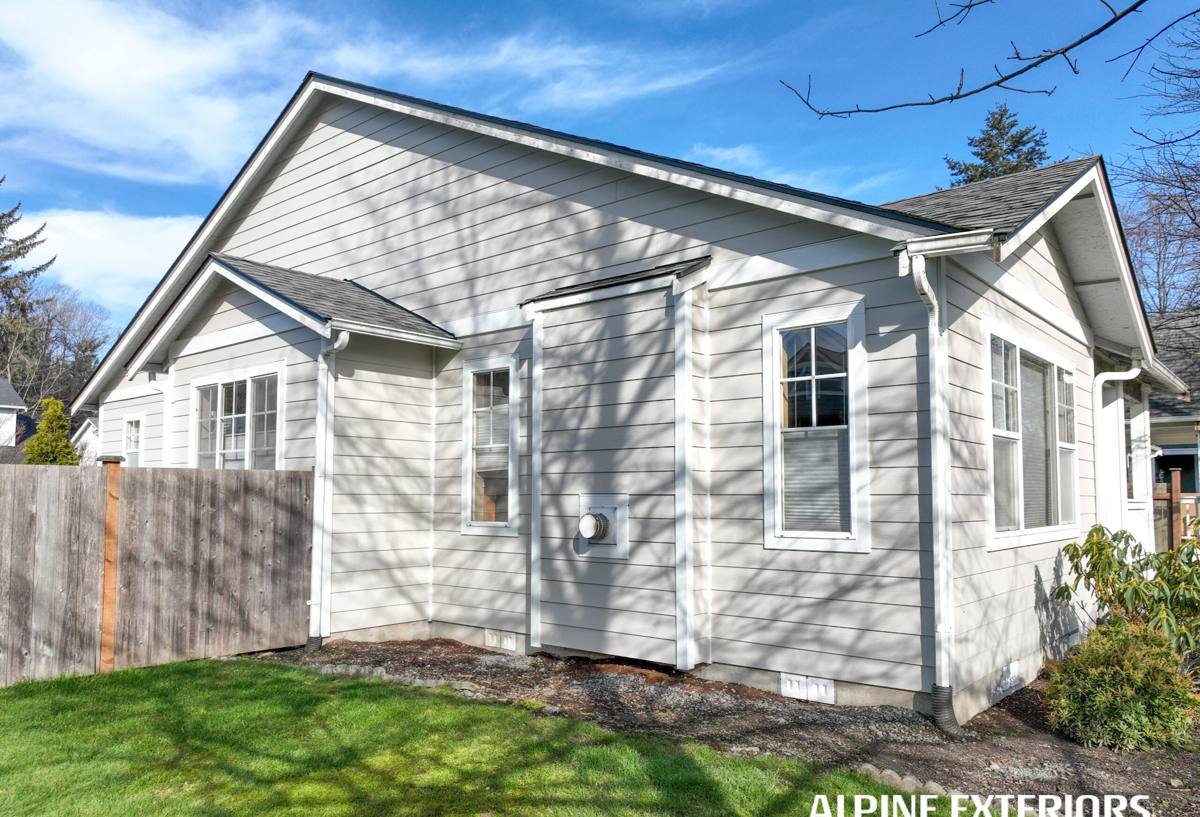
The Repair Problems We See Most Often in This Area
Moss and Trapped Moisture
Moss doesn't just sit on top of shingles — it lifts them. As moss colonies grow, they wedge shingle edges upward, break the seal strip underneath, and hold water against the roof surface long after a storm has passed. On shaded, north-facing slopes especially, this is one of the most common reasons we get called out for a leak that turns out to be moss-related rather than storm damage.
Wind-Driven Rain at Flashings and Valleys
Most leaks we trace back don't come from the open field of the roof — they come from a transition point: a valley, a chimney, a wall-to-roof intersection, a plumbing vent. Wind-driven rain can push water uphill under shingles at these spots, which means a repair that only re-seals the surface without correcting the flashing underneath is a temporary fix at best.
Granule Loss and Salt-Air Wear
Asphalt shingles rely on their granule layer for UV protection and fire resistance. Salt air combined with constant damp-dry cycling wears that layer down faster than it would in a drier inland climate, especially on south- and west-facing slopes that also take the brunt of sun exposure between rain systems. Bald patches and heavy granule loss in gutters are early warning signs, not just cosmetic wear.
What a Correct Roof Repair Actually Involves
Diagnosis Before Any Patching
Water travels. A stain on a ceiling is rarely directly below the point where water is entering the roof — it can travel along rafters, sheathing, or underlayment before showing up somewhere else entirely. We start every repair by tracing the actual entry point from the attic or roof deck side whenever possible, not just patching wherever the stain appears indoors. Patching the wrong spot means the leak keeps going and the damage keeps spreading, hidden, until it's a much bigger job.
Matching Materials, Not Just Covering the Spot
A repair should match the existing roofing system in material, profile, and fastening method — not just get something waterproof over the hole. Mismatched shingle types, incompatible flashing metals, or the wrong sealant against the existing membrane can create new problems, including galvanic corrosion between dissimilar metals, or a patch that traps moisture instead of shedding it. We also check surrounding shingles and flashing for age and condition while we're up there, since a repair site is often the first place broader wear becomes visible.
Ventilation's Role in a Lasting Repair
A repair can hold perfectly at the surface and still fail from underneath if attic ventilation is blocked or inadequate. Trapped heat and moisture in the attic accelerate the breakdown of underlayment and decking from below, which shows up later as a "new" leak in the same area. When we're already into a section of roof for a repair, we check that intake and exhaust venting are actually working, not just present.
Repair Shortcuts We Don't Rely On
There are quick options that can look like a repair without actually being one. Troweled-on roofing cement over a failed flashing detail, spray-applied roof coatings over shingles that are already past their service life, or a tarp left in place through another wet season all buy a little time, but none of them address why water is getting in. Our standard is to fix the actual failure point, even when a faster cosmetic option exists, because in this climate a shortcut tends to trap moisture rather than shed it — and often costs more to correct later than doing it right the first time.
The same standard applies to sealants and adhesives. Some products cure well in dry, moderate conditions but perform poorly when applied in the damp, cool conditions common here for much of the year. We choose materials and timing based on what will actually cure and bond correctly on a Mount Vernon roof, not just what's fastest to apply.
Signs Your Roof Needs Repair Now, Not Later
Some roof problems in this climate are obvious. Others hide until they've caused real damage to decking, insulation, or framing. Watch for:
- Granules collecting in gutters or at downspout outlets
- Moss or dark streaking concentrated on shaded or north-facing slopes
- Curling, cupping, or lifted shingle edges, especially after a windy storm
- Rust staining or visible corrosion around flashing, vents, or fasteners
- Soft or spongy spots underfoot when walking the roof, if it's safe to do so
- Daylight visible through the roof deck from inside the attic
- Water stains on ceilings or interior walls that appear or worsen during wind-driven storms specifically
- Sagging along a valley or ridge line
Any one of these on its own doesn't necessarily mean a major repair, but ignoring several at once usually turns a manageable job into a much larger and more expensive one.
Repair or Replace? How We Help You Decide
Not every roof problem calls for a full replacement, and not every leak can be solved with a patch. The right call depends on the roof's age, how widespread the damage is, and what's actually happening underneath the surface layer.
| Factor | Leans Toward Repair | Leans Toward Replacement |
|---|---|---|
| Roof age | Within its expected service life | At or past expected service life |
| Extent of damage | Isolated to one area or detail | Spread across multiple slopes |
| Decking condition | Solid, dry sheathing | Soft, rotted, or delaminated sheathing |
| Moss and algae coverage | Limited, surface-level growth | Widespread, actively lifting shingles |
| Repair history | First or second repair in this area | Same area repaired repeatedly |
| Underlayment condition | Intact where accessible | Brittle, torn, or missing |
We'll always tell you honestly which side of that line your roof falls on, including when a repair is the right call even though a full replacement would bring in more revenue for us. A roof that only needs a repair doesn't need to be sold a full tear-off, and we're not in the business of manufacturing bigger jobs.
Our Roof Repair Process
- Inspection. We examine the roof surface, flashing details, attic or deck side where accessible, and the areas surrounding the reported problem, not just the spot itself.
- Written explanation. Before any work starts, we explain what's actually failing, why it's failing, and what the repair will involve, in plain language and with no pressure to add extra work.
- Repair. We remove and replace damaged materials rather than layering new material over old, correct any flashing or underlayment issues we find along the way, and match materials to the existing roof system.
- Moss and debris clearing. If moss or organic growth contributed to the problem, we clear it from the repair area and the surrounding roof surface as part of the job, not as a separate upsell.
- Final check. We walk the completed repair and the surrounding roof area to confirm the fix holds and nothing nearby was missed or left for next season.
Why Local Experience in Mount Vernon Matters
A roofing crew that only occasionally works this area learns the region's weather patterns in theory. A crew that works Mount Vernon regularly learns it firsthand: which slopes hold moss longest through the year, which flashing details tend to fail first under wind-driven rain, and how quickly a small leak can turn into decking damage if it sits through even one more wet season. That kind of pattern recognition shortens the diagnosis phase and helps us catch related problems before they turn into their own separate repair calls down the road.
It also means we're not guessing at material choices. We've seen which products and installation details actually hold up to sustained salt air and near-constant damp conditions here, and which ones need more frequent attention than a general specification sheet might suggest — and we'll tell you that honestly rather than defaulting to whatever is easiest to install or sell. A crew that regularly works this stretch of Washington also means a faster response when a storm causes damage, instead of waiting behind a schedule built around a different region entirely.
Keeping a Repaired Roof Sound Between Service Visits
A well-executed repair still benefits from basic upkeep, especially in a climate where moss and moisture are a constant pressure rather than an occasional event.
Keeping gutters clear so water actually leaves the roof instead of backing up under shingle edges, trimming back overhanging branches that keep sections of roof shaded and damp for longer than they need to be, and having the roof looked at after any major windstorm are the simplest ways to protect a repair and catch the next issue early, before it turns into a bigger job. None of this requires a service contract, just periodic attention from someone who knows what a healthy roof in this climate is supposed to look like.
If you're dealing with a leak, visible moss, storm damage, or just a roof that's due for an honest look, we're happy to come take a look at your Mount Vernon home. The estimate is free, there's no pressure to move forward, and if a simple repair is genuinely the right fix, that's what we'll recommend — just fill out the form below to get started.