 Chuckanut Exterior
 Mount Vernon's Climate Doesn't Forgive Bad Siding
Homes in and around Mount Vernon sit in a stretch of the Salish Sea lowlands where the weather works against exterior surfaces almost year-round. Salt-laden air off the water, long stretches of driving rain, and a moss season that can run from fall through spring all put steady pressure on whatever material is on your walls. Siding here doesn't just need to look good on install day — it needs to hold its finish, resist moisture intrusion, and keep organic growth from getting a foothold for decades.
We work this area regularly, and the pattern is consistent: siding failures we get called out for are almost never about one bad storm. They're about materials or installation details that couldn't keep up with year after year of wet, salt-influenced weather. That's the lens we bring to every fiber cement siding project in Mount Vernon.
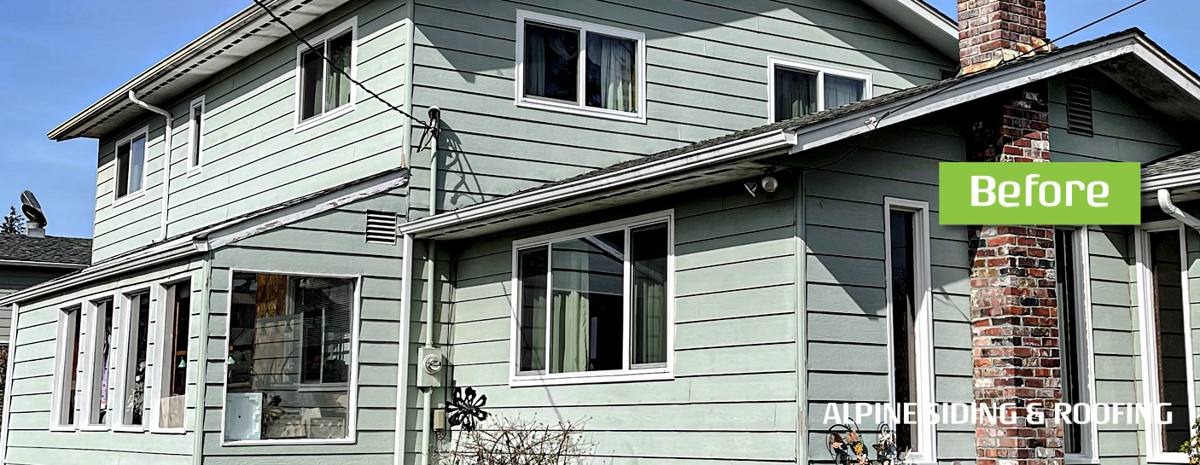
Why We Only Install James Hardie Fiber Cement
Chuckanut Exterior Company installs one siding system: James Hardie fiber cement. We don't offer vinyl, LP SmartSide, Cemplank, Allura, or primed wood siding, and that's a deliberate standard, not a limitation on what we're capable of installing. Each of those alternatives has trade-offs — vinyl can warp and fade and offers little real protection against moisture behind it; engineered wood products rely on factory coatings and edge-sealing that are unforgiving of field mistakes; primed wood needs ongoing repainting to stay protected. In a climate like Skagit Valley's, those trade-offs show up faster and cost homeowners more over time.
Built for Wet, Salt-Influenced Climates
James Hardie manufactures regionally engineered product lines, and the HZ5 formulation used in the Pacific Northwest is built specifically for high-moisture, marine-influenced climates like ours. It resists moisture absorption far better than wood-based products, won't rust or corrode from salt exposure the way some fasteners and trim materials can, and is non-combustible — a meaningful consideration as wildfire smoke and dry-season fire risk have become a bigger part of Washington summers even on the wet side of the state.
ColorPlus Technology Holds Up to Moss and Mildew Pressure
Most of what we install carries Hardie's ColorPlus factory finish rather than field-applied paint. It's baked on in a controlled environment, adheres more consistently than paint applied on-site in variable weather, and holds color longer under UV and moisture cycling. In a region with a long moss season, a durable, consistent finish matters — moss and algae get a grip more easily on surfaces with uneven coverage or chalky, aging paint, and a compromised finish is often the first sign a siding job is starting to fail.
What a Correct Fiber Cement Installation Actually Involves
Fiber cement is a forgiving material once it's on the wall, but it's unforgiving of shortcuts during installation. Most siding problems we see on this material trace back to installation details, not the product itself.
Moisture Management Comes First
Before a single piece of siding goes up, the wall needs a correctly lapped weather-resistant barrier, properly flashed windows and doors, and flashing or kick-out details at every roof-to-wall intersection. In a climate that sees as much driving rain as ours, water management behind the siding matters at least as much as the siding itself. Skipping or rushing this step is the single most common cause of hidden rot we find when we tear off older siding.
Fastening, Gaps, and Clearances
James Hardie specifies exact fastener types, spacing, and penetration depth, along with minimum clearances from grade, roof lines, and decks. Panels need consistent gapping at butt joints and around penetrations, sealed with the right sealant — not caulked over gaps that are too wide or nailed too tight, which can cause cracking. These are small details, but they're the difference between siding that performs for its full service life and siding that starts showing problems in five to ten years.
Our Process for Mount Vernon Projects
We follow the same disciplined process on every home, adjusted for the specific exposure and condition of the house.
- On-site assessment of the existing siding, sheathing, and any moisture damage, with photos and a written scope
- Removal of old siding and inspection of the sheathing and weather barrier underneath
- Repair of any water-damaged sheathing or framing found during tear-off, documented before we cover it back up
- Installation of a new weather-resistant barrier and correct flashing at all windows, doors, and roof intersections
- Installation of James Hardie fiber cement panels or lap siding to manufacturer spec, with correct fastening and clearances
- Trim, caulking, and touch-up paint at cut edges to protect against moisture intrusion at seams
- Final walkthrough and cleanup
We don't skip the tear-off and inspection step, even when it would be faster to side over what's already there. In a climate where hidden moisture damage is common, covering up a problem instead of finding it just delays a much more expensive repair.
What Drives the Cost of a Fiber Cement Siding Project
Every home is different, but the same handful of factors explain most of the cost variation we see on Mount Vernon-area projects.
| Cost Factor | Why It Matters |
|---|---|
| Condition of existing sheathing | Rot or moisture damage found during tear-off adds repair work before new siding can go on |
| Home size and wall complexity | More corners, dormers, and roof intersections mean more cutting, flashing, and labor time |
| Siding profile (lap, panel, shingle-style) | Different profiles have different material and installation labor requirements |
| Trim and accent work | Fascia, soffit, and trim details add material and time beyond the field siding itself |
| Access and site conditions | Steep lots, tight setbacks, or limited equipment access can affect labor time |
We give straightforward, itemized estimates so you can see what's driving the number, not a single lump figure that leaves you guessing.
Why Hiring a Crew That Already Works This Area Matters
Siding installed to a generic national spec doesn't always account for local conditions. A crew that regularly works Skagit Valley and the surrounding Whatcom County coastline understands how much moisture control and detailing matter here versus in a drier inland climate, where the same shortcuts might not show up as problems for years, if ever. We know what wall assemblies tend to look like on homes of the age and construction common in this area, and we plan flashing and moisture management accordingly rather than applying a one-size-fits-all approach.
Local presence also matters after the job is done. If a question comes up about a warranty claim, a touch-up, or how the siding is holding up after a few wet winters, you're dealing with a crew that's still working in your area, not chasing down a company that moved on to other regions.
Maintenance Through a Long Moss Season
Fiber cement siding is low-maintenance compared to wood, but "low-maintenance" doesn't mean "no maintenance" in a climate like this one. A few habits go a long way:
- Keep gutters clear so water doesn't sheet down the wall face during heavy rain
- Trim back vegetation and tree cover that keeps siding shaded and damp longer than it should be
- Rinse siding periodically to keep moss, algae, and airborne salt residue from building up on the surface
- Check and re-caulk seams around trim and penetrations every few years as part of routine upkeep
- Address any cracked or damaged panels promptly rather than letting moisture find a way behind them
None of this is heavy work, but staying on top of it is what lets a correctly installed Hardie system reach the long service life it's designed for in this climate.
Questions to Ask Before You Hire a Siding Crew
- Are you a certified or experienced James Hardie installer, and can you explain their installation spec?
- Will you remove the old siding and inspect the sheathing, or side over what's already there?
- How will you handle flashing at windows, doors, and roof intersections?
- What does your written estimate include — trim, caulking, touch-up paint, cleanup?
- Do you carry the insurance and licensing required to work in Skagit County?
- What does the manufacturer warranty cover, and what does your workmanship warranty cover separately?
A contractor who's confident in their process should be able to answer all of these clearly and specifically, not with vague reassurances.
If your Mount Vernon home's siding is past its prime, showing moss buildup, or you're just planning ahead for a replacement, we're glad to come take a look. Fill out the form below for a free, no-pressure estimate — we'll walk the exterior with you, explain what we see, and give you a straightforward scope and price for James Hardie fiber cement siding built for this climate.