 Chuckanut Exterior
 Metal Roofing Built for the Edison Stretch of Chuckanut
Homes along the Edison side of the Chuckanut corridor sit in one of the more demanding microclimates in Whatcom County. You've got salt-laden air rolling in off the water, long stretches of driving rain through the fall and winter, and a moss season that seems to start earlier and last longer every year. A roof out here isn't just shedding water — it's fighting corrosion, biological growth, and wind-driven moisture all at once. Asphalt shingles can handle a lot, but metal roofing, installed correctly, handles this specific combination of stressors better than almost anything else on the market.
This page is about one thing: what a metal roof needs to actually perform on an Edison-area home, and what our crew does differently because we already work this stretch of Chuckanut regularly.
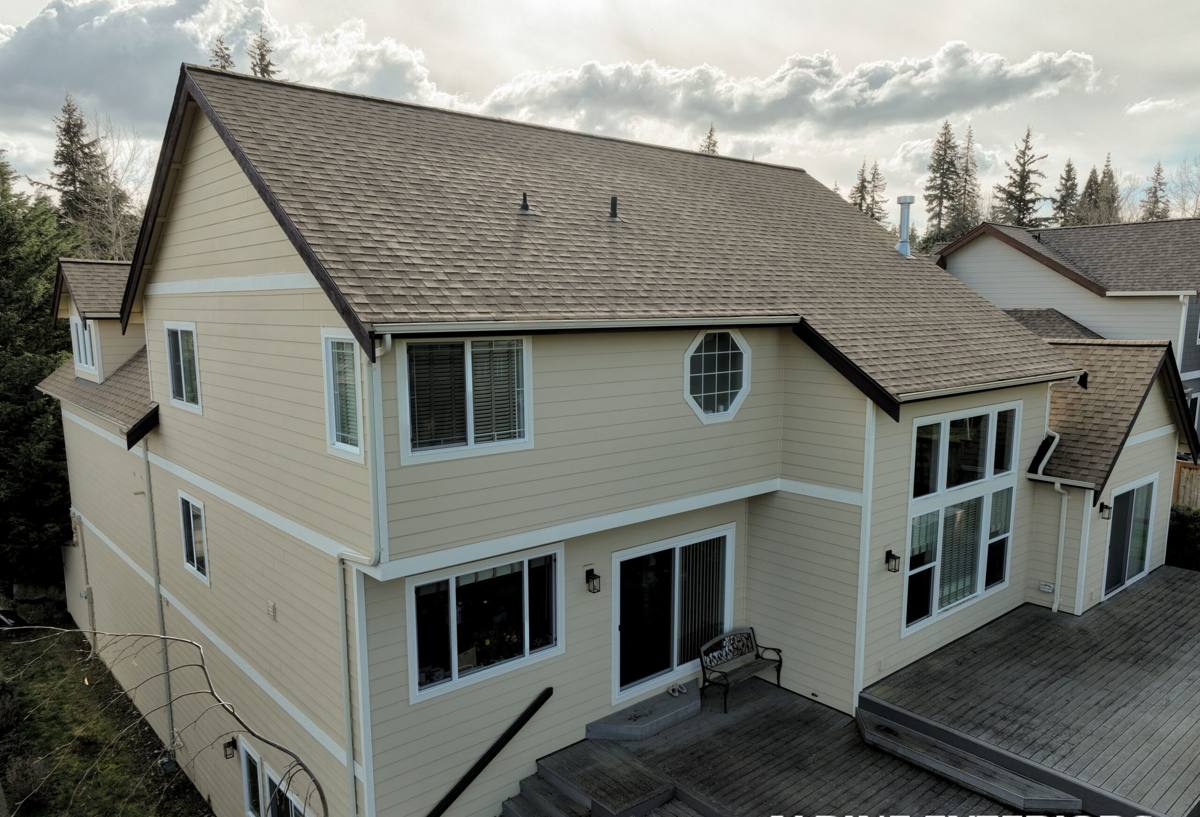
Why This Climate Is Hard on a Roof
Three factors show up together here more than in most parts of the county, and each one affects a different part of the roof system.
Salt Air
Proximity to saltwater accelerates corrosion on anything with exposed metal — fasteners, flashing, valleys, and panel edges. This doesn't mean metal roofing is a bad choice near the water; it means the metal, coating, and fastener spec matter a lot more here than they would fifty miles inland. Bare or poorly coated steel will show rust streaking years before a properly specified system would.
Driving Rain
Wind off the water pushes rain sideways, not just straight down. That changes how water behaves at laps, valleys, and penetrations. A roof that would shed water fine in a calm rain can still take on moisture at those points if the underlayment and flashing details weren't built for wind-driven conditions.
Moss Season
Shaded, north-facing slopes and the damp, mild winters common in this part of the state keep moisture sitting on roof surfaces for weeks at a time. Moss and algae take hold in that environment. On shingles, moss roots into the granules and lifts them. On metal, moss can't root the same way, but it can still hold moisture against the surface and shorten the life of a coating if the roof was never designed to shed water and dry quickly.
Panel Types We Install and How They Compare
Not every metal roofing product is a good match for a salt-air, high-moisture site. We steer homeowners toward systems with proven coastal performance and away from products that look similar but cut corners on coating or fastening.
| Panel Type | Best For | Coastal Durability | Typical Maintenance |
|---|---|---|---|
| Standing seam (concealed fastener) | Full roof replacements, homes wanting the cleanest look and longest service life | Excellent — no exposed fasteners to corrode | Low; periodic inspection of flashing and sealant points |
| Exposed-fastener metal panels | Outbuildings, shops, budget-conscious projects | Fair — fasteners and washers are the weak point near salt air | Moderate; fastener washers need periodic checking and eventual replacement |
| Stone-coated steel | Homeowners wanting a shake or shingle look with metal's durability | Good, provided cut edges and fasteners are properly coated | Low to moderate |
| Aluminum panel systems | Sites with the heaviest salt exposure | Very good — aluminum doesn't rust the way steel can | Low |
For most Edison-area homes we recommend standing seam in a coastal-rated finish. The lack of exposed fasteners removes the single most common point of long-term corrosion, and the panel's continuous runs give wind-driven rain fewer places to work its way in.
What a Correct Metal Roof Install Actually Involves
Metal panels get most of the attention, but the panel is only as good as everything underneath and around it. This is where a lot of the difference between a roof that lasts and one that fails early actually shows up.
Deck Inspection and Repair
Before anything goes down, the roof deck gets checked for soft spots, rot, or prior water damage — especially around old vent penetrations and valleys where past leaks tend to concentrate. Metal panels are unforgiving of an uneven or compromised deck; fastening into soft wood is one of the more common causes of early failure.
Underlayment Choice
Given how much wind-driven rain this area sees, we don't treat underlayment as an afterthought. A high-temperature, self-adhering synthetic underlayment at eaves, valleys, and penetrations gives the roof a second line of defense if wind ever pushes water past the panel laps.
Fastener and Flashing Spec
In a salt-air environment, fastener material matters as much as the panel itself. We spec corrosion-resistant fasteners and match flashing metal to the panel metal where possible, since dissimilar metals in contact can accelerate corrosion at the exact points where a roof is most vulnerable — valleys, headwalls, and chimney or vent flashing.
Ventilation
A well-vented attic keeps moisture from building up under the deck, which matters for both the roof structure and for controlling condensation on the underside of metal panels. Ridge and soffit venting get checked and corrected as part of the install, not treated as separate from the roofing work.
Our Process for an Edison Metal Roof Project
- On-site assessment. We walk the roof, check the deck and current flashing, and talk through what your home's exposure — shading, slope direction, proximity to water — actually calls for.
- Tear-off or overlay decision. Most metal roof installs over an aging shingle roof call for a full tear-off so we can inspect and repair the deck. We'll tell you honestly if your situation is an exception.
- Underlayment and flashing installed first. This is the step that determines how the roof handles wind-driven rain, and it's done before a single panel goes down.
- Panel installation. Panels are run, seamed, and fastened to spec, with valleys, ridges, and penetrations detailed individually rather than covered with generic trim.
- Cleanup and walkthrough. Job site is cleaned, magnetic sweep done for stray fasteners, and we walk the finished roof with you before calling it done.
Living With a Metal Roof in Moss Season
A correctly installed metal roof drastically reduces moss problems compared to shingles, but it doesn't make the site's growing conditions disappear. Shaded, north-facing sections can still collect organic debris and moisture at valleys and behind chimneys.
- Keep overhanging branches trimmed back so roof surfaces get more light and airflow
- Clear needles and leaf debris from valleys and gutters at least twice a year
- Check for standing moisture at low-slope transitions after extended wet stretches
- Have flashing and sealant points inspected every few years, not just when a leak shows up
- Avoid pressure washing panel finishes directly — it can damage coatings and force water under laps
What Drives the Cost of a Metal Roof Here
| Factor | Why It Matters |
|---|---|
| Panel material (steel vs. aluminum) | Aluminum costs more but resists salt-air corrosion better long-term |
| Roof complexity | More valleys, dormers, and penetrations mean more custom flashing labor |
| Deck condition | Rot or soft decking found during tear-off adds repair costs before panels can go on |
| Fastening system | Concealed-fastener standing seam costs more upfront but lowers long-term maintenance |
| Access and site conditions | Steep slopes, tree cover, or difficult staging areas affect labor time |
We won't quote a number without seeing the roof — anyone who does is guessing. What we can tell you honestly is that metal costs more upfront than asphalt, but in a salt-air, high-moisture site like Edison, the reduced maintenance and longer service life usually make it the better long-term value, not just the better-looking one.
Why Hire a Crew That Already Works Edison
Roofing crews that mostly work inland don't always think about dissimilar-metal corrosion, wind-driven rain at laps, or how shaded valleys behave in a wet, mild winter — because those aren't daily problems where they usually work. Out here, they are. We spec fasteners, flashing metal, and underlayment with this specific stretch of Whatcom County's climate in mind, not a generic inland install. That's not a sales pitch — it's the difference between a roof that needs attention in five years and one that doesn't.
Warranty and Material Honesty
Manufacturer warranties on metal roofing vary widely by product and finish, and coastal exposure can affect what's actually covered — some manufacturers treat proximity to saltwater as a separate warranty condition. We go over the specific warranty terms for whatever product we're recommending before you sign anything, including any coastal exposure clauses, so there are no surprises later.
If you're weighing a metal roof for a home in the Edison area, we're happy to take a look and give you a straight, no-pressure assessment of what your roof actually needs. Use the form below to request a free estimate.