 Chuckanut Exterior
 Why Larrabee Roofs Wear on a Different Schedule
Homes in the Larrabee area, tucked along the wooded, water-facing terrain near Chuckanut, don't age the same way a roof does twenty miles inland. Three things stack on top of each other here: salt-laden air moving off the water, long stretches of driving rain that come in sideways during winter storms, and heavy tree cover that keeps roofs shaded, damp, and slow to dry out. Any one of those is manageable on its own. Together, over enough winters, they shorten the life of a roofing system that was never quite matched to the site in the first place.
We're not describing a hypothetical. It's the pattern we see on tear-offs throughout this stretch of Whatcom County: shingles that look fine from the ground but have lost their granules early, fasteners that have started to corrode ahead of schedule, and decking that's gone soft in the shaded valleys where moss has been sitting the longest. A correctly installed roof in Larrabee has to account for all of that from day one — it's not something you patch in later.
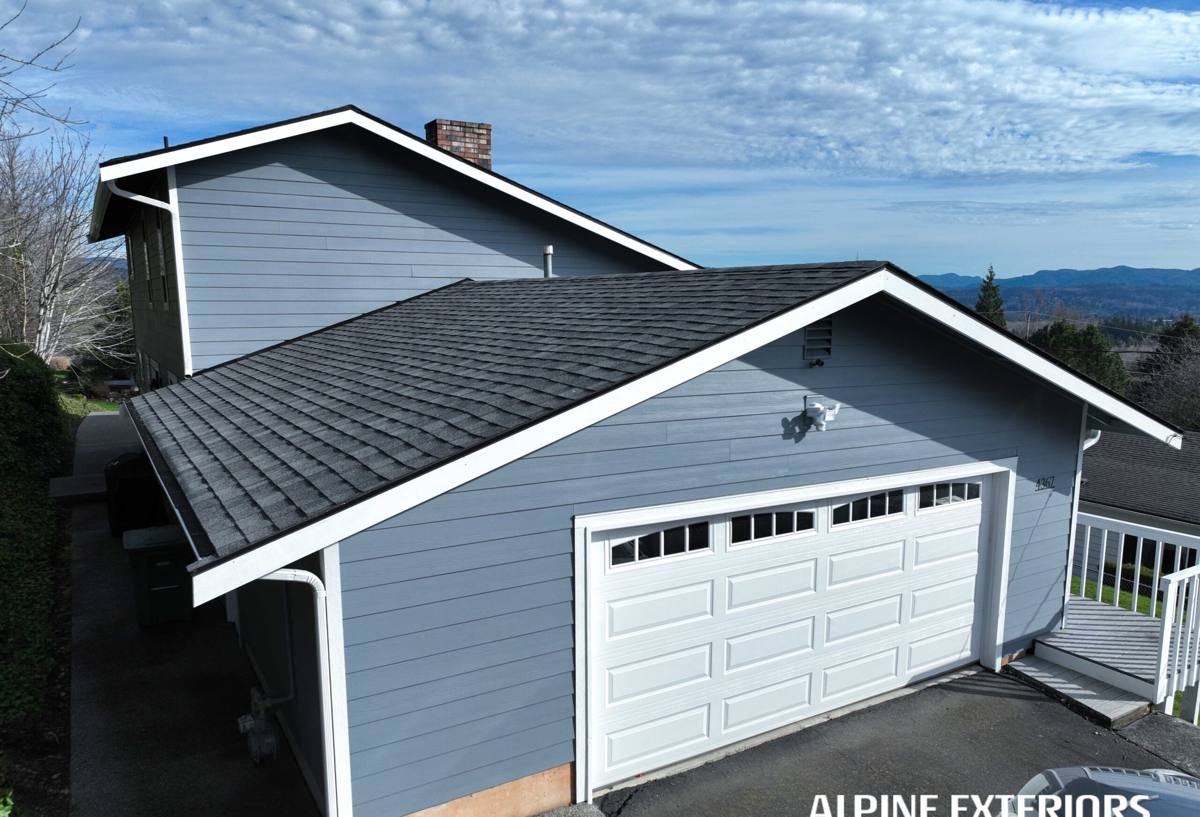
What "Correct" Actually Means on a New Roof Installation
A new roof is more than shingles nailed to a deck. The materials you can see account for maybe half of how long the system lasts. The other half is in the details most homeowners never get shown — the underlayment, the flashing, the ventilation, and how well the crew reads the specific exposure of your house before they start.
Tear-Off and Deck Inspection
Every legitimate new roof installation starts with a full tear-off down to the deck. This is the only point in the project where anyone can actually see the plywood or plank sheathing underneath — and in a climate like this, that inspection matters. Damp or rotted decking gets replaced board by board before anything new goes down. Skipping this step, or "re-roofing" over an old layer, is how homeowners end up with a roof that looks new but is failing from underneath within a few years.
Underlayment and Moisture Barriers
In a region that sees this much sustained rain, we treat the underlayment as a real second line of defense, not a formality. That typically means a synthetic underlayment across the full roof, with self-adhered ice-and-water membrane at the vulnerable points — eaves, valleys, and around any penetration — where wind-driven rain is most likely to find a way in.
Flashing Details
Flashing is where most roof leaks actually start, not in the field of the shingles. Chimneys, skylights, dormers, and roof-to-wall transitions all need step flashing, counterflashing, or kickout flashing installed correctly and sealed — not just caulked over an old piece that was left in place to save time.
Ventilation
A roof deck that can't breathe stays damp longer after every storm, which is exactly the condition that lets moss and algae take hold. Balanced intake at the eaves and exhaust at the ridge keeps air moving through the attic space, which protects both the roof deck and the insulation below it.
Materials That Actually Hold Up Near the Water
There's no single "best" roofing material for every home — it depends on your roof's pitch, exposure to wind and salt air, budget, and how the house is built. Here's how the common options compare for a coastal, tree-shaded property like the ones we see throughout Larrabee and Chuckanut.
| Material | Typical Lifespan | How It Handles This Climate |
|---|---|---|
| Architectural asphalt shingle | 25–30 years | Good value, wide color range; needs solid ventilation and periodic moss treatment to hit its full lifespan in shaded, damp areas |
| Standing seam metal | 40–50+ years | Sheds rain and moss growth well due to its smooth, steep-shedding surface; higher upfront cost, strong long-term value near salt air when properly coated |
| Composite/synthetic shake | 30–50 years | Mimics traditional wood shake appearance without the same moisture absorption and rot risk that untreated wood faces in a wet climate |
| Cedar shake (natural) | 20–30 years with upkeep | Attractive, traditional look; requires more diligent maintenance and periodic treatment to resist moss and moisture in a climate this consistently wet |
We'll walk you through the honest trade-offs for your specific roof rather than pushing one product line. A steep, sun-exposed roof and a low-pitched, heavily shaded one can call for two different answers even on the same street.
Our Installation Process, Start to Finish
- On-site assessment — we walk the roof and attic, note pitch, exposure, existing ventilation, and any signs of past moisture damage.
- Written scope and material selection — you get a clear, itemized plan before any work begins, with material options explained in plain terms.
- Tear-off — full removal of the old roofing down to the deck, with debris contained and hauled off site.
- Deck repair — any soft, delaminated, or rotted sheathing is replaced before underlayment goes down.
- Underlayment and flashing — ice-and-water membrane at vulnerable points, synthetic underlayment across the field, new flashing at every penetration and transition.
- Ventilation check — intake and exhaust are verified or upgraded to balance airflow through the attic.
- Roofing installation — materials installed to manufacturer specification, not just "close enough," since that spec is what keeps the warranty valid.
- Final walkthrough — we go over the finished roof with you, including care and maintenance specific to your material and site.
Moss, Algae, and the Long Wet Season
Moss isn't just a cosmetic issue in this part of Whatcom County — it's a moisture-retention problem. Once moss establishes itself on a roof, it holds water against the surface long after the rest of the neighborhood has dried out, and its root structure works into shingle granules and seams over time. Roofs under heavy tree cover, which describes a lot of properties around Larrabee and the wooded stretches near Chuckanut, are especially prone to this because they get less direct sun to dry them between storms.
A new installation can be designed to fight this from the start — smoother-surfaced materials, strategic placement of zinc or copper strips near the ridge where rain washes moss-inhibiting minerals down the roof face, and ventilation that keeps the deck drier overall. None of this eliminates the need for occasional cleaning and gutter maintenance, but it meaningfully slows how fast moss takes hold.
Signs Your Roof Needs Replacement, Not Another Repair
Homeowners often ask us to patch a leak, only to find the roof is past the point where patching makes sense. These are the signs worth taking seriously:
- Shingles that are cupping, curling, or losing granules in patches, especially on shaded slopes
- Daylight visible through the attic roof deck, or damp insulation after storms
- Soft or spongy spots underfoot when walking the roof
- Moss or algae that returns within months of being cleaned
- Flashing that's rusted, cracked, or was never properly step-flashed to begin with
- A roof that's approaching or past the upper end of its material's expected lifespan
- Repeated leaks in different spots each winter rather than one isolated failure
If you're seeing two or more of these, a repair is usually a short-term fix on a system that's already telling you it's done.
What Affects the Cost of a New Roof Installation
We don't publish a flat price because no two roofs in this area are the same — but the honest range for a full tear-off and replacement on an average home typically runs from the high four figures to the low five figures for asphalt systems, with metal and specialty materials running higher. The real cost drivers are:
| Factor | Why It Matters |
|---|---|
| Roof size and number of planes | More squares and more valleys/hips mean more material and labor |
| Deck condition | Hidden rot or soft sheathing found during tear-off adds repair cost, but it's cheaper to fix now than to build a new roof over a bad deck |
| Pitch and access | Steep roofs or homes with difficult access take longer and require more safety setup |
| Material choice | Asphalt, metal, and composite shakes carry different material and labor costs |
| Ventilation and flashing upgrades | Bringing older, undersized ventilation up to a proper standard adds some cost but protects the whole system |
We give you the real number for your roof after a walkthrough, not a phone-estimate guess.
Why a Crew That Already Works Larrabee Matters
A roofing crew that mainly works dry, inland neighborhoods will still build you a technically fine roof — but they may not think twice about the extra ice-and-water coverage at a shaded valley, or where moss tends to collect first on a roof facing the water. Crews who work this stretch of Whatcom County regularly see the same patterns year after year: which slopes stay wet longest, which flashing details fail first under driving rain, and which materials actually hold up once the salt air and tree shade go to work on them. That local pattern-recognition is what keeps a new roof performing in year fifteen the same way it did in year one.
If you're weighing a new roof for your Larrabee-area home, we're happy to take a look and give you a straight, no-pressure estimate. Fill out the form below and we'll set up a time to walk the roof with you.