 Chuckanut Exterior
 Why Board & Batten Fits Larrabee Homes
Larrabee sits close enough to the water and the tree line that its homes deal with a specific combination of weather most inland Whatcom County properties don't see: salt-carrying wind off the bay, long stretches of driving rain, and shaded, damp conditions that keep moss and moisture around far longer than a sunnier lot would. Board and batten siding — with its bold vertical lines and deep shadow reveals — has always suited this kind of setting, both because it reads well against timber and coastline surroundings and because, done right, its overlapping board-and-strip design sheds water more predictably than a flat panel profile. The look is only half the story, though. On a property like this, the material underneath the battens matters as much as the pattern on top.
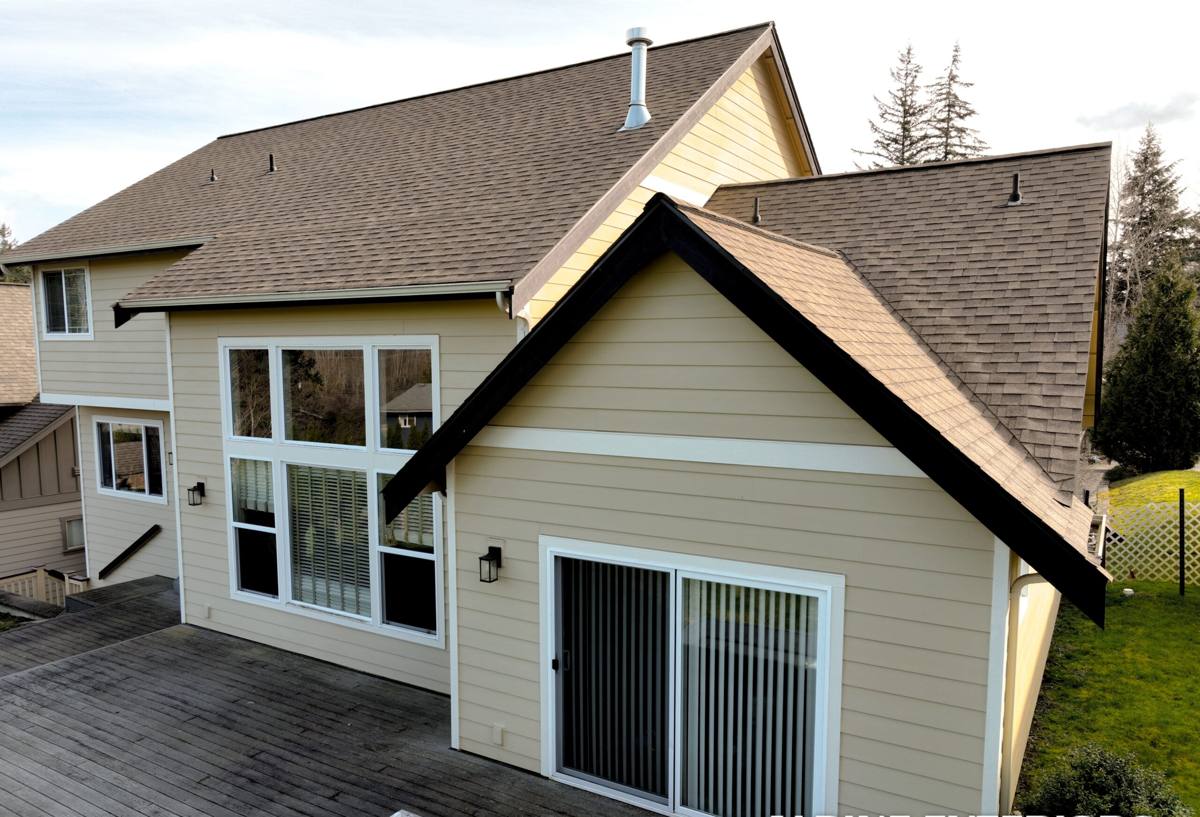
What Larrabee's Climate Actually Does to Siding
Before talking about installation, it's worth being specific about what this location does to exterior materials over time, because it explains most of the decisions that follow.
Salt Air
Airborne salt from the water accelerates corrosion on fasteners, flashing, and any metal trim, and it slowly breaks down finishes that aren't formulated to resist it. Paint film that would hold up fine twenty miles inland can chalk, fade, or lift years earlier in a salt-exposed location like this.
Driving Rain
Wind-driven rain doesn't just fall on a wall — it gets pushed sideways into every seam, joint, and butt edge. Vertical siding profiles like board and batten have more horizontal joints than lap siding does, per square foot, so every one of those joints needs to be detailed correctly or it becomes a water entry point.
A Long Moss Season
Shaded lots and persistent damp mean moss and algae get a long growing season here — often close to year-round on north-facing walls or areas under tree cover. Moss holds moisture against the surface it grows on, which is a much bigger problem for a material that absorbs water than for one that doesn't.
Why We Only Install Board & Batten in James Hardie Fiber Cement
Board and batten is available in several materials, and we get asked about most of them. We install it exclusively in James Hardie fiber cement, and in a climate like Larrabee's, that's not a brand preference — it's a response to how each material actually behaves in salt air, standing moisture, and moss coverage over the long run.
- Primed spruce or cedar board and batten is real wood, and real wood absorbs water. Under moss and in driving rain, that means ongoing risk of swelling, cupping, and rot at butt joints and the base of battens unless it's repainted and recaulked on a strict schedule.
- Vinyl board and batten resists rot, but it's a thin, flexible material that can warp or buckle with heat and cold cycling, and its color is baked in rather than field-refinished — once it fades or gets brittle from UV and salt exposure, there's no repainting your way out of it.
- LP SmartSide is an engineered wood product, meaning it's still wood-based at its core with a resin-treated strand structure. It holds up better than raw lumber, but it still relies on an intact factory coating and careful joint sealing to keep moisture out — a real vulnerability in a wind-driven-rain environment.
James Hardie fiber cement is non-combustible and cement-based rather than wood-based, so it doesn't swell, rot, or feed the moss the way organic siding materials do. Its ColorPlus factory finish is baked on under controlled conditions and is formulated to hold color and resist the fading that comes with salt air and UV exposure — and Hardie's HZ product lines are engineered specifically for wetter, more humid climates like the Pacific Northwest coast. It's the standard we're comfortable putting our name behind on a property with Larrabee's exposure.
What Correct Board & Batten Installation Involves
Board and batten looks simple from the ground, but it has more failure points than lap siding if it's rushed. A correct install on a home in this area includes:
Water Management Behind the Siding
A weather-resistant barrier and properly lapped, taped seams go on before any siding, with rainscreen furring strips behind the battens where the wall assembly calls for it. This gives any moisture that does get past the surface a path to drain and dry instead of sitting against the sheathing.
Fastening and Layout
Battens and boards are fastened per Hardie's engineering specifications — correct fastener type, spacing, and embedment depth — with layout planned around window and door openings so cut edges land in places that get properly flashed and caulked, not buried where a leak would go unnoticed.
Joint and Trim Detailing
Every horizontal butt joint, inside corner, and trim intersection is flashed or sealed with the coastal exposure in mind. This is the detail that separates a board and batten job that looks good for a season from one that holds up through a decade of driving rain.
Board & Batten vs. Other Siding Profiles for a Property Like This
| Factor | Board & Batten (Hardie) | Lap Siding (Hardie) | Wood/Engineered Board & Batten |
|---|---|---|---|
| Water shedding at joints | Good, if detailed correctly | Very good — fewer horizontal joints | Depends on coating upkeep |
| Moss/algae resistance | High — non-organic substrate | High — non-organic substrate | Lower — organic material feeds growth |
| Salt air finish durability | Strong — factory ColorPlus finish | Strong — factory ColorPlus finish | Weaker — relies on field paint/coating |
| Look | Bold, vertical, farmhouse/coastal | Traditional horizontal | Same look, different durability |
Board and batten and lap siding perform similarly well when both are Hardie fiber cement — the choice between them is mostly aesthetic. The bigger performance gap is between fiber cement and organic materials in this exact profile, since board and batten's joint pattern gives water more opportunities to find a weak point.
Maintenance in a Moss-Prone, Salt-Air Environment
Fiber cement board and batten still needs basic upkeep, just far less of it than wood or vinyl alternatives:
- Rinse the exterior periodically to clear salt residue and early moss growth, especially on shaded or north-facing walls
- Keep gutters and downspouts clear so runoff doesn't sheet down the siding face
- Trim back vegetation and tree cover that keeps a wall section damp longer than the rest of the house
- Have caulking at trim and joints checked every few years, since sealant is the one component that ages faster than the siding itself
- Watch for any hairline gaps at butt joints after the first couple of winters and have them resealed before a small gap becomes a bigger one
Our Process, Start to Finish
| Step | What Happens |
|---|---|
| Estimate & Walkthrough | We assess the existing wall assembly, exposure, and any moisture or moss issues specific to the property |
| Product & Color Selection | Board width, batten spacing, and ColorPlus finish selected for the home |
| Prep & Water Barrier | Old siding removed, sheathing inspected, weather-resistant barrier and rainscreen installed |
| Installation | Boards and battens installed to Hardie fastening specs with full joint and trim flashing |
| Final Walkthrough | Full inspection of seams, corners, and trim before the job is signed off |
Why Hiring a Crew That Already Works This Area Matters
A crew that regularly works Larrabee and the surrounding Chuckanut area already knows which walls take the worst of the driving rain, which lots hold moss longest, and how much clearance a rainscreen assembly needs to actually perform in this exposure. That's not something you can fully substitute with a generic install checklist — it comes from having done the work here before and seen what holds up. It also means faster, more accurate estimates, since we're not guessing at how the coastal exposure and tree cover on a given lot will affect the job.
A Quick Checklist Before You Hire
- Confirm the installer works in fiber cement board and batten specifically, not just lap siding
- Ask how they detail horizontal joints and trim intersections for wind-driven rain
- Ask whether a rainscreen or furring assembly is included, not just house wrap alone
- Get the manufacturer and product line in writing, not just "Hardie siding" as a general term
- Ask about their experience with moss and algae issues specific to shaded, coastal lots
Cost Factors to Expect
Board and batten pricing depends on wall square footage, the amount of trim and corner detailing, whether existing siding needs to be removed, and whether the sheathing underneath needs any repair once it's exposed. Homes with more window and door openings, more corners, or existing moisture damage will run higher than a simple, unobstructed wall. We walk every property before quoting so the number reflects the actual home, not a generic average.
If you're weighing board and batten for a home in Larrabee, we're happy to take a look and put together a straightforward, no-pressure estimate — no obligation, just an honest read on what the job actually involves for your property.