 Chuckanut Exterior
 Roofing Around Lake Samish Has Its Own Set of Problems
Lake Samish sits in a pocket of Whatcom County where the weather does a few things year-round that a lot of roofing never gets designed for. You've got moisture sitting in the air off the lake itself, salt-laden wind that rolls in from the Chuckanut corridor and the Sound, and tree cover that keeps large sections of most roofs shaded for a good part of the day. Put those three together and you get a roof environment that ages faster than the same shingles would age on a dry, open lot twenty minutes inland.
We're not saying that to scare anyone into a premature replacement. Most roofs out here do fine for their expected lifespan if they were installed correctly and ventilated properly in the first place. But when a Lake Samish roof does fail early, it's almost always one of three things: moss and organic buildup that trapped moisture against the shingles, algae staining that masked deeper granule loss, or a ventilation setup that never accounted for how shaded and humid this particular stretch of Whatcom County actually is. A correct replacement here means designing around those realities from day one, not just swapping old shingles for new ones in the same pattern.
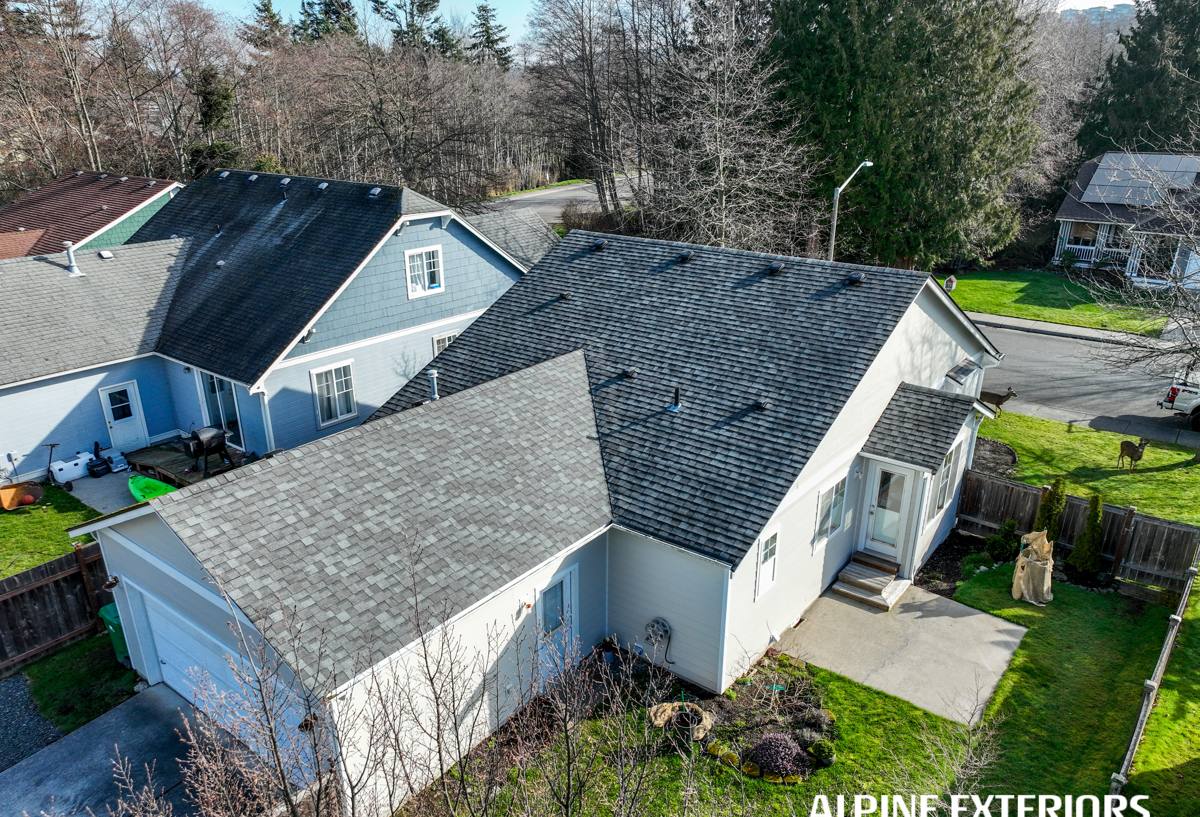
What "Correct" Looks Like for This Climate
A roof replacement is more than the shingle layer. Everything underneath it matters just as much, and around Lake Samish it arguably matters more, because the underlayment and ventilation are what determine whether the roof handles a wet winter or slowly rots from the inside.
Underlayment That Actually Handles Sustained Rain
Chuckanut-area storms tend to bring driving, wind-pushed rain rather than gentle straight-down rainfall. That kind of weather can force water sideways under shingle tabs and through nail penetrations that would stay dry in calmer conditions. We spec synthetic underlayment with ice-and-water shield at eaves, valleys, and any roof penetration — chimneys, vent stacks, skylights — as standard practice on Lake Samish homes, not as an upsell.
Ventilation Sized for Shade and Humidity
Tree cover keeps roof decks cooler and damper longer after a rain than an open roof would be. Without enough intake and exhaust airflow, that moisture has nowhere to go, and it condenses in the attic instead. Over a few seasons that shows up as sheathing rot, mold on the underside of the deck, and shingles that fail from beneath before they ever wear out on top. We calculate net free ventilation area against the actual attic square footage on every job, not a generic rule of thumb.
Flashing Details Where Water Actually Gets In
Most roof leaks don't start in the open field of shingles — they start at transitions: chimneys, dormers, wall-to-roof intersections, and valleys. On a lake-adjacent property with more moisture exposure, worn or improperly lapped flashing is usually the first thing to fail. We replace flashing as part of a full replacement rather than reusing old metal, because reused flashing is one of the most common causes of a "brand new roof" leaking within a year or two.
Moss: The Recurring Problem for This Neighborhood
Moss is worth its own section because it's the single most common complaint we hear from homeowners around Lake Samish, and it's often misunderstood. Moss itself doesn't eat through shingles the way people assume. The damage comes from what moss does mechanically and moisturewise: its root structure lifts shingle edges and tabs, and the mat it forms holds water against the roof surface for days at a time instead of letting it shed and dry.
A few honest points on moss, since we'd rather be straightforward about this than sell fear:
- Moss growth is driven by shade, moisture, and organic debris (needles, leaves) collecting on the roof — all three are common around a wooded lake setting.
- Zinc or copper strips near the ridge reduce future moss growth through natural runoff, but they don't remove existing moss or reverse damage already done.
- Pressure washing an aging roof to remove moss can strip granules and shorten the roof's remaining life — it's not a substitute for correct replacement when a roof is already compromised.
- Moss on a five-year-old roof is a maintenance issue. Moss on a fifteen-year-old roof with visible tab lifting is usually a sign the deck underneath needs to be inspected, not just cleaned.
When we replace a roof in this area, we talk through moss prevention as part of the plan — not as an afterthought sold after the fact.
Material Choices for Lake Samish Homes
There's no single "right" roofing material for every home here — it depends on the home's style, budget, and how much of the roof sits under tree canopy. Here's how the common options compare for this specific climate:
| Material | Moss/Moisture Resistance | Typical Lifespan Here | Considerations for Lake Samish |
|---|---|---|---|
| Architectural asphalt shingle | Good, with proper ventilation and periodic cleaning | 25-30 years | Most common choice; performs well when installed with correct underlayment and airflow |
| Standing seam metal | Excellent — sheds moss and debris well, minimal seams for water to enter | 40-50+ years | Higher upfront cost, but low maintenance in shaded, damp settings |
| Cedar shake | Poor without diligent upkeep — holds moisture and organic debris | 20-25 years with maintenance | We're honest that shaded, lake-adjacent lots are a tough environment for wood roofing; it requires real maintenance commitment |
| Synthetic/composite shingle | Good to very good | 30-40 years | Worth considering where wood-shake appearance is wanted without the maintenance burden |
We'll walk through these trade-offs in plain terms during your estimate rather than steering you toward whatever happens to be easiest for us to install.
How Our Process Works
A roof replacement should be predictable, not stressful. Here's what it actually looks like from first call to final walk-through:
- On-site inspection. We get on the roof, not just look at it from the ground. We check the deck condition, existing ventilation, flashing, and any moss or moisture damage before quoting anything.
- Written estimate with real options. You get a clear scope of work and material choices, with pricing broken out so you know what you're paying for — not a single lump-sum number with no detail behind it.
- Scheduling around the weather. Whatcom County's wet season narrows the practical installation window. We plan the job so tear-off and dry-in happen quickly, minimizing the time your home has an open roof.
- Tear-off and deck inspection. Once old material is off, we inspect the sheathing for rot or soft spots — common on older roofs with moss history — and replace any compromised sections before anything new goes down.
- Underlayment, flashing, and ventilation installed to spec. This is where a roof's actual performance is decided, and we don't rush it.
- Final shingle or material installation. Installed to manufacturer spec so your warranty is valid, not just installed to look finished.
- Walk-through and cleanup. We review the finished work with you and make sure the property is cleared of debris and nails before we consider the job done.
What to Check Before You Hire Anyone for This Job
Roof replacement is one of the areas where a bad contractor decision is expensive and hard to reverse. A few things worth confirming with any contractor you're considering for a Lake Samish property:
- Do they carry current Washington state contractor licensing and liability insurance, and will they show you proof without being asked twice?
- Do they inspect the deck and ventilation, or just quote based on square footage from a satellite photo?
- Do they specify ice-and-water shield and underlayment details in writing, or leave it vague?
- Are they familiar with permit requirements for Whatcom County and the local jurisdiction your property falls under?
- Will they give you a written warranty that covers both materials and workmanship, and explain what voids it?
Why a Crew That Knows This Area Actually Matters
Roofing crews that mostly work drier, more open parts of the county sometimes underestimate what a shaded, lake-adjacent roof needs — they'll spec ventilation and moss prevention the same way they would for a roof that gets full sun most of the day. That's not malicious, it's just a mismatch between experience and the specific site conditions here.
Working around Chuckanut and Lake Samish regularly means we've seen how these roofs actually age — where moss tends to establish first, which valleys collect the most standing water, and how tree cover changes ventilation needs from one property to the next even within the same neighborhood. That local pattern recognition is part of what you're paying for when you hire a crew that already knows the area, on top of the actual installation work.
Maintenance After Your New Roof Is On
A new roof isn't a "set it and forget it" purchase, especially in this climate. A short amount of upkeep goes a long way toward hitting the full expected lifespan of the material:
- Keep gutters and valleys clear of needles and leaves, especially heading into fall and winter storm season.
- Have the roof visually checked every year or two for early moss growth or lifted tabs, rather than waiting for a leak to notice a problem.
- Trim back overhanging branches where practical to reduce shade, debris buildup, and physical abrasion on the roof surface.
- Address minor moss growth early with gentle, low-pressure methods rather than letting it establish and spread.
Ready to Talk Through Your Roof
If you're noticing moss buildup, granule loss, curling shingles, or you just know your Lake Samish roof is getting up there in age, it's worth having someone look at it before a small issue turns into deck damage. We offer free, no-pressure estimates — you'll get a straight assessment of where your roof actually stands and what your real options are, with no obligation to move forward. Use the form below to get started.