 Chuckanut Exterior
 Storm Damage Roof Repair Built Around Lake Samish's Weather
Lake Samish homes take a different kind of beating than a roof a few miles inland. Between the tree canopy that rings the lake, the wind that funnels through the valley during a front, and the damp that never fully leaves the air, roofs out here age faster and hide damage more easily than homeowners expect. When a storm rolls through Whatcom County and leaves a roof looking "mostly fine," that's usually the moment to look closer, not the moment to relax.
This page covers exactly one service for exactly one area: storm damage roof repair for homes on and around Lake Samish, near Chuckanut. We're not going to give you a generic rundown of roofing services. We're going to explain what storm damage actually does to a roof out here, what a correct repair looks like, and how our process works from the first call to the final inspection.
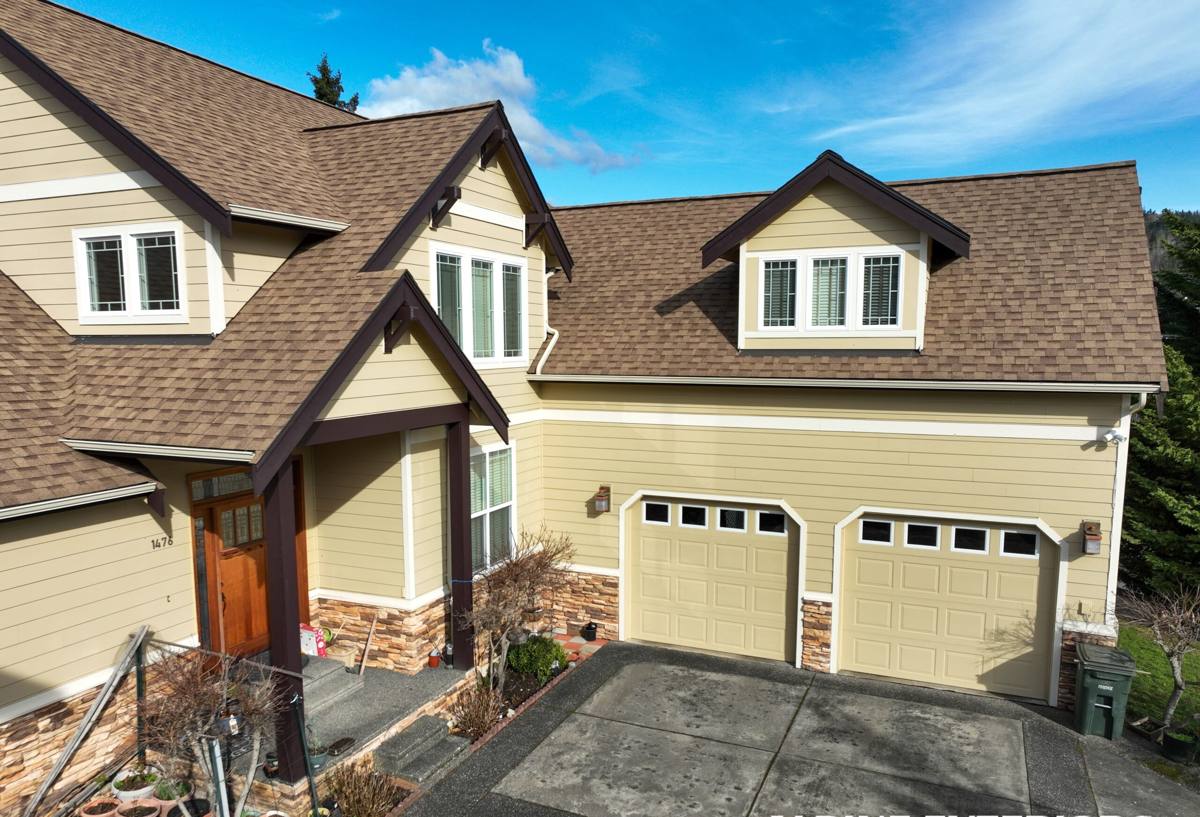
How Chuckanut's Climate Wears Down a Roof
Every roofing material has a service life rated for average conditions. Lake Samish doesn't offer average conditions. Three things stack the deck against a roof here, and understanding them is the first step to protecting one.
Salt Air and Slow Corrosion
Being close enough to Puget Sound's salt air matters more than most homeowners realize. Salt-laden moisture accelerates corrosion on any exposed metal — flashing, fasteners, drip edge, and vent caps all take the brunt of it. A fastener that would hold for decades in a dry inland climate can start weeping rust stains and losing grip years earlier out here. Storm damage often shows up first at these metal connection points, because they were already the weakest link before the storm hit.
Driving Rain and Wind-Driven Water
Western Washington rain isn't usually the problem — it's rain that comes in sideways during a real blow. Wind-driven rain finds its way under shingle tabs, around chimney flashing, and through any gap that would never leak in a straight-down rainstorm. A roof can pass a casual glance and still be actively letting water into the deck every time the wind picks up from the wrong direction.
A Long Moss Season
Lake Samish's tree cover and shade mean moss has a long growing season on north-facing and shaded slopes. Moss holds moisture against the shingle surface long after the rest of the roof has dried, which softens shingles, lifts tabs, and works its way under flashing. A storm that would cause minor cosmetic damage on a clean roof can cause real water intrusion on a roof with an established moss mat, because the moss has already compromised the seal.
What Storm Damage Actually Looks Like on a Lake Samish Roof
Storm damage rarely announces itself with a hole in the roof. More often it's subtle, and it's exactly the kind of damage that gets missed by an untrained eye or a rushed inspection.
- Wind uplift: Shingle tabs lifted or creased at the edges, often on the side of the roof that faced the storm — sometimes barely visible from the ground.
- Impact damage: Bruised or fractured shingles from falling branches or wind-blown debris, common given how much tree cover surrounds Lake Samish properties.
- Granule loss: Bare or thin patches where the protective granule coating has been stripped by wind and hard rain, accelerating UV and moisture damage underneath.
- Flashing failure: Bent, lifted, or separated flashing around chimneys, skylights, and roof-to-wall transitions — a frequent entry point for wind-driven rain.
- Ridge and hip damage: Cap shingles are the most exposed part of the roof and often show the first signs of wind stress.
- Hidden deck moisture: Soft spots or discoloration in the roof deck itself, usually only found once shingles are pulled back for inspection.
The common thread is that most of this damage isn't visible from the driveway. It takes someone on the roof, checking the right spots, to know whether a storm left cosmetic wear or a real leak path.
Temporary Fix vs. Correct Repair
After a storm, it's tempting to go with whatever gets water stopped fastest. That's the right call in the first 24 hours. It's the wrong call as a permanent solution. Here's the honest difference between the two approaches.
| Factor | Temporary Tarp or Patch | Correct Storm Repair |
|---|---|---|
| Purpose | Stop active leaking immediately | Restore the roof's actual weather protection |
| Materials matched to existing roof | No — generic materials, not color or profile matched | Yes — shingles and flashing matched where possible |
| Deck and underlayment checked | No | Yes, at every repair area |
| Expected lifespan of the fix | Days to a few weeks | Matches the remaining life of the surrounding roof |
| Risk if left as the final fix | Continued moisture intrusion, hidden rot, mold | Low, when installed correctly |
| Typical cost range | Low, often a few hundred dollars | Varies widely by scope — a fair quote requires an on-roof inspection |
We'll always tarp or patch an active leak the same day if that's what's needed. But we don't consider the job done until the actual repair is made, and we'll tell you plainly if a tarp is being used as a stopgap rather than a fix.
What a Correct Storm Damage Repair Involves
A repair that actually holds up through the next storm season isn't complicated, but it does need to be thorough. Skipping steps is how a roof ends up with the same leak back in six months.
Full Inspection, Not Just the Obvious Spot
Storm damage is rarely limited to the area a homeowner noticed. We check the entire roof plane, not just the section over the stain on the ceiling, because wind and impact damage often show up in more than one place at once.
Deck Condition
If water has been getting under the roofing material for any length of time, the deck underneath may be softened or delaminating. Shingles installed over a compromised deck won't hold — the deck has to be sound, or repaired, before new material goes down.
Underlayment and Flashing
Underlayment is the roof's real waterproofing layer; shingles are the wear surface on top of it. Storm repairs need to replace damaged underlayment, not just the visible shingles above it, and any flashing that's bent, corroded, or separated needs to be reset or replaced rather than caulked over.
Material Matching
We match shingle style, color, and profile as closely as the original roof allows so a repair doesn't stand out like a patch job. Where an exact match isn't available, we'll tell you honestly rather than promise something we can't deliver.
Moss and Debris Clearing
Given how much moss pressure Lake Samish roofs face, a proper storm repair includes clearing moss and organic debris from the repair area and surrounding roof, not just working around it. Repairing a leak next to an active moss mat is a short-term fix at best.
Our Process, Start to Finish
- Initial contact and triage: If you have active leaking, we prioritize stopping water intrusion first, even if that means a temporary tarp while we schedule the full repair.
- On-roof inspection: We walk the roof in person — not just a look from the ground — checking shingles, flashing, vents, valleys, and the deck for soft spots.
- Written scope and honest quote: You get a clear explanation of what's damaged, what needs to be repaired versus what can be monitored, and a price before any work starts.
- Repair work: Damaged shingles, underlayment, and flashing are replaced; deck repairs are made where needed; moss and debris are cleared from the work area.
- Final check: We inspect the completed repair and the surrounding area to confirm the fix will hold under the next round of wind-driven rain.
Working With Your Insurance Company
Many storm repairs on Lake Samish roofs are at least partly covered by homeowners insurance, but every policy and every claim is different, and we're not insurance adjusters. What we can do is document what we find — photos of the damage, a written description of cause and scope, and a clear repair estimate — so you have what you need to file a claim with confidence. We'll answer an adjuster's questions honestly and explain our findings in plain terms, but the coverage decision itself is always between you and your insurer.
Why It Matters to Hire a Crew That Already Works Lake Samish
A roofing crew that mostly works flatter, more open neighborhoods can still do good work on a Lake Samish roof — but they're learning the site conditions for the first time on your dime. A crew that already works this area knows what tree cover does to moss growth on shaded slopes, understands how wind moves through the valley and which roof faces take the worst of a storm, and doesn't need to guess at how salt air affects fastener life this close to the water. That familiarity shows up in faster, more accurate diagnosis and in repairs that are built for the conditions the roof will actually face again next winter, not just for the storm that just passed.
It also matters for response time. After a regional storm, every roofing company in Whatcom County gets busy at once. A crew that already has a presence around Chuckanut and Lake Samish can typically get a temporary fix in place and a full repair scheduled faster than one driving in from further out.
After the Storm: A Homeowner Checklist
If your home has just been through a wind or rain event, here's what's worth checking or asking about before you decide next steps.
- Check ceilings and attic spaces for new staining, dampness, or a musty smell.
- Look at gutters and downspouts for granules, shingle fragments, or debris buildup.
- Note which direction the storm's wind came from — it often points to which roof slope took the worst of it.
- Avoid walking the roof yourself after a storm; wet, moss-covered, or damaged shingles are not safe footing.
- Photograph any visible damage from the ground for your own records before repairs begin.
- Get an on-roof inspection before assuming damage is only cosmetic — hidden deck or underlayment damage doesn't show from below.
- Ask any contractor for a written scope, not just a verbal price, before work starts.
If a recent storm has you wondering whether your Lake Samish roof came through clean, we're glad to take a look. We offer a free, no-pressure estimate — an honest inspection, a straight answer about what we find, and a written quote if repair work is needed. Use the form below to get started.