 Chuckanut Exterior
 Deck Building for Lake Samish Properties
Lake Samish sits in a pocket of Whatcom County that gets more shade, more standing moisture, and more moss pressure than a typical open-lot property in Chuckanut or nearby Bellingham. Tree cover ring most of the lake, lots slope toward the water, and a lot of homes were built to take advantage of the view rather than the drainage. That combination is exactly what shortens the life of a poorly built deck. A deck done right for a Lake Samish lot isn't the same project as a deck on a flat, sunny lot in town — the framing, the fastener choices, and the decking material all need to account for shade and moisture that never really lets up.
This page covers what we look at specifically for deck builds around Lake Samish: the local conditions that matter, how we plan around them, what our build process looks like, and what upkeep actually looks like once the deck is in.
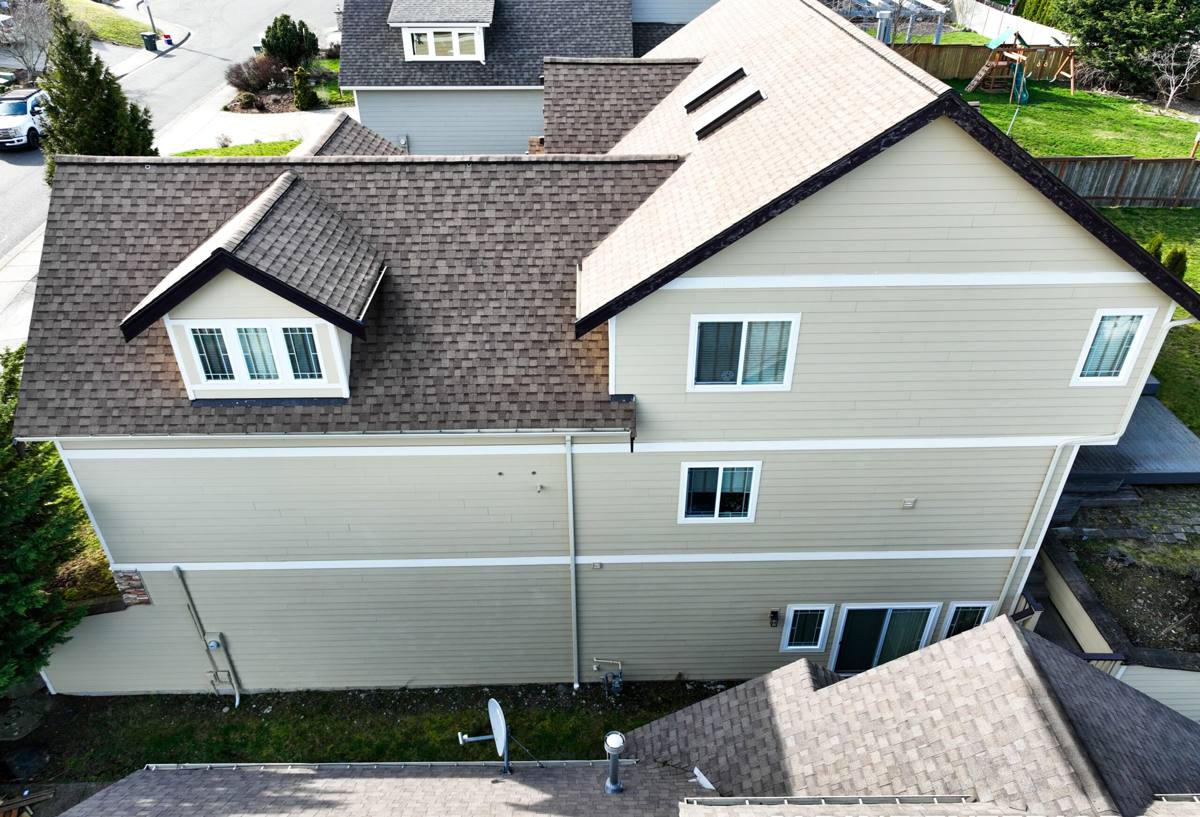
What the Lake Samish Environment Does to a Deck
Whatcom County's marine climate means driving rain for a good chunk of the year, and Lake Samish adds its own wrinkle on top of that regional pattern: tree canopy and lake-effect humidity keep a lot of these lots shaded and damp longer into the day than properties out in the open. That's a rough combination for wood and even for some composite products.
Moss and Algae Season
Moss doesn't need standing water to take hold — it just needs shade and consistent moisture, which is exactly what a tree-lined lakefront lot provides for much of the year. Left alone, moss and algae films build up on decking boards and stair treads and turn a deck slick within a season or two, especially on the north side of a house or under overhangs. That's a genuine slip hazard, not just a cosmetic issue, and it's the single biggest complaint we hear from lake-area homeowners about a deck that "just isn't holding up."
Moisture Intrusion and Slow Drying
A deck in full sun dries out between rain events. A shaded lake-adjacent deck often doesn't, especially through fall and winter. That prolonged dampness is what drives rot at ledger boards, post bases, and anywhere two pieces of wood sit face-to-face without a way to shed water. It's also what accelerates corrosion on lower-grade fasteners and connectors faster than the same hardware would wear on a sunnier property closer to town.
Air Quality and Coastal Influence
Whatcom County's proximity to Puget Sound and the Salish Sea means the air carries some salt content even away from the immediate shoreline, which we factor into hardware and fastener selection on every deck we build in this area — Lake Samish included.
Decking Material: What Actually Holds Up Here
There's no single "best" decking material for every property — it depends on how much sun a deck gets, how the homeowner wants to spend their maintenance time, and budget. For shaded, moisture-heavy Lake Samish lots specifically, here's how the common options actually compare in practice.
| Material | Moss/Moisture Behavior | Maintenance Needed | Typical Lifespan | Relative Cost |
|---|---|---|---|---|
| Pressure-treated wood | Absorbs moisture readily; needs airflow and regular cleaning to resist moss | Annual cleaning, periodic staining/sealing | 10–15 years with upkeep | Lowest |
| Cedar | Naturally rot-resistant but still needs sealing in shaded, damp spots | Sealing every 1–2 years, regular cleaning | 15–20 years with upkeep | Mid |
| Composite decking | Doesn't rot, but can grow surface moss/algae film in deep shade if not cleaned | Periodic washing, no staining/sealing | 25–30 years | Mid-High |
| PVC/capped polymer decking | Fully moisture-sealed surface; easiest to keep clean in shade | Occasional washing | 25–30+ years | Highest |
For a shaded, tree-covered lake lot, we lean toward steering homeowners away from uncapped wood as the sole decking surface unless they genuinely want the maintenance routine that comes with it — not because wood is a bad product, but because the upkeep burden in this specific microclimate is higher than most homeowners expect going in. Composite and capped polymer boards cost more up front but remove moss and rot from the list of things you have to manage year after year.
Structural Considerations for Lakeside Lots
Slope and Footings
Lake Samish properties frequently slope down toward the water, which means deck framing often has to deal with uneven grade, taller support posts, and footings set into soil that holds more moisture than an inland lot. We size and set footings based on actual soil conditions at each property rather than assuming a standard flat-lot footing depth will hold.
Ledger Attachment and Flashing
Where a deck attaches to the house is the single most common failure point on any deck, and it matters more here because of how long that ledger connection stays damp. Proper flashing that directs water away from the ledger board — rather than trapping it against the house — is not optional on a shaded, high-moisture lot.
Railings and Stairs Near Grade Changes
Sloped lake lots often mean taller decks with more significant drops, which changes railing height and stair requirements. We build to the structural and safety requirements that apply given the actual drop and layout of the property, not a generic deck spec.
Fasteners and Hardware
Given the moisture and coastal air influence in this part of the county, we use corrosion-resistant, code-rated fasteners and structural connectors throughout — this isn't an upgrade, it's the baseline for a deck we're willing to put our name on in this environment.
Our Deck Building Process
The process for a Lake Samish deck follows the same core steps as any deck build, but every stage gets evaluated against the site's actual shade, slope, and moisture conditions rather than a generic assumption.
- Site walk and assessment — we look at sun exposure, tree canopy, existing drainage patterns, and the condition of any structure the new deck will attach to.
- Design and material conversation — layout, decking material, and railing choices get discussed against how much maintenance the homeowner actually wants to take on long-term.
- Permitting — we handle the permitting steps that apply to the specific property and scope of work.
- Footings and framing — footings set to the actual soil and slope conditions on site, framing built with corrosion-resistant hardware throughout.
- Decking, railing, and stairs installed — installed with attention to airflow and drainage so the finished deck doesn't trap moisture against itself.
- Final walkthrough — we go over the finished deck with the homeowner, including what routine maintenance will look like given the site's shade and moisture exposure.
Permits and Local Requirements
Deck construction in unincorporated Whatcom County — which covers the Lake Samish area — generally requires a building permit once a deck exceeds certain size or height thresholds, and properties near the lake shoreline can be subject to additional shoreline-related review depending on proximity to the water. Requirements vary by exact location, lot configuration, and scope of work, so we confirm what applies to a given property with the county rather than assuming, and we handle that process as part of the job.
Maintenance Checklist for a Lake Samish Deck
Whatever material a deck is built from, a shaded lake-adjacent property needs a maintenance rhythm suited to its conditions. This is the baseline we recommend to homeowners in this area:
- Sweep leaves and debris off the deck surface regularly through fall — trapped organic matter is what feeds moss growth
- Wash the deck surface at least once or twice a year to remove algae and moss film before it takes hold, more often on heavily shaded sections
- Check and clear gaps between boards so water and debris can pass through instead of pooling
- Inspect ledger flashing and the house connection point annually for signs of trapped moisture
- Look over railing posts, stair stringers, and footings for movement or soft spots each spring
- Re-seal or re-stain wood decking on the schedule the product actually requires — don't stretch it in a shaded, damp location
- Trim back overhanging branches where practical to get more sun and airflow onto the deck surface
Why a Local Chuckanut Crew Matters for This Job
A deck built without accounting for Lake Samish's shade and moisture pattern will look fine on install day and start showing problems within a couple of seasons — moss on the treads, soft spots near the ledger, hardware that's already showing rust. A crew that regularly works properties around this lake has already seen which details actually matter here versus which ones are just spec-sheet boilerplate. We build with that in mind from the footings up, not as an afterthought once moss shows up.
If you're planning a new deck or replacing one that hasn't held up to the conditions out at Lake Samish, we'd be glad to take a look at the property and talk through what makes sense for your site. Reach out for a free, no-pressure estimate using the form below.