 Chuckanut Exterior
 Siding Repair Built for Happy Valley's Coastal Conditions
Homes in Happy Valley sit close enough to the water and the tree line to take a different kind of beating than siding a few miles inland. Salt-laden air off the Sound, driving rain that comes in sideways during winter storms, and a moss season that seems to stretch longer every year all work on exterior siding in ways that show up as cracked caulking, soft trim, and paint that fails years before it should. Siding repair here isn't a cosmetic job — done right, it's about finding where moisture actually got in, fixing that first, and then closing the gap with material that can stand up to the next twenty years of the same conditions.
We work throughout Chuckanut and know Happy Valley's exposure patterns specifically — which elevations catch the worst wind-driven rain, which shaded slopes hold moss longest, and which siding types were common on homes built here in different eras. That local pattern recognition is what separates a repair that actually holds from one that's covering a problem back up.
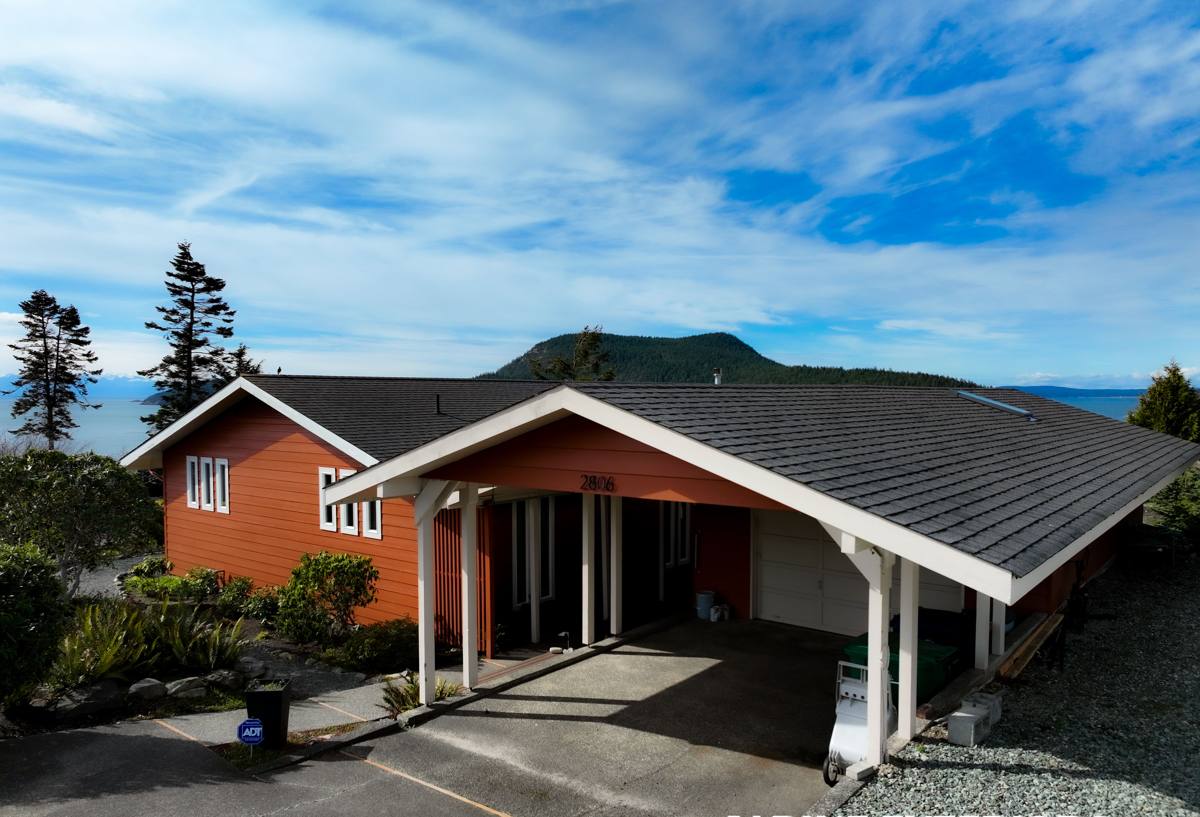
Why Siding Fails Faster in Happy Valley
Salt Air and Corrosion
Salt air doesn't just affect metal fasteners and flashing — it accelerates the breakdown of caulking and paint films, which is usually the first line of defense keeping water out of a wall assembly. Once that seal degrades, moisture gets behind the siding and the damage compounds fast, especially around butt joints, corner trim, and anywhere siding meets a window or door.
Driving Rain
Whatcom County storms often bring rain at an angle rather than straight down, which pushes water into laps, seams, and fastener holes that were never designed to handle sustained horizontal pressure. Siding that looks fine from the ground can be hiding saturated sheathing behind it if the original installation didn't account for this.
Extended Moss Season
Shaded, damp conditions common in Happy Valley let moss and algae take hold on north-facing walls and anywhere siding sits close to trees or landscaping. Moss itself doesn't destroy fiber cement, but it holds moisture against the surface for extended periods, and on wood-based or engineered wood products it can accelerate rot at the exact spots where it clings.
Signs Your Siding Needs Repair
- Cracked, curling, or missing caulk at joints, corners, and trim intersections
- Soft or spongy spots when you press on the siding, especially near the bottom courses
- Visible gaps where boards have pulled away from the wall or from each other
- Paint that's peeling, bubbling, or chalking heavily in one area but not others
- Dark streaking, moss, or algae buildup that keeps returning after cleaning
- Warping or bowing boards, particularly on wood or engineered wood siding
- Interior signs — a musty smell, discoloration, or soft drywall on an exterior wall
- Rust staining below nail heads or flashing on older installations
Any one of these on its own might be minor. Several showing up in the same area, especially near ground level or under a window, usually means water has been getting behind the siding for a while.
What a Correct Repair Actually Involves
A siding repair that's done right starts before anyone touches the wall. We pull the damaged material back far enough to see what's underneath — sheathing, house wrap, flashing — because patching over a wet or compromised substrate just hides the problem until it's bigger and more expensive.
Assessment and Moisture Check
We check moisture content in the sheathing around the damaged area, not just at the visible failure point. Water travels, and the wet zone is often larger than what's showing on the surface.
Flashing and Water Management
A large share of the repairs we see in Happy Valley trace back to flashing that was missing, undersized, or installed incorrectly at windows, doors, and butt joints — not a failure of the siding material itself. Fixing the repair without correcting the flashing means the same failure comes back.
Matching Material
Where boards need to be replaced rather than patched, we match profile, exposure, and reveal so the repair blends into the existing wall instead of standing out as an obvious patch.
Sealing and Finish
Proper caulking at the right joints (and no caulk where it shouldn't be, which can trap moisture) followed by a factory-matched or properly primed and painted finish, so the repaired section weathers at the same rate as the rest of the house.
Repair or Replace? How We Make That Call
Not every siding problem in Happy Valley needs a full re-side. But when damage is widespread, or when the underlying material has a track record of recurring moisture issues, patch repairs stop being cost-effective. Here's how we typically evaluate it:
| Condition | Repair Is Usually Enough | Replacement Should Be Considered |
|---|---|---|
| Extent of damage | Isolated to one or two areas | Spread across multiple walls or elevations |
| Sheathing condition | Dry, sound wood underneath | Soft, delaminating, or rotted sheathing found |
| Siding material | Fiber cement with a localized impact or joint failure | Untreated wood, older hardboard, or a product with chronic moisture problems |
| Age of siding | Under 10-15 years, otherwise performing well | Near or past its expected service life |
| Recurrence | First time this area has failed | Same spot has been patched more than once |
We'll tell you honestly which category your home falls into. If a repair will genuinely hold, that's what we recommend — a full replacement isn't the right call just because it's more work.
Our Repair Process
- On-site inspection — we look at the full elevation, not just the spot you called about, since related damage often hides nearby
- Moisture and structural check — probing sheathing and framing where damage is suspected
- Root-cause diagnosis — identifying whether flashing, caulking, grading, or the siding material itself is the actual source
- Written scope — what's being repaired, what material is used, and why, before any work starts
- Repair execution — removing compromised material, correcting the water management detail, installing matched siding
- Finish and cleanup — sealing, painting or color-matching, and a final walkthrough
Why Repair Material Matters
When we do need to replace boards as part of a repair, we use James Hardie fiber cement — the same product we install for full re-sides. We don't patch a Hardie wall with a different brand, and we don't recommend patching failing vinyl, LP SmartSide, or bare wood siding with more of the same product if that product is what caused the recurring problem in the first place.
Hardie's HZ5 product line is engineered for the kind of wet, wind-driven climate Whatcom County sees, and it's non-combustible fiber cement rather than an engineered wood product, so it doesn't share the moisture-related failure modes that affect wood-based siding. Its factory-applied ColorPlus finish also means a repair patch can be color-matched to a much tighter tolerance than field-painted material, which matters when you're trying to make a repair disappear into an existing wall rather than stand out as a visible patch.
We're not going to talk you into a full James Hardie re-side when a targeted repair will do the job. But if the existing siding on your Happy Valley home is a product we don't install — vinyl, LP SmartSide, Cemplank, Allura, primed spruce, or cedar — and the damage is more than isolated, that's the point where we'll be direct with you about the trade-offs of continuing to patch it versus addressing it with a product built to hold up here long-term.
Why Local Experience in Happy Valley Matters
A repair crew that's worked other homes in this neighborhood already knows what to expect before they pull the first board. They know which wall orientations catch the worst of the driving rain, where moss builds up fastest, and which older installation details were common on homes in this part of Chuckanut — details that explain a lot about why a particular wall is failing. That familiarity shortens the diagnostic process and reduces the chance of missing a related issue nearby.
It also means realistic expectations about timing. Whatcom County's wet season limits the windows for exterior repair work, and a crew that plans around that locally is less likely to leave a wall open to weather mid-repair.
Maintaining Your Siding After the Repair
- Rinse siding annually, focusing on shaded and north-facing walls where moss collects
- Keep gutters clear so overflow doesn't run down the wall behind the siding
- Trim back vegetation that keeps a wall shaded and damp
- Re-caulk joints as they age rather than waiting for a visible gap
- Walk the exterior once a year and press-test any area that looks suspect
A repair holds a lot longer when it's paired with basic upkeep — most of what we see coming back to a house a second time traces to a maintenance gap, not a failed repair.
If you're seeing signs of siding trouble on a Happy Valley home, we're glad to take a look. A free, no-pressure estimate gets you an honest read on whether you're looking at a straightforward repair or something bigger — just fill out the form below.