 Chuckanut Exterior
 Building Windows for a Marine Climate, Not a Generic One
Fairhaven sits close enough to the water that a new-construction window job here is a water-management project first and a glazing project second. Whatcom County's marine climate sends salt-laden air off the Sound, long stretches of driving, wind-driven rain through fall and winter, and a moss season that can run from October well into spring. None of that is a problem for a new home — until the window openings become the weak point. A window that's correctly selected and correctly installed on day one will shrug off decades of that weather. One installed without that specific climate in mind tends to show it within a few winters: staining below the sill, softening trim, or a slow leak that doesn't surface until the drywall does.
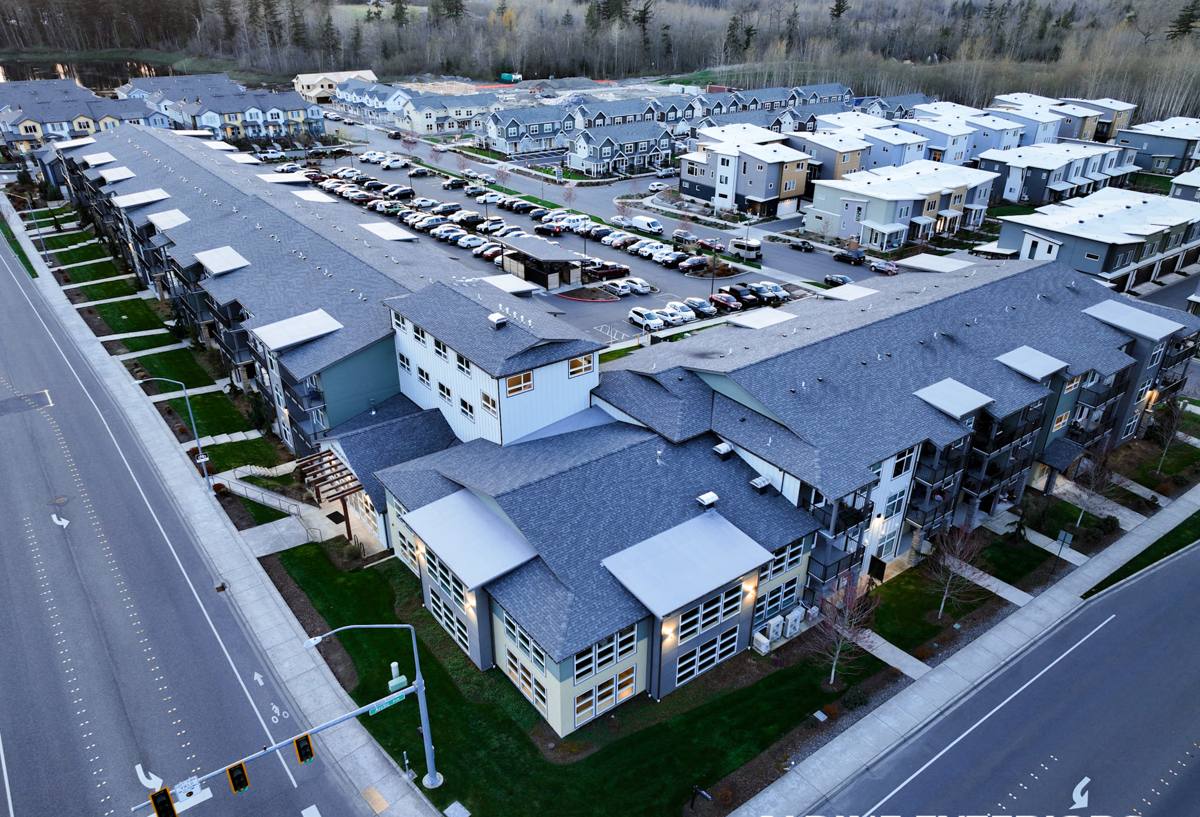
This page covers new-construction window work specifically for Fairhaven — new builds, additions, and full rebuilds where the rough openings are framed and flashed from scratch, not retrofit into an existing wall.
New Construction vs. Retrofit: Why the Distinction Matters
"New construction" windows have a nailing fin (or flange) around the perimeter of the frame that gets fastened directly to the sheathing before siding goes on. "Retrofit" or "pocket" windows are built to slide into an existing frame with the old frame left in place, which is the right call on a remodel where you don't want to disturb the siding. Mixing up which approach a project needs — or installing a new-construction window as if it were a retrofit unit — is one of the most common ways a new build ends up with a hidden moisture path behind the cladding.
On a true new build, the nailing fin is your best friend: it gives you a continuous, mechanically fastened connection to the wall assembly that, layered correctly with flashing and the weather-resistive barrier, sheds water before it ever reaches the framing. Getting that layering sequence right matters more in Fairhaven than in a drier inland climate, because there's more water hitting the wall, more often, and it often arrives sideways on a windy day off the water.
What a Correct Install Actually Involves
Flashing and Water Management
Every rough opening needs a sloped sill pan so any water that gets past the window has somewhere to go besides straight down into the framing. Jamb flashing and head flashing need to overlap in the right order — sill pan first, then side jambs, then head flashing last, so water always sheds onto the layer below it, never behind it. This sounds basic, but it's the single most common shortcut taken on new builds where the crew is moving fast to get the building dried in.
Nail-Fin Integration with the Weather-Resistive Barrier
The house wrap or building paper has to be cut, folded, and taped around the opening so the nailing fin ends up fully integrated into the drainage plane — not just stapled over the top of it. In a climate with this much wind-driven rain, a flap of house wrap that's taped on top of the fin instead of woven underneath it is exactly the kind of detail that looks fine at final walk-through and fails quietly two winters later.
Sealant Selection and Placement
Sealant is a backup to good flashing, not a substitute for it. We leave the bottom of the nailing fin unsealed on purpose (a weep path for the sill pan) while fully sealing the sides and top — the opposite of what happens when someone caulks the entire perimeter "to be safe." Fully sealing the bottom traps water inside the wall instead of letting it drain out, which is a slower and much more expensive failure to discover.
Frame Materials for Salt Air and Long Wet Winters
Every major frame material can perform well here if it's detailed correctly, but each comes with different maintenance expectations once salt air and sustained moisture are part of the picture year-round.
| Frame Material | Moisture & Salt-Air Behavior | Maintenance | Notes for Fairhaven |
|---|---|---|---|
| Vinyl | Won't rot or corrode; welded corners resist water intrusion | Low — occasional cleaning | Good value; verify reinforced frames on larger new-construction openings |
| Fiberglass | Very stable in temperature swings and damp air; minimal expansion/contraction | Low | Strong fit for larger glass areas and exposed elevations facing the water |
| Wood interior / clad exterior | Warm interior look; exterior cladding protects the wood from weather | Moderate — sealant joints need periodic inspection | Works well when detailing at the cladding-to-frame joint is done carefully |
| Aluminum | Strong but conducts heat/cold and can show condensation without a thermal break | Low, but watch for corrosion at fasteners over time | Best reserved for specific architectural applications, not general use here |
We don't push one brand or material on every job. The right choice depends on the home's elevation exposure, how much of the wall is glass, and what the rest of the exterior is doing — but we won't spec a frame or configuration that we know is a poor match for this climate just because it's cheaper up front.
Our New-Construction Window Process
The process is the same discipline every time, because the climate doesn't give you a second chance to skip a step.
- Plan review — we check window schedules against the actual framed openings and the home's exposure before anything is installed.
- Opening prep — rough openings are checked for square, level, and correct dimension; sill pans are built before any unit goes in.
- Weather barrier integration — house wrap is cut and flashed so the drainage plane stays continuous around every opening.
- Setting the window — units are shimmed, leveled, and fastened per the manufacturer's schedule, not just "however it fits."
- Flashing and sealing — head flashing, jamb integration, and sealant are completed in the correct order and left to weep where they should.
- Final check — every opening is inspected before siding or trim covers it up, because that's the last point anyone can see the flashing directly.
Why a Crew That Already Works Fairhaven Matters
A lot of window failures in this area trace back to a crew that does excellent work in a drier climate and applies the same habits here without adjusting for it. The exposure Fairhaven homes get from the water — more wind-driven rain, more sustained damp periods, more moss buildup on north-facing walls and trim — changes which details actually matter. A crew that works Whatcom County regularly has already seen what happens when a sill pan is skipped or a fin is taped instead of woven, and builds the extra step in as a matter of course rather than an afterthought.
There's also a coordination advantage on new builds specifically. Window installation touches the framer's rough openings, the siding crew's cladding lines, and sometimes the painter's caulk-and-paint sequence. A local crew that's worked alongside other Fairhaven-area trades knows how to sequence that handoff so nobody covers up a detail before it's been checked.
Living With New Windows: A Homeowner's Maintenance Checklist
New-construction windows are largely maintenance-free compared to older single-pane units, but a marine climate still asks a little of you each year.
- Rinse salt residue off frames and glass a few times a year, especially on water-facing elevations
- Clear moss and debris from window sills, tracks, and weep holes before winter rains ramp up
- Check exterior sealant joints annually for cracking or separation, particularly on wood-clad units
- Keep gutters and downspouts clear so overflow doesn't wash directly down the wall above a window
- Operate every window (open/close) a few times a year so hardware and weatherstripping don't seize or compress unevenly
- Watch for condensation between panes, which signals a failed seal rather than a cleaning issue
What Affects the Cost of a New-Construction Window Job
Costs on new construction vary by home size, glass area, and frame material, so we won't quote a number here that doesn't mean anything without seeing the plans. What we can tell you is what actually moves the price up or down.
| Factor | Why It Matters |
|---|---|
| Number and size of openings | More glass area and larger units mean more material and labor per opening |
| Frame material | Vinyl, fiberglass, and wood-clad options carry different material costs and lead times |
| Elevation exposure | Openings facing prevailing wind and rain often warrant extra flashing detail |
| Glazing performance | Higher-performance glass packages cost more but reduce condensation and energy loss |
| Access and staging | Multi-story openings or tight lot access add time regardless of window count |
Every quote we give reflects the actual openings on your plans, not a generic per-window rate that ignores exposure and detailing.
Get a Straight Answer for Your Build
If you're framing a new home, addition, or rebuild in the Fairhaven area, we're glad to walk your plans and give you a clear, honest read on the windows before anything gets installed. There's no pressure and no obligation — just a free estimate and a straightforward conversation about what your project actually needs. Use the form below to get started.