 Chuckanut Exterior
 Roof Repair Built for Edison's Coastline Climate
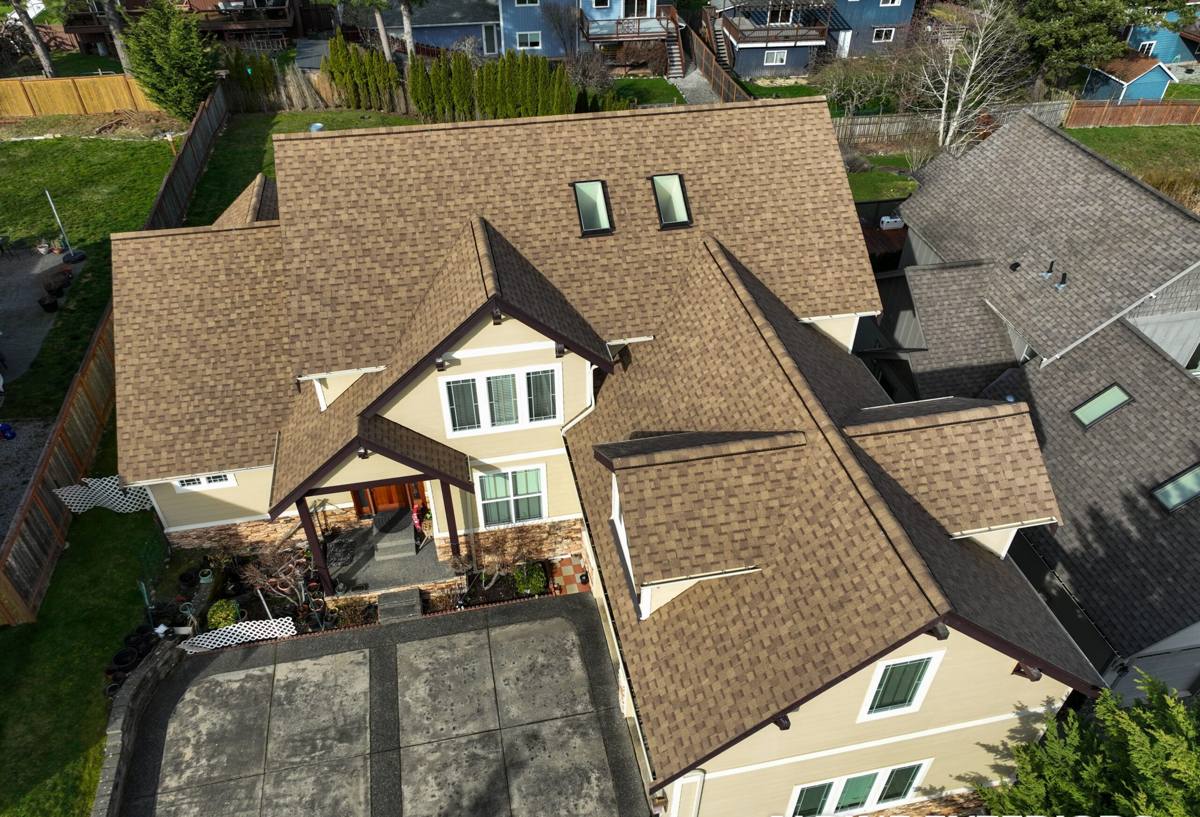
Edison sits close enough to Chuckanut Bay and the surrounding tidal flats that its roofs deal with a different combination of stress than homes further inland in Whatcom County. Salt-laden air moves in off the water, driving rain comes sideways during winter storms, and the tree cover that makes this area beautiful also keeps roofs shaded and damp for months at a time. That combination shortens the life of flashing, fasteners, and shingles faster than a standard weathering chart would predict. A roof repair here isn't just about patching a leak — it's about understanding why that leak started in the first place and fixing the underlying cause, not just the symptom.
We work on homes throughout this stretch of the county regularly, which means we're not guessing at how a roof in Edison ages. We've seen what the salt air does to exposed nail heads, what a full season of moss does to shingle granules, and where driving rain finds the gaps that a drier climate would never expose.
Why Edison Homes Need a Different Kind of Repair Approach
Salt Air and Slow Corrosion
Homes closer to the water take on airborne salt that settles on roofing metal — flashing, drip edge, exposed fasteners, and vent boots with metal collars. Over time this accelerates corrosion in ways that a roof twenty miles inland won't experience at the same rate. A repair that doesn't account for this will often fail again within a year or two, because it replaces the visible damage without upgrading the material or protecting the metal that's still exposed to the same conditions.
Driving Rain and Wind-Driven Water
Storms moving through this part of Washington frequently bring rain in at an angle rather than straight down. That matters because a roof can shed vertical rain just fine while still leaking under wind-driven conditions, because water is being pushed sideways and upward under shingle edges, around chimney flashing, and into any gap in the underlayment. Repairs that only address the spot where water is visibly entering the attic sometimes miss the actual entry point, which can be several feet away and higher up the roof plane.
Extended Moss Season
Shade, moisture, and mild temperatures give moss a long growing window on roofs in this area. Left alone, moss holds water against the roofing surface, lifts shingle edges as it grows, and works its way under flashing at valleys and roof-to-wall transitions. A repair on a moss-affected roof has to include moss and debris removal as part of the job, or the same failure point will just recur.
Signs an Edison Roof Needs Repair, Not Full Replacement
Most roofs don't fail all at once — they show localized signs first. Catching these early is what keeps a repair a repair instead of turning into a replacement.
- Water staining on an interior ceiling or wall, especially near a chimney, skylight, or where two roof planes meet
- Granules collecting in gutters or at downspout outlets, a sign shingles are wearing thin in specific areas
- Visible moss or algae buildup concentrated on north-facing or shaded roof sections
- Lifted, curled, or missing shingles in a localized area rather than across the whole roof
- Rust streaking below metal flashing or fasteners
- Soft or spongy decking felt underfoot during an inspection, indicating localized water damage below the surface
- Daylight visible through the attic roof deck at any point
If the damage is contained to one or two areas and the decking underneath is still sound, a targeted repair is almost always the right call — it's more cost-effective than replacement and, done correctly, holds up for years.
What a Correct Roof Repair Actually Involves
A repair that only replaces a few visible shingles without checking what's underneath is a short-term fix. A repair done right addresses the full path water could take to get inside.
Diagnosis Before Anything Gets Touched
We start by tracing the leak from the interior stain or attic evidence back to its actual source on the roof, which is often uphill from where the water shows up inside. This step matters more on this stretch of coastline than almost anywhere else in the county, because wind-driven rain can travel further under roofing material before it finds a path down into living space.
Underlayment and Decking Check
Once the shingles are pulled back in the affected area, we check the underlayment and decking for soft spots, delamination, or rot. Any compromised decking gets replaced before new roofing material goes down — patching over damaged decking is one of the most common shortcuts that leads to a repeat repair within a year or two.
Flashing Repair or Replacement
Flashing around chimneys, skylights, vent pipes, and roof-to-wall intersections is one of the most common failure points on homes in this area, especially given the corrosive effect of salt air over time. We replace flashing rather than re-caulking over failing metal, since caulk is a temporary seal, not a repair.
Matching Materials
Where possible we match new shingles to the existing roof in profile and color family so the repair blends in rather than standing out as an obvious patch. Exact dye-lot matching isn't always possible on an older roof, and we'll tell you honestly up front if that's the case rather than promising a perfect match we can't deliver.
Moss and Debris Removal
Any moss, needles, or organic debris in the repair area and surrounding roof plane gets cleared as part of the job. Leaving debris in place while patching around it just sets up the same moisture problem again.
Repair vs. Replacement: How We Make the Call
| Factor | Points Toward Repair | Points Toward Replacement |
|---|---|---|
| Extent of damage | Localized to one or two areas | Spread across multiple roof planes |
| Roof age | Under 15-20 years, within expected lifespan | Near or past manufacturer lifespan |
| Decking condition | Solid, no widespread rot | Soft or delaminated in multiple spots |
| Shingle granule loss | Isolated to specific sections | Uniform wear across the whole roof |
| History of repairs | First or second repair on this roof | Repeated repairs in the same areas |
We'll always tell you honestly which side of this table your roof falls on. There's no benefit to us talking a homeowner into a full replacement when a solid repair will genuinely hold, and no benefit to patching a roof that's going to need replacing within a couple of years regardless.
Our Repair Process, Start to Finish
- On-site inspection of the roof and attic, including a walk of the full roof plane, not just the reported leak area
- Written explanation of what we found, what's causing it, and what repair scope we recommend
- A clear estimate before any work begins, including whether decking replacement may be needed
- Removal of damaged material, moss, and debris in the work area
- Decking repair or replacement where needed
- New underlayment, flashing, and shingles installed to match the existing roof
- Final check for any additional vulnerable points nearby, since one failure point often signals wear starting nearby too
- Site cleanup, including magnetic sweep for stray fasteners
Materials and Approach: What We Use and Why
| Component | Our Standard Approach | Why It Matters Here |
|---|---|---|
| Flashing | Corrosion-resistant metal, fully replaced rather than caulked over | Salt air accelerates corrosion on lower-grade or aging metal |
| Underlayment | Water-resistant synthetic or felt matched to existing roof system | Provides a secondary barrier against wind-driven rain |
| Fasteners | Corrosion-resistant nails, correctly set (not over- or under-driven) | Prevents early rust streaking and loosened shingles |
| Shingles | Matched to existing profile and color family where available | Keeps the repair visually consistent with the rest of the roof |
| Moss treatment | Manual removal plus recommendations for ongoing control | Addresses moss as an ongoing maintenance issue, not a one-time fix |
Maintenance That Extends the Life of a Repair
A well-done repair still benefits from basic upkeep, especially in a climate this damp and shaded. A few habits go a long way toward protecting the investment:
- Clear gutters and downspouts at least twice a year so water isn't backing up under roof edges
- Trim back overhanging branches to reduce shade and debris buildup that feed moss growth
- Have the roof visually checked after any major windstorm, since wind-driven rain events are when small flashing gaps tend to show themselves
- Address small leaks quickly rather than waiting — water damage spreads to decking and framing the longer it's left unaddressed
- Schedule a periodic roof check even without an active leak, since early wear is easier to see from the roof than from inside the attic
Why Hiring a Crew That Already Works in Edison Matters
Roofing crews unfamiliar with this specific stretch of Whatcom County coastline sometimes underestimate how much salt air and prolonged dampness affect material choices and repair longevity. A crew that regularly works roofs in and around Edison and the broader Chuckanut area already knows which components fail first, how far wind-driven rain can travel under a roof surface, and how aggressive the moss season really is here compared to more inland parts of the county. That local knowledge shapes every repair decision, from flashing material to how much attention the job gives to moss removal versus just patching the visible damage.
We also stand behind our repair work and are straightforward about what a repair can and can't fix. If a roof is genuinely past the point where a repair makes sense, we'll say so rather than doing a patch job that won't hold through the next wet season.
If you're dealing with a leak, visible moss buildup, or damaged shingles on an Edison-area roof, we're happy to take a look and give you a straightforward, no-pressure estimate — just fill out the form below to get started.