 Chuckanut Exterior
 Edison Roofs Work Harder Than Most
Homes around Edison sit close enough to the water and the tree line that the roof over your head is dealing with more than the average Whatcom County house. You've got salt-laden air drifting in off the bay, long stretches of driving rain that comes in sideways during winter storms, and shaded, damp conditions that keep moss and moisture active for most of the year. None of that is a reason to panic about your roof — but it is a reason to install one that's actually built for these conditions, not a generic roof that happens to be sitting on a house near the water.
This page covers what a new roof installation should look like specifically for an Edison property: what the climate does to roofing materials over time, what a correct installation involves, and how our process is set up to handle the specific conditions this part of Chuckanut and Whatcom County throws at a roof.
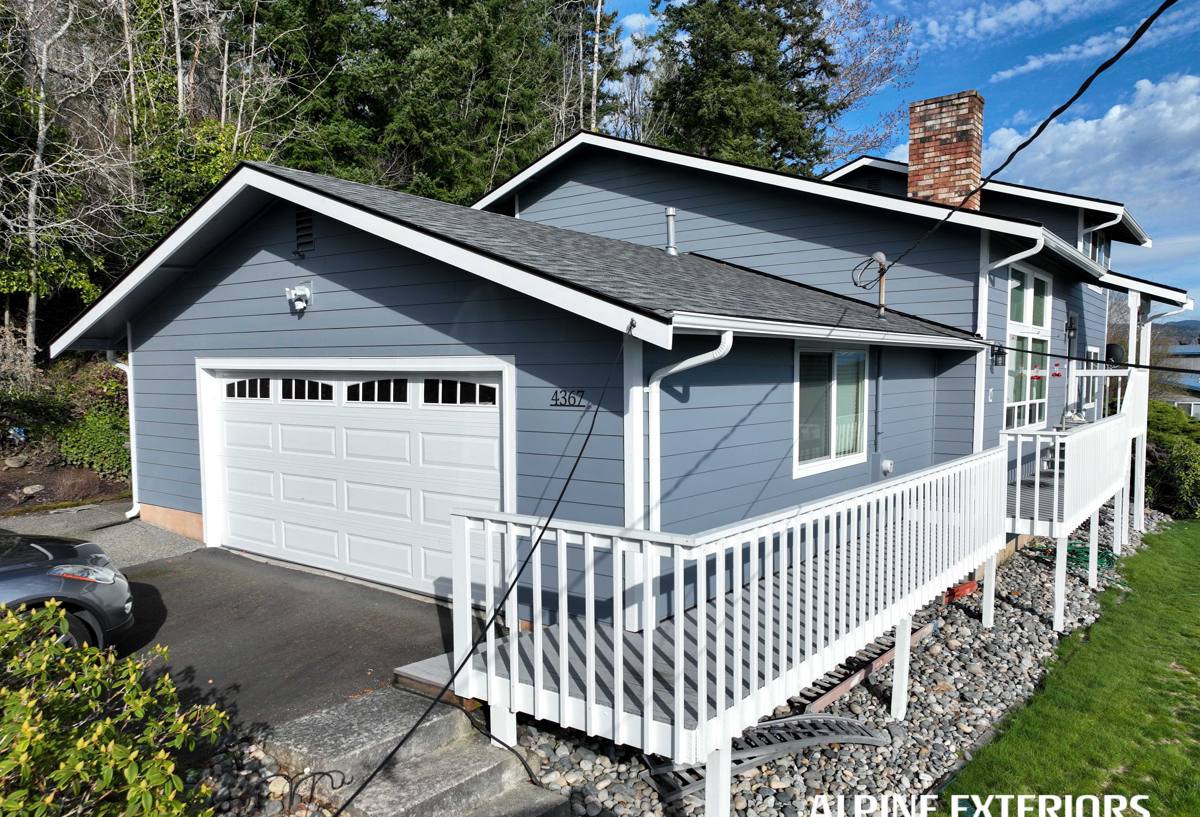
What This Climate Actually Does to a Roof
Salt Air and Metal Fatigue
Airborne salt doesn't damage shingles directly the way it damages metal, but it does accelerate corrosion on anything exposed — fasteners, flashing, drip edge, vent boots with metal collars, and any exposed metal roofing panels. Standard galvanized fasteners and untreated steel flashing can start showing rust and pitting years before they would inland. It's not dramatic, but it's the kind of slow degradation that turns into a leak at a flashing seam five or six years down the road if the wrong materials were used from the start.
Driving Rain and Wind-Driven Moisture
Chuckanut-area storms don't just drop rain straight down — wind off the water pushes it sideways and up under laps, edges, and anywhere the roofing system relies on gravity alone to shed water. A roof that would perform fine in a calmer inland climate can leak here if the underlayment, flashing, and starter courses weren't installed with wind-driven rain specifically in mind.
Moss, Shade, and a Long Growing Season
Mature tree canopy and consistent moisture mean moss has a long season to establish itself, especially on north-facing slopes and any section of roof that stays shaded most of the day. Moss holds moisture against the roofing surface, works into shingle laps and granule surfaces, and over time lifts shingles enough to let water underneath. A roof installed without moss prevention built in is starting that clock the day it goes on.
Choosing the Right Roofing System for an Edison Property
There isn't one "correct" material for every home — it depends on your roof's pitch, how much shade it gets, your budget, and how long you want to go between maintenance. Here's an honest comparison of the systems we most often install in this area:
| Material | Salt Air Durability | Moss Resistance | Typical Lifespan | Best For |
|---|---|---|---|---|
| Architectural asphalt shingle | Good, with corrosion-resistant fasteners and flashing | Moderate — needs zinc/copper strips and clean valleys | 25–30 years | Most homes; best value |
| Standing seam metal | Excellent with coated/marine-grade panels and fasteners | Very good — sheds moss more easily than textured surfaces | 40–50+ years | Homes wanting long-term, low-maintenance performance |
| Synthetic composite shingle | Good — resists moisture absorption better than organic materials | Good | 30–40 years | Homes wanting shake or slate look without the maintenance |
We'll walk your specific roof with you before recommending anything. A steep, sun-exposed south face and a shaded north slope on the same house sometimes call for different approaches to detailing, even if the material stays the same.
What a Correct Installation Actually Involves
The material on top is only part of the story. Most roof failures we get called out to inspect trace back to what's underneath — underlayment, flashing, and ventilation that were rushed or done with the wrong products for the conditions. For an Edison home, that means:
- Synthetic underlayment rated for extended exposure, with all seams and fastener penetrations properly sealed against wind-driven rain
- Ice-and-water shield style membrane at eaves, valleys, and any low-slope transitions where water is most likely to back up
- Corrosion-resistant (stainless or coated) fasteners and flashing, not standard galvanized, anywhere exposed to salt air
- Step flashing and counter-flashing at every wall and chimney intersection, not just caulk or roof cement standing in for proper metal work
- Balanced intake and exhaust ventilation sized to the attic, so moisture from inside the house doesn't condense against the roof deck
- Zinc or copper strips near the ridge on shaded slopes to slow future moss growth
- Drip edge on every eave and rake, sized and lapped correctly to keep water off the fascia
Skip any one of these and the roof might look fine for a few years — but "fine for a few years" isn't the same as "installed correctly for this climate."
Our Installation Process
- Roof and attic inspection. We check the existing deck, ventilation, and any signs of past moisture damage before quoting anything — you shouldn't pay to cover up a problem that needed fixing first.
- Tear-off and deck assessment. Old roofing comes off down to the deck, and any soft or damaged sheathing gets replaced before anything new goes down.
- Underlayment and flashing. This is where most of the long-term performance is decided — done carefully, with materials matched to this climate.
- Material installation. Shingles, panels, or composite roofing installed to manufacturer spec, with attention to nailing pattern and exposure — details that matter more in high-wind conditions than most homeowners realize.
- Ventilation check and final details. Ridge and soffit ventilation confirmed, valleys and penetrations double-checked, moss-prevention strips installed where called for.
- Cleanup and walkthrough. Yard and gutters cleared of debris, and we walk the finished roof with you so you know exactly what was done.
Ventilation and Moisture Control Matter as Much as the Roofing Itself
A lot of roofs in Whatcom County fail from the inside out. Warm, moist air from the house rises into the attic, and without enough intake and exhaust airflow, it condenses against the underside of the roof deck. Over a wet Pacific Northwest winter, that trapped moisture rots sheathing and rafters from underneath — often before there's any visible sign from the outside. When we install a new roof, we size the ventilation to the actual attic, not just to whatever was there before, because "matching what was there" sometimes means matching a system that was already failing.
Moss Prevention Is Part of the Install, Not an Afterthought
Given how much shade and moisture this area gets, we don't treat moss control as an optional add-on. Zinc or copper strips installed near the ridge release trace metal ions with every rain, which discourages moss growth on the slopes below without harming plants or gutters. Combined with keeping valleys and low spots clear of debris where moss likes to start, this cuts down significantly on how often you'll need to think about moss over the life of the roof — though no roof in this climate is completely moss-proof, and periodic gentle cleaning is still part of normal maintenance.
Why a Crew That Already Works This Area Matters
A roofing crew that mostly works drier, inland areas doesn't always think about corrosion-resistant fasteners, wind-driven rain detailing, or moss-prone shaded slopes as default considerations — because where they usually work, those aren't the deciding factors. Around Edison and the rest of Chuckanut, they are. Working this area regularly also means we're familiar with Whatcom County permitting requirements, typical roof pitches and configurations in older versus newer homes here, and how tree canopy on a given lot tends to affect a roof's exposure and drainage. That local pattern-recognition shows up in fewer surprises during the job and a roof that's built for the conditions it will actually face, not just the conditions on a spec sheet.
Warranty and Protecting Your Investment
Manufacturer warranties on roofing materials are only as good as the installation underneath them — most shingle and panel warranties have specific requirements around underlayment, ventilation, and flashing that, if not met, can limit what's actually covered. We install to those requirements as a baseline, and we'll walk you through exactly what your material's warranty covers and what our own workmanship coverage adds on top of it, in plain terms, before you sign anything. A new roof is a significant investment, and you should know precisely what's protected and for how long.
If your roof is showing granule loss, moss buildup, curling edges, or you're just past the point where patch repairs make sense, we're glad to come take a look. We offer free, no-pressure estimates for Edison and the surrounding Chuckanut area — use the form below to get a time on the calendar.