 Chuckanut Exterior
 Windows Built for the Edison Climate, Not a Catalog
Edison sits in that stretch of low farmland and shoreline near Chuckanut where the weather off the water shapes everything about how a house ages. Homes here take a different beating than houses twenty miles inland — more salt in the air, more driving rain that comes in sideways instead of straight down, and a moss season that runs longer than most homeowners expect. Windows are one of the first places that shows up. A window that's fine in a sheltered inland neighborhood can start failing early here if it wasn't chosen and installed with this specific exposure in mind.
"Custom windows" doesn't mean fancy shapes or upgraded trim packages. For us it means sizing, materials, and installation details matched to your actual opening, your actual exposure, and your actual house — not a stock size from a big-box aisle forced into a wall it doesn't quite fit.
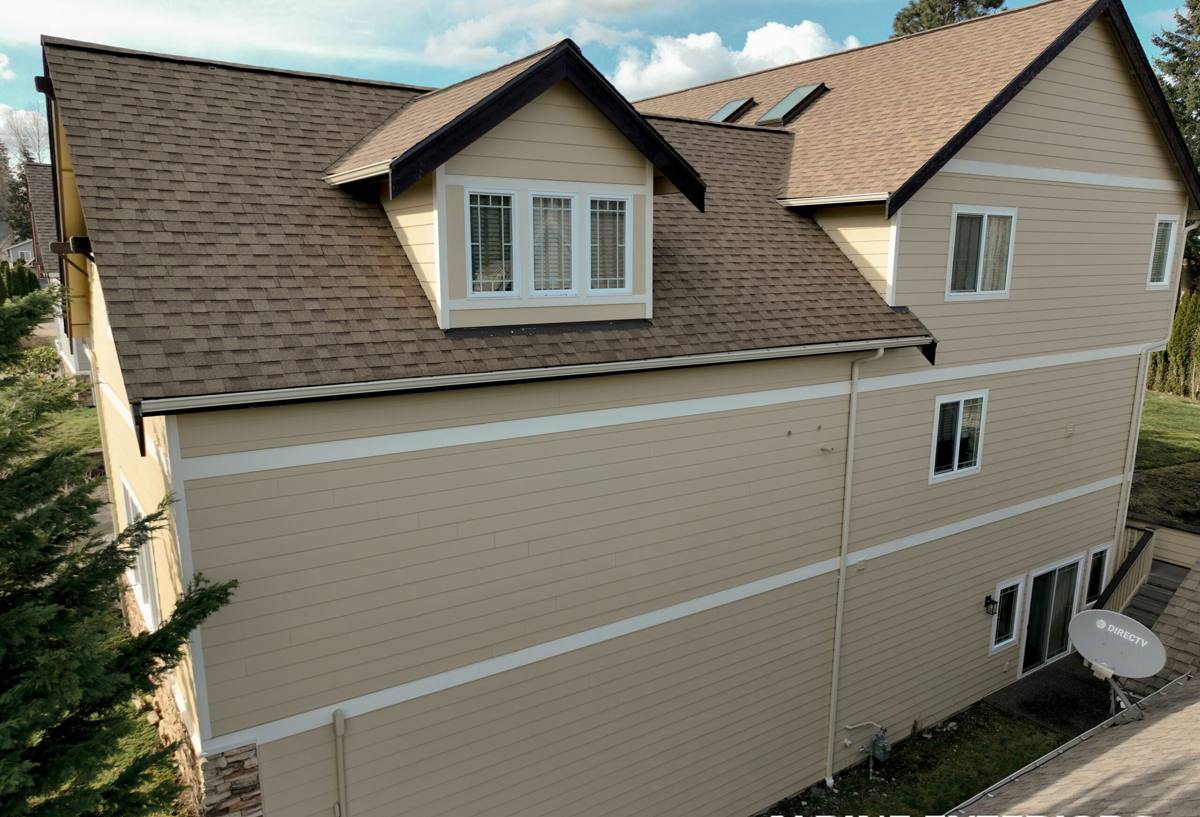
What Salt Air, Driving Rain, and Moss Season Do to Windows Over Time
Each of these three conditions attacks a window differently, and understanding that is most of what separates a window that lasts from one that doesn't.
Salt Air
Airborne salt is corrosive to unprotected metal hardware, screen frames, and lower-grade cladding. It also settles into microscopic surface texture on some finishes, which is why homes closer to the water tend to need more frequent glass and frame cleaning just to keep seals and tracks free of buildup that traps moisture.
Driving Rain
Rain that comes in at an angle, pushed by wind off the bay, tests a window's weather-sealing far harder than rain that falls straight down. A window can be perfectly watertight in a light vertical rain and still leak under wind-driven rain if the flashing, sill pan, or weatherstripping wasn't detailed for that condition.
Moss and Sustained Damp
Long stretches of overcast, damp weather keep wood trim, sills, and frame joints wet for days at a time. That's what feeds moss and mildew growth around window perimeters, and it's also what slowly breaks down caulking, wood putty, and any material that wasn't chosen to tolerate sustained moisture exposure rather than just occasional rain.
What "Custom" Actually Means for Edison Homes
A lot of window sales pitches use the word "custom" loosely. Here's what it actually involves on a real job:
- Field-measuring every opening individually — older homes settle unevenly, and openings that look identical from the street are often off by a quarter inch or more from each other
- Matching frame material and finish to the wall's actual sun and wind exposure, not just the house's overall style
- Selecting glass packages based on which direction the window faces and how much weather it takes directly
- Detailing flashing and drainage for the specific wall assembly behind the window, not a generic install method
- Sizing and hardware choices that account for how the window will actually be used — a bedroom egress window has different requirements than a fixed picture window
None of this shows up on a spec sheet. It's the difference between a window that's "installed" and one that's installed correctly for this specific house in this specific location.
Frame Material Comparison for This Climate
There's no single "best" frame material — each has real trade-offs, and the right call depends on the wall's exposure, your maintenance appetite, and your budget. Here's how the common options stack up specifically against salt air, driving rain, and sustained damp:
| Frame Material | Salt Air Resistance | Moisture Tolerance | Maintenance Burden |
|---|---|---|---|
| Vinyl | Good — won't corrode or rust | Good if seams and welds are sound | Low; occasional cleaning |
| Fiberglass | Very good — stable, doesn't pit or corrode | Very good; dimensionally stable when wet or dry | Low to moderate |
| Wood (unclad) | Poor without diligent upkeep | Requires consistent sealing and repainting | High — needs regular attention in this climate |
| Wood-clad (aluminum or vinyl exterior) | Good on the clad face; interior wood still needs normal care | Good if cladding and flashing are detailed correctly | Moderate |
| Aluminum | Can pit or corrode over time near salt air unless properly finished | Prone to condensation without a thermal break | Moderate to high near the water |
We don't push one material as universally "the best." We'll tell you honestly which one fits your specific wall, your budget, and how much upkeep you actually want to do — including telling you when a lower-maintenance option is the smarter call for a home this close to the water, even if it costs a bit more up front.
Glass, Seals, and Weatherstripping That Hold Up
The glass package matters as much as the frame in this climate. A few things worth understanding before you choose:
- Dual-pane vs. triple-pane — triple-pane adds cost and weight but can be worth it on walls that take the brunt of wind and driving rain, mainly for comfort and condensation control rather than dramatic energy savings alone
- Low-E coatings — help with heat loss and UV, and are a reasonable standard choice regardless of exposure
- Argon or krypton gas fill — improves insulation value but isn't the deciding factor most homeowners think it is; frame and installation quality matter more
- Weatherstripping material — compression seals generally outlast basic foam strips under repeated wind-driven rain cycles, and are worth the upgrade on exposed elevations
Where you spend the upgrade budget matters more than whether you spend it everywhere. A window on a wall that rarely takes direct rain doesn't need the same spec as one facing the prevailing weather.
Correct Installation: Where Most Window Jobs Actually Fail
Most window failures we get called out to inspect aren't caused by a bad window. They're caused by installation shortcuts that don't show up as a problem until the second or third rainy season. This is the part of the job that determines whether a window lasts fifteen years or thirty.
Sill Pan Flashing
A proper sill pan gives any water that gets past the window a way out, instead of a place to collect. Skipping this is one of the most common — and most consequential — shortcuts in the trade.
Integrated Flashing Sequence
Flashing has to be layered correctly with the house wrap or building paper — water needs to shed downward and outward at every layer, the same way roofing shingles overlap. Get the order wrong and you've built a path for water to get behind the siding instead of away from it.
Sealant Placement
Caulk is not a substitute for proper flashing — it's a secondary defense, and it should never be relied on as the only barrier. We also leave designed weep points open so any incidental moisture can drain back out rather than getting sealed in.
Shimming and Squaring
An out-of-square window stresses its own seals from day one, which shortens the life of the weatherstripping and can cause operational problems well before the glass or frame itself would normally need attention.
Our Process, Start to Finish
We keep the process straightforward and communicate clearly at each stage:
- On-site assessment — we look at each opening, the wall assembly behind it, and its actual sun/rain exposure before recommending anything
- Honest material and glass recommendations — matched to that specific opening and your budget, not a one-size package
- Precise field measurement — every opening measured individually, since older homes rarely have perfectly uniform openings
- Ordering and lead time review — we'll give you a realistic timeline up front, since custom sizes take longer than stock
- Removal and installation — including full flashing and sill pan work, not just setting the new unit in the old opening
- Sealing and trim finish — interior and exterior detailing done to shed water correctly, not just look finished
- Walkthrough and cleanup — we test operation, check seals, and leave the site clean
What to Ask Before You Hire Anyone for Window Work
Whoever you hire — us or someone else — these are worth asking before you sign anything:
- Do you field-measure every opening individually, or work from a single house-wide size?
- What's your standard flashing and sill pan detail, and will you walk me through it?
- How do you handle warranty claims — is it you, or do I have to deal with the manufacturer directly?
- Can you explain why you're recommending a specific frame material for this wall, not just this house?
- Do you carry current liability insurance and are your installers your own crew or subcontracted?
- What does a realistic timeline look like from order to install, including lead time?
A contractor who answers these clearly and specifically, without vague reassurance, is generally one who does this work correctly and often.
Why Local Experience in Edison and Chuckanut Matters
Window installation isn't identical everywhere. A crew that mostly works dry, inland neighborhoods can do fine work and still get caught off guard by what salt air and driving rain do to a wall over time. Working the Edison and Chuckanut area regularly means we've seen how flashing details, frame materials, and sealants actually hold up here — not just how they're supposed to perform on paper. It also means we know what moss and sustained damp do to trim and sills in this specific stretch of Whatcom County weather, and we detail accordingly instead of relying on a generic install method that's built for somewhere else.
That local pattern recognition is the difference between a window install that looks right on day one and one that's still performing correctly five rainy seasons from now.
Maintenance Through the Moss Season
Even a correctly installed window benefits from a little seasonal attention in this climate:
- Clear debris and moss buildup from sills and tracks before it holds moisture against the frame
- Check weatherstripping annually for compression loss or gaps, especially on exposed elevations
- Keep weep holes clear so water can drain as designed
- Rinse salt residue off frames and glass periodically if you're close to the water
- Watch for soft spots in exterior trim, which can signal a sealant or flashing issue worth catching early
None of this is complicated, but skipping it for a few years in a row is how small issues turn into bigger repairs.
If you're weighing window replacement or a new install for a home in or around Edison, we're happy to take a look and give you a straightforward, no-pressure estimate — including an honest read on what your specific walls actually need. Use the form below to get started.