 Chuckanut Exterior
 Deck Replacement Built for York's Weather, Not Against It
If you live in the York area near Chuckanut, you already know your deck doesn't age the same way a deck in a dry inland town does. Salt-laden air off the water, long stretches of driving rain, and a moss season that seems to start earlier every year all work on wood and fasteners at the same time. A deck that looks fine from the porch door can be hiding soft joists, rusted hardware, or a ledger board that's been slowly separating from the house for years. Deck replacement isn't about aesthetics first — it's about rebuilding the structure so it can actually handle where it's sitting.
This page is specifically about full deck replacement for homes in and around York, not a generic overview. We'll walk through what local conditions do to decks here, what a correct replacement actually involves, how we run the job, and why working with a crew that already knows this stretch of Whatcom County matters more than it might seem.
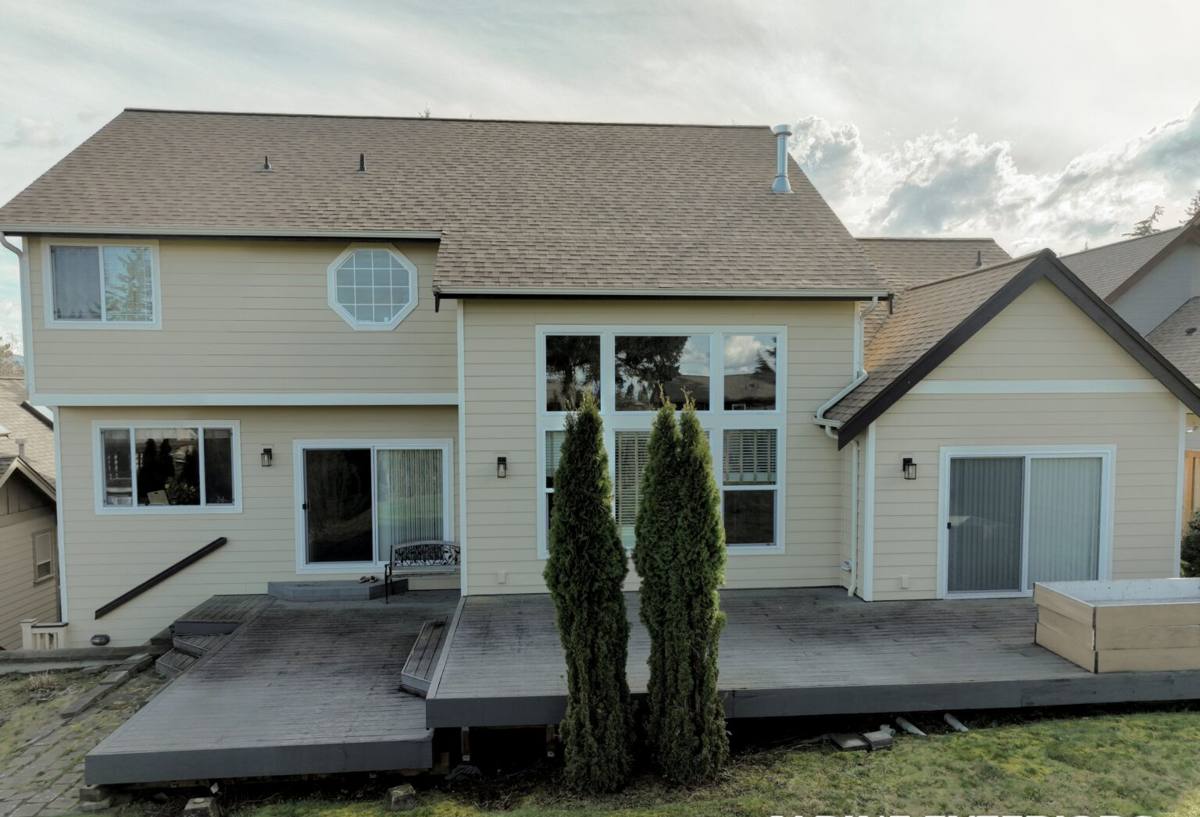
Why Decks Near York Wear Out Faster
Salt Air and Metal Fasteners
Proximity to salt water accelerates corrosion in nails, screws, and structural connectors — the parts of a deck you can't see but that hold the whole thing together. Once fasteners start rusting, they lose grip strength long before the wood around them looks bad. This is one of the most common reasons a deck that "looks okay" turns out to be unsafe underneath.
Driving Rain and Water Intrusion
Rain that comes in sideways, rather than straight down, finds its way into places a deck wasn't built to shed water from — end grain, fastener holes, the gap where a ledger board meets the siding. Over time this drives rot into framing members that are expensive and dangerous to ignore.
Moss, Shade, and Slow Drying
A long moss season means more months where a deck surface stays damp instead of drying out between rains. Moss and algae hold moisture against the decking boards, which speeds up decay in wood decking and can make composite and even some capped products slippery and harder to keep clean. Decks with partial shade from mature trees or the house itself tend to hold moss longest and show wear first.
Signs Your York-Area Deck Needs Replacement, Not Just Repair
Some deck problems are fixable with a board swap or a few new fasteners. Others are signs the whole structure is past the point of patching. Before you invest in another repair, it's worth checking for these:
- Soft, spongy, or bouncy spots when you walk across the deck, especially near the house
- Visible gaps, staining, or separation where the deck ledger meets the siding or foundation
- Rust streaks running down from screws, nails, or metal joist hangers
- Wood that's gray, splintery, or crumbles when probed with a screwdriver
- Railings or posts that wobble under normal pressure
- Persistent moss or dark staining that comes back within weeks of cleaning
- A deck built more than 15-20 years ago with no documented upgrades to framing or connectors
Any one of these on its own might just mean a repair. Several together, especially anything involving the ledger board or main support posts, usually means it's time to talk about full replacement.
What a Correct Deck Replacement Actually Involves
A deck replacement done right in this climate is not just new boards over old framing. It starts underneath.
Ledger Board and Flashing
The ledger board — where the deck attaches to the house — is the single most common failure point in wet climates. Correct flashing at this connection keeps water from running behind the siding and rotting both the ledger and the wall framing behind it. This is one detail we never shortcut, even when it adds a step to the schedule.
Footings, Posts, and Framing
We check footing depth and condition, post connections, and joist spacing against current structural standards, not just what was there before. Older decks in the York area were often built to lighter standards than are used today, and soil conditions plus years of moisture exposure can shift what a footing can actually support.
Fasteners and Hardware
Given the salt air here, we use corrosion-resistant, code-rated fasteners and connectors rather than standard hardware store hardware. It costs a bit more up front and saves you from hidden rust damage down the road.
Decking Surface and Drainage
Board spacing, direction, and under-deck drainage all affect how fast the surface dries after rain — which matters directly for moss control. We plan the layout with drying and drainage in mind, not just appearance.
Decking Material Options for Wet, Salt-Air Conditions
There's no single "best" decking material for every home — it depends on your budget, how much maintenance you want to do, and how much shade and moisture your specific yard gets. Here's an honest comparison of the main options we install:
| Material | Maintenance | Moisture & Moss Behavior | Typical Lifespan Here |
|---|---|---|---|
| Pressure-treated wood | Annual cleaning, periodic sealing | Absorbs moisture; needs sealing to resist moss and rot | 10-15 years with upkeep |
| Cedar or other natural wood | Regular sealing/staining | Naturally rot-resistant but still needs care in constant damp | 12-18 years with upkeep |
| Composite decking | Occasional washing | Doesn't rot, but can hold surface moisture and grow moss if shaded | 20-25+ years |
| Capped composite / PVC | Low — occasional washing | Best resistance to moisture absorption and staining | 25+ years |
We install all of these based on what fits your home and budget. Our professional standard leans toward capped composite or well-sealed cedar for decks that sit in shaded, damp spots near York, simply because they hold up with less maintenance in exactly the conditions that cause the most trouble here — not because any lower-cost option is a bad product.
Our Deck Replacement Process
- On-site evaluation — we inspect the existing deck's framing, ledger connection, footings, and hardware to confirm replacement is the right call and to identify any hidden rot in the surrounding structure.
- Design and material selection — we go over decking material, railing style, and layout options based on your home's exposure to sun, shade, and prevailing weather.
- Permitting — most deck replacements require a permit through Whatcom County or your local jurisdiction; we handle the application and inspections as part of the job.
- Demolition and disposal — full removal of the old deck surface and, where needed, the framing, with proper disposal.
- Framing and flashing — new or reinforced footings, joists, and ledger flashing built to current standards.
- Decking, railing, and stairs installation — installed with attention to drainage, fastener spacing, and airflow underneath.
- Final walkthrough and inspection — we review the finished deck with you and confirm it passes any required local inspection.
Permits and Code Considerations
Deck replacement in Whatcom County typically triggers a permit requirement, especially when footings, framing, or the ledger connection are being rebuilt rather than just the surface boards. Skipping this step can create problems later — at resale, with insurance, or if the deck is ever damaged and needs an insurance claim. We handle the permit process as a standard part of the job rather than an add-on, so you're not left figuring out county requirements on your own.
What Deck Replacement Typically Costs
Every deck is different, but the biggest cost drivers tend to be the same across most York-area projects:
| Cost Factor | Why It Matters |
|---|---|
| Deck size and shape | Larger decks and multi-level designs need more material and labor |
| Framing condition | Rotted joists, posts, or footings add rebuild cost beyond surface replacement |
| Decking material chosen | Wood costs less up front; composite and capped products cost more but need less upkeep |
| Railing and stair complexity | Custom railings, multiple stair sets, or code-required guard heights add labor |
| Site access | Sloped yards, tight side access, or height above grade affect equipment and labor time |
| Permit and inspection requirements | Structural rebuilds generally require permitting, which adds a modest but necessary cost |
We won't quote a number without seeing the deck — anyone who does is guessing. What we can tell you honestly is that framing condition is usually the biggest swing factor, which is exactly why the on-site evaluation matters before any price gets discussed.
Why It Matters to Hire a Crew That Already Works in York
A deck built for a dry, inland climate and one built for salt air, driving rain, and a long moss season are not the same project, even if they look identical from the street. Crews that work regularly around Chuckanut and York already know which fastener grades hold up, how to detail ledger flashing against wind-driven rain, and where moss tends to collect based on how a lot sits relative to sun and tree cover. That local pattern recognition shows up in fewer callbacks and a deck that's still solid well past the point a generic build would start failing.
We also know the practical side of working in this area — typical lot layouts, common permit turnaround with Whatcom County, and the kind of access challenges that come with older neighborhoods near the water. None of that shows up on a spec sheet, but it affects how smoothly your project runs.
Get a Free, No-Pressure Estimate
If your deck near York is showing signs of age, feeling soft underfoot, or you're just planning ahead before the next wet season sets in, we're happy to take a look. The estimate is free, there's no pressure to commit on the spot, and you'll get an honest read on whether you're looking at a repair or a full replacement. Use the form below to get started.