 Chuckanut Exterior
 Why Silver Beach Decks Wear Out Faster Than the Brochures Say
A deck in Silver Beach lives a harder life than a deck built in a dry inland town. You've got moisture coming from two directions here — salt-laden air drifting in off the water, and the steady, driving rain that Whatcom County gets for a good chunk of the year. Add in tree cover along many Silver Beach lots, and you get long stretches where a deck's shaded side barely dries out between storms. That combination is exactly what accelerates wood rot, corrodes fasteners, and feeds the moss and algae growth that makes decking surfaces slick and, eventually, structurally compromised.
We're not describing a hypothetical. This is the pattern we see over and over on repair calls in this part of Chuckanut: decks that look fine from the yard but have soft framing underneath, rusted-through hardware at the ledger connection, or a green film building up on boards that never get direct sun. None of that is a defect in how the deck was originally built — it's just what this climate does to wood, metal, and fasteners over time if maintenance and material choices don't account for it.
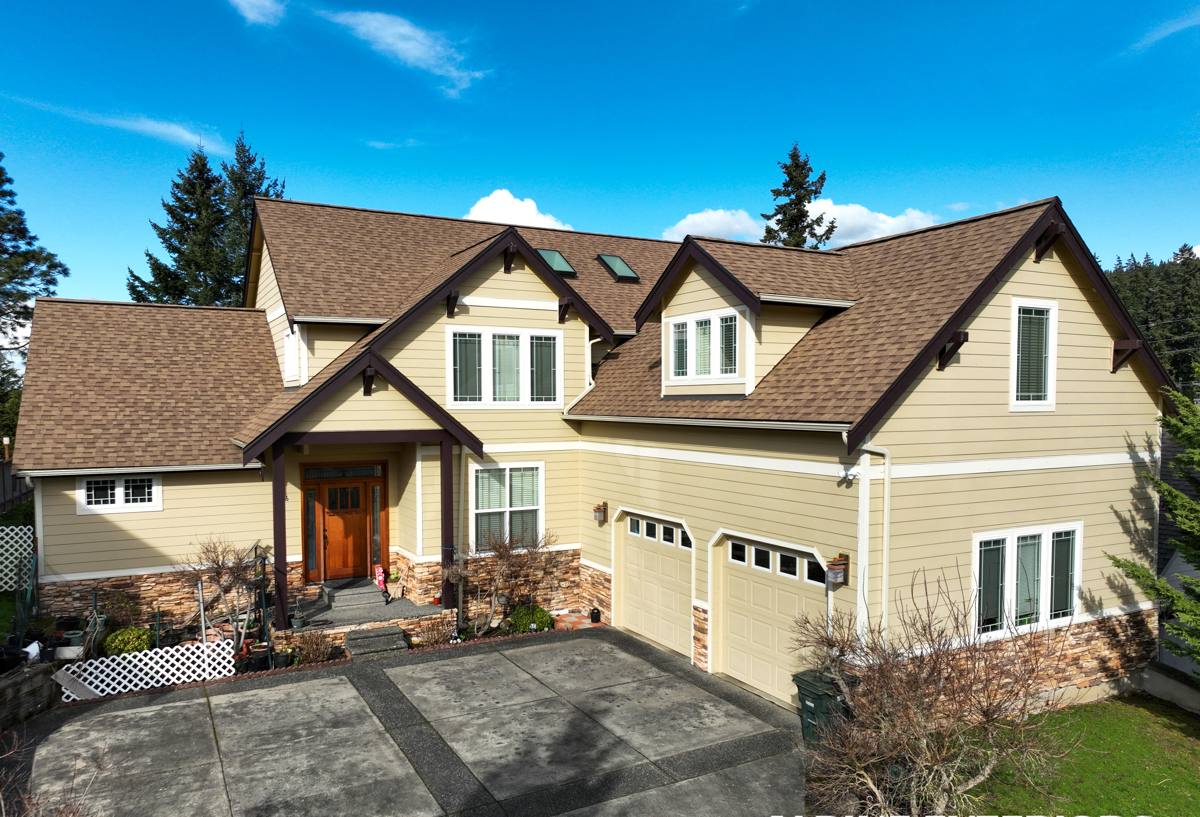
What Salt Air, Rain, and Moss Actually Do to a Deck
Salt Air and Fasteners
Airborne salt accelerates corrosion on any metal it settles on — nails, screws, joist hangers, bolts. Standard electro-galvanized fasteners that might hold up fine in a drier, inland climate can start rusting within a few years this close to the water. Once a fastener corrodes, it loses holding strength long before it looks obviously bad, which is why a deck can seem sound right up until a board lifts or a railing wobbles.
Driving Rain and Water Intrusion
Rain that comes in sideways, which is common here during winter storms, gets pushed into gaps that vertical rain would never reach — behind ledger boards, under poorly lapped flashing, around post bases. Water that gets trapped rather than shed is what causes rot, and it almost always starts hidden, in framing you can't see from the deck surface.
Moss and the Shade Problem
Moss doesn't just make decking slippery. Once it establishes on a board, it holds moisture against the wood surface around the clock, which speeds up decay underneath the growth. On shaded lots, moss can return within a season of cleaning if the underlying moisture problem — poor drainage, tight spacing, low airflow under the deck — isn't addressed at the same time.
Signs Your Deck Needs Repair Now
Some damage is obvious. A lot of it isn't, until it's expensive. Here's what we tell Silver Beach homeowners to check for, or to point out when we come by for a look:
- Soft or spongy spots underfoot, especially near the house or along board ends
- Rust staining bleeding out around screws, nails, or joist hangers
- Gaps opening up where the deck meets the house (ledger board pulling away)
- Railings or stair posts that flex or wobble when you lean on them
- Persistent moss or dark staining that returns quickly after cleaning
- Visible daylight or water stains on the framing when viewed from underneath
- Boards that have cupped, split lengthwise, or popped their fasteners
- A musty smell coming from underneath the deck after rain
Any one of these can be a simple, contained repair. Several at once, or anything involving the ledger board or main support posts, usually means we need to open things up before we can tell you what it'll actually take to fix it right.
What a Correct Deck Repair Actually Involves
Deck repair gets treated as a cosmetic job more often than it should be. Swapping a rotten board for a new one without checking what caused it to rot just buys you a few more years before the same spot fails again. A repair that's actually going to hold up in this climate works through the whole system, not just the visible surface.
Ledger Board and Flashing
The ledger board — where the deck attaches to the house — is the single most common failure point we find on older decks in this area, because it's also the hardest spot for water to drain away from naturally. A proper repair means removing decking to inspect the flashing, replacing anything that's rusted or improperly lapped, and confirming the connection is still rated to carry the deck's load, not just patched to look sealed.
Framing and Fasteners
Joists and beams get probed for soft wood, not just eyeballed. Any fastener showing corrosion gets replaced with hardware rated for the exposure — this is one area where matching the fix to the coastal climate matters more than matching the cheapest option. We also check post bases and footings for movement, since a deck can look level on top while a support post has started to settle or rot at the base.
Decking, Guardrails, and Stairs
Surface boards, railings, and stair components get repaired or replaced based on both condition and code compliance. Guardrail height, baluster spacing, and stair rise/run all have to meet current building code when we're doing structural work, even on an older deck that was built under different rules.
Repair or Replace? How We Help You Decide
Not every deck problem calls for a full rebuild, and not every deck is worth patching. The honest answer usually comes down to how much of the structural framing is still sound versus how much of the visible damage is just surface wear. Here's the general breakdown we walk homeowners through:
| Condition Found | Usually Means | Typical Scope |
|---|---|---|
| A few soft boards, ledger and framing solid | Localized wear from moss, sun, or foot traffic | Board and fastener replacement |
| Rusted hardware throughout, framing still firm | Fasteners weren't matched to coastal exposure | Hardware upgrade, spot framing checks |
| Soft or rotted ledger board or rim joist | Long-term water intrusion at the house connection | Ledger and flashing rebuild, partial reframe |
| Multiple posts or footings settled or rotted | Drainage or ground contact issues below deck | Substructure rebuild |
| Structure sound, but deck is decades old and undersized for current use | Deck predates current code or family needs | Full replacement, new footprint possible |
We give you our honest read on which category your deck falls into before we quote anything — including telling you plainly when replacement will actually cost less over time than repeated patch repairs.
Materials We Use for Coastal-Climate Repairs
Material choice matters more here than in a drier climate, because the margin for error is smaller. For fasteners and structural hardware, we use stainless or hot-dip galvanized products rated for exterior and coastal exposure rather than standard-duty hardware, even when it costs more up front — replacing a rusted screw twice costs more than buying the right one once. For decking material, both quality pressure-treated wood and composite boards can perform well in this climate, but they carry different maintenance expectations.
| Decking Material | Maintenance Needed Here | Moss/Algae Resistance |
|---|---|---|
| Pressure-treated wood | Periodic cleaning and resealing to shed water | Moderate — depends on upkeep |
| Cedar or other natural wood | Regular sealing; more sensitive to standing moisture | Lower without consistent maintenance |
| Composite decking | Occasional washing, no sealing required | Higher, but not immune on heavily shaded decks |
We'll walk you through the honest trade-offs for your specific deck's sun exposure and shade pattern rather than pushing one material as a universal fix — a composite board on a heavily shaded, low-airflow deck can still grow moss if the underlying moisture problem isn't solved.
Our Deck Repair Process
- On-site inspection. We check the deck from above and underneath, probing framing, the ledger connection, and fasteners rather than just looking at the walking surface.
- Honest scope and estimate. You get a clear breakdown of what's failing, why, and what it'll take to fix it — including if we think repair isn't the right call.
- Repair the cause, not just the symptom. Flashing, fasteners, and framing get addressed alongside any board or surface replacement.
- Code-correct rebuild of any structural component. Guardrails, stairs, and connections are brought up to current requirements wherever we're doing structural work.
- Cleanup and walkthrough. We show you what was done and what to watch for going forward.
Why a Crew That Already Works Silver Beach Matters
A contractor who works this specific stretch of Chuckanut regularly has already seen how the local combination of salt air, rain exposure, and tree-shaded lots plays out on decks in this neighborhood, not just in a general Pacific Northwest sense. That matters when it comes to knowing which fastener grade actually holds up here, which framing details tend to fail first on homes near the water versus set back from it, and what Whatcom County permitting expects for structural deck work.
It also means less guesswork and fewer surprises once we open things up. We're not learning the local climate on your project — we're applying what we've already confirmed works on decks facing the same conditions yours does.
Keeping Your Deck in Good Shape After the Repair
A good repair buys you years, but this climate doesn't stop working on your deck once we leave. A few habits go a long way:
- Sweep off leaves, needles, and debris regularly, especially in fall and winter
- Clean moss and algae off promptly rather than letting it re-establish over a season
- Keep gutters and downspouts clear so runoff isn't draining straight onto or under the deck
- Trim back overhanging branches to improve airflow and sun exposure where possible
- Have fasteners and the ledger connection checked every few years, even if nothing looks wrong on the surface
If you're noticing soft spots, rust stains, moss that keeps coming back, or a deck that just doesn't feel as solid as it used to, we're happy to take a look and give you a straight answer on what it needs. Reach out for a free, no-pressure estimate using the form below — there's no charge and no obligation to move forward.