 Chuckanut Exterior
 Building Decks for Silver Beach's Waterfront Climate
Silver Beach sits close enough to the water that its homes take a different kind of weather beating than houses even a few miles inland. Salt-laden air moves through the neighborhood off Bellingham Bay, driving rain comes in sideways during the fall and winter storm cycle, and the shaded, moisture-heavy conditions common to this part of Whatcom County keep decks damp for long stretches between dry spells. A deck built without those specifics in mind will show it within a few seasons — soft spots, black streaking, corroded fasteners, and a surface that stays slick with moss long after the rest of the yard has dried out.
We build and repair decks in the Silver Beach area regularly, and the design choices that work on a dry, inland lot don't always hold up here. This page covers what actually matters for a deck in this specific pocket of Chuckanut: the materials that resist salt and moisture, the structural details that keep water from finding its way into places it shouldn't, and what a proper build or repair process looks like.
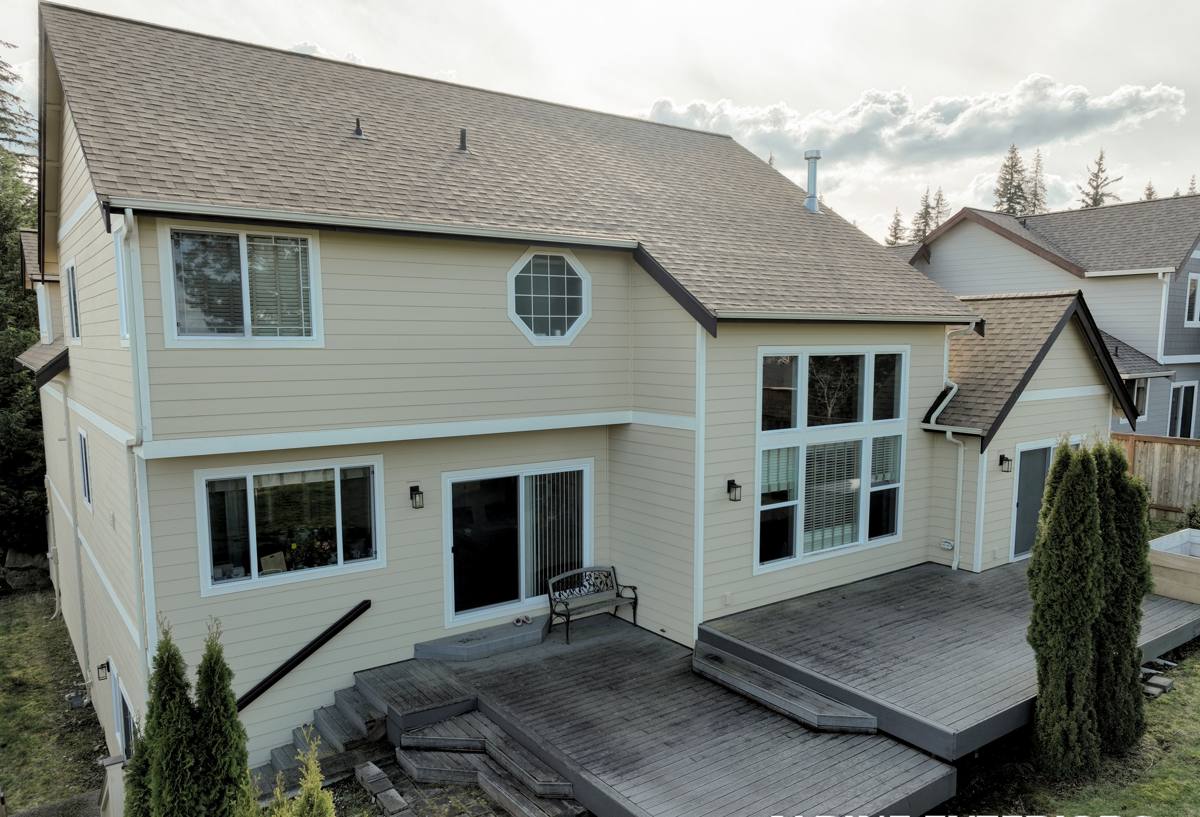
What Salt Air and Moss Season Actually Do to a Deck
Salt Air and Metal Fasteners
Proximity to saltwater accelerates corrosion on anything metal — nails, screws, joist hangers, structural brackets. Standard galvanized hardware that would last decades inland can start showing rust bleed and pitting much sooner this close to the bay. Once a fastener corrodes, its holding strength drops, and that's a structural issue, not just a cosmetic one.
Driving Rain and Water Intrusion
Rain that comes in at an angle, which is common during Whatcom County's fall and winter storms, gets pushed into places vertical rain never reaches — under railing base plates, behind ledger boards, into end-grain cuts on decking that weren't sealed. Wood absorbs moisture fastest through its end grain, so any cut edge that's left unsealed becomes a soft point over time.
Moss, Algae, and Shade
Silver Beach's tree cover and marine layer keep a lot of surfaces damp well after a storm has passed. Moss and algae need exactly that — shade and sustained moisture — and once they get a foothold on a deck surface, they hold water against the wood and make the boards dangerously slick underfoot. A deck design that ignores airflow and drainage is inviting moss back every year no matter how often it gets cleaned.
Material Choices That Make Sense Here
There's no single "best" decking material for every home — it depends on budget, maintenance appetite, and how the deck is used. But in a salt-air, high-moisture environment like Silver Beach, some choices clearly hold up better than others.
| Material | How It Handles This Climate | Maintenance |
|---|---|---|
| Pressure-treated lumber | Good moisture resistance when properly sealed; needs reapplication of sealant on a regular schedule | Annual cleaning and periodic re-sealing |
| Cedar | Naturally moisture and insect resistant, weathers to gray if left unfinished; still needs end-grain sealing at cuts | Periodic staining or sealing to hold color and resist moss |
| Composite decking | Doesn't absorb moisture the way wood does, resists rot; surface still needs cleaning to prevent moss and algae buildup | Low — occasional washing, no sealing or staining |
| Stainless or marine-grade fasteners | Resists the corrosion standard galvanized hardware sees this close to saltwater | None — this is a one-time upgrade decision |
For most Silver Beach projects, we lean toward composite decking or well-sealed cedar for the walking surface, paired with corrosion-resistant fasteners and hardware throughout the frame — not just where it's visible. The frame and ledger connections take the same weather the surface does, and they're much harder to inspect and fix once the deck is closed up.
What a Correctly Built Deck Actually Involves
Ledger Attachment and Flashing
The ledger board — where the deck attaches to the house — is the single most common source of water damage and structural failure on any deck, and it's even more critical in a driving-rain climate. Proper flashing that directs water away from the house band board, rather than letting it pool at the connection point, is not optional here.
Footings and Frost Depth
Footings need to be set below the frost line and sized correctly for the soil conditions on the lot, which can vary block to block in this area depending on how close you are to the shoreline and what the fill and drainage look like underneath. Undersized or shallow footings show up as a bouncy, uneven deck within a few years.
Board Spacing and Airflow
Decking boards need enough gap between them to let water drain through and air move underneath — too tight, and the deck holds moisture and grows moss faster; too wide, and it's a tripping and drainage nuisance in its own way. The substructure underneath also needs clearance for airflow, not a sealed-off, damp cavity that never fully dries.
Railings and Hardware
Railing posts and their attachment points take direct weather exposure and structural load at the same time. Corrosion-resistant hardware and correct blocking behind the post connections matter more here than in a drier climate, where a marginal connection might go unnoticed for years longer.
Our Process for Silver Beach Deck Projects
- On-site assessment. We look at drainage on the lot, sun and shade exposure, proximity to the water, and the condition of any existing structure before recommending materials or a design.
- Material and design discussion. We walk through the honest trade-offs between decking materials for your specific use, budget, and maintenance preference — no upselling toward whatever happens to be in stock.
- Permitting and structural planning. Footings, ledger attachment, and railing height requirements are handled to code, not to the minimum that passes a quick glance.
- Build with climate-appropriate details. Flashing, corrosion-resistant fasteners, proper board spacing, and sealed end cuts are standard on every deck we build here, not an upgrade option.
- Walkthrough and maintenance guidance. We tell you what to expect for upkeep given the materials chosen, so there are no surprises the first time moss season rolls around.
Repairing an Existing Deck vs. Rebuilding
Not every deck in Silver Beach needs to be torn out and replaced. If the framing and footings are sound and the damage is limited to surface boards, railings, or fasteners, targeted repair is often the honest recommendation. Signs that point toward repair rather than full replacement:
- Soft or spongy spots limited to a few boards, not the whole surface
- Surface moss and algae staining without underlying rot in the frame
- Corroded visible fasteners while the structural connections remain sound
- Railings that are loose or wobbly but the posts themselves aren't rotted
- A deck under 15 years old with a well-built substructure
Signs that usually mean it's time to rebuild rather than patch:
- Rot at the ledger board connection to the house
- Undersized or shifting footings causing an uneven or bouncy deck
- Widespread rot through multiple joists, not isolated boards
- A structure built without proper flashing that's been absorbing water for years
We'll tell you honestly which category your deck falls into rather than defaulting to a full rebuild recommendation when a repair would genuinely hold up.
Maintenance That Actually Keeps Moss and Salt Damage at Bay
Whatever material a deck is built from, a little regular maintenance goes a long way in this climate:
- Sweep debris and standing leaves off the surface regularly, especially in shaded corners where moisture lingers
- Wash the deck surface at least once or twice a year to interrupt moss and algae before they establish
- Check fastener heads periodically for rust bleed, especially on older galvanized hardware
- Reapply sealant or stain on wood decking on the schedule the product calls for — skipping a cycle in this climate shows up fast
- Keep gutters and downspouts near the deck clear so runoff isn't dumping extra water onto or under the structure
Why Local Deck-Building Experience Matters in Silver Beach
A crew that mostly builds decks in drier inland parts of Whatcom County will design to habits that don't hold up on a shoreline-adjacent lot in Chuckanut. The flashing detail that's "usually fine" inland isn't fine here. The fastener grade that's standard elsewhere corrodes faster with this much salt air. Working in Silver Beach regularly means we've already seen which details actually matter on this stretch of the county, rather than learning it the hard way on your project.
If you're planning a new deck, or you're not sure whether your current one needs repair or replacement, we're happy to take a look and give you a straightforward assessment. Reach out for a free, no-pressure estimate using the form below.