 Chuckanut Exterior
 Windows Built for South Hill's Weather, Not Just Its Views
South Hill homes sit close enough to the water and the tree line that windows take a beating most inland houses never see. Salt-laden air moves through on the marine breeze, driving rain comes in sideways during fall and winter storms, and a long moss season keeps everything damp for months at a time. Standard windows, or windows installed without that environment in mind, show it early: cloudy glass seals, swollen sashes, corroded hardware, and frames that let moisture creep into the wall cavity behind them. Custom windows done right for this neighborhood aren't about a bigger showroom catalog — they're about matching the window assembly, the flashing detail, and the installation sequence to the specific way weather attacks a home here.
We've worked on homes throughout Chuckanut and the surrounding Whatcom County area long enough to know that a window that performs fine in a dry climate can fail in five years here if it's installed with generic assumptions. That's the gap we close.
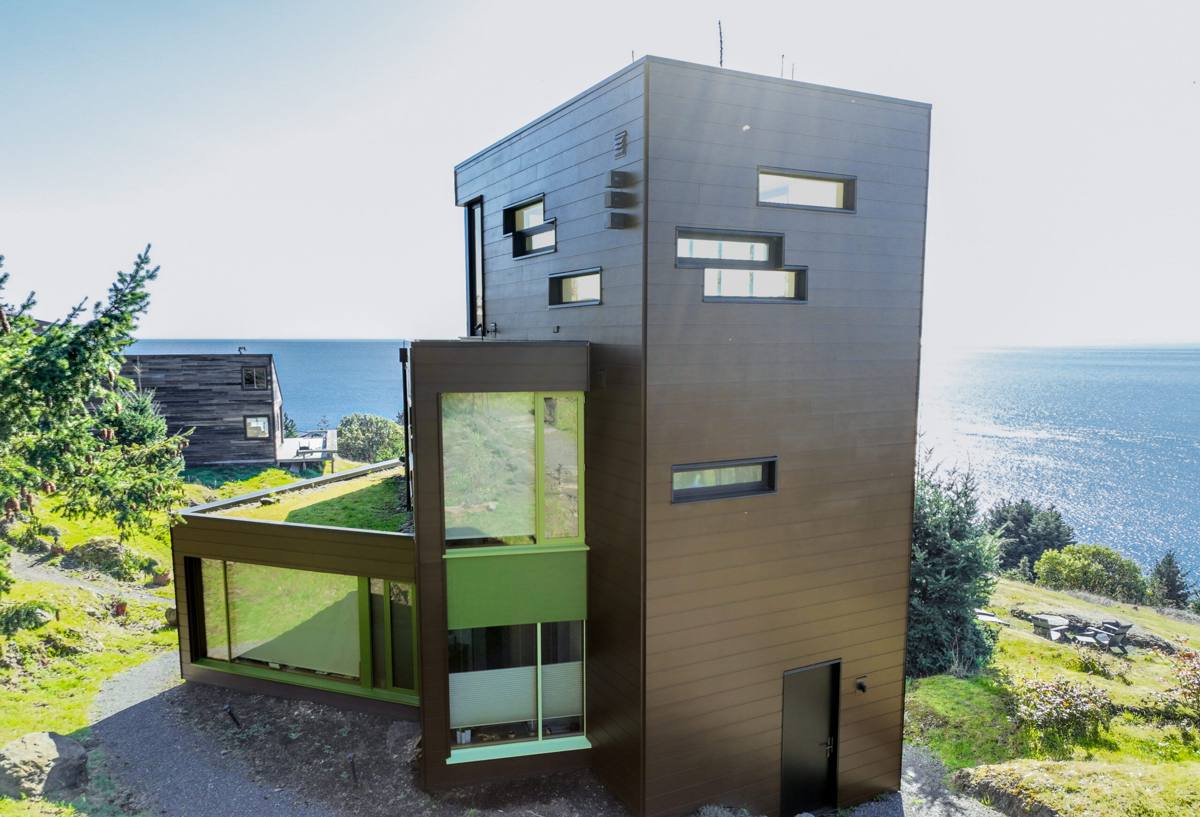
What South Hill's Climate Actually Does to Windows
Salt Air and Metal Components
Coastal salt air is corrosive to unprotected or poorly finished metal — hinges, balance systems, screen frames, and cheaper cladding all show pitting and white corrosion faster near the water. Once hardware starts to corrode, windows get harder to open and close, seals stop compressing evenly, and small gaps let more moisture in, which accelerates the whole cycle.
Driving Rain and Wind-Driven Water
South Hill's exposure means rain doesn't always fall straight down — wind pushes it sideways into wall assemblies, and that's where most window failures actually start. A window can have a perfectly good glass unit and still leak if the flashing, sill pan, and sealant details around it weren't built to shed wind-driven water. This is a detail that's easy to get wrong and expensive to fix later, because the damage happens inside the wall before it ever shows up as a stain on the interior trim.
Moss Season and Prolonged Dampness
Whatcom County's moss season isn't just a roof problem. Extended periods of damp, low-light weather keep exterior surfaces wet longer, which matters for wood-clad or wood-trimmed windows in particular. Wood that stays damp for weeks at a stretch is more prone to rot at joints and sills if it isn't properly primed, sealed, and detailed on install. It also means algae and moss can take hold on sills and trim that don't drain and dry properly.
What "Correct" Actually Means on a Window Job Here
A lot of window problems we get called out to fix aren't product failures — they're installation shortcuts that don't show up until a season or two of real weather has passed. A correct job in this climate includes:
- A sill pan or sloped sill detail that directs any water that gets past the window back outside the wall, not into the framing
- Properly lapped flashing tape and building paper/house wrap integration so water sheds down and out, following gravity and the existing drainage plane
- Backer rod and sealant at the exterior joint sized and installed to stay flexible through temperature swings, not just caulked over the gap
- Shimming and fastening that keeps the frame square and doesn't rack it, which is what keeps weatherstripping compressing evenly for the life of the window
- Insulation in the gap between the frame and rough opening — not stuffed too tight, not left with voids — for both energy performance and condensation control
- Interior air sealing so warm indoor air doesn't reach the cold zone near the glass and cause condensation inside the wall cavity
Skip any one of these and the window can still look fine for a year or two before problems show up. That delay is exactly why so many replacement jobs we see started as a "quick" install by someone not accounting for local conditions.
Choosing Materials and Finishes for This Environment
There's no single "best" window material — the right choice depends on exposure, maintenance appetite, and the look of the home. What we won't do is recommend a product or finish that we know creates a maintenance headache in this specific climate without being upfront about the trade-off. Some general guidance:
| Frame Material | Salt Air Behavior | Maintenance Load | Good Fit For |
|---|---|---|---|
| Vinyl | Doesn't corrode; UV and heat cycling matter more than salt | Low — occasional cleaning | Budget-conscious replacements, rental units, straightforward openings |
| Fiberglass | Very stable in coastal air; minimal expansion/contraction | Low to moderate | Homes wanting durability without the upkeep of wood |
| Aluminum-clad wood | Exterior face resists weather well if cladding and flashing details are correct | Moderate — interior wood still needs occasional attention | Homeowners who want a wood interior look with better exterior durability |
| Solid wood | Most vulnerable to prolonged damp and salt exposure without diligent upkeep | High — regular repainting/sealing | Historic or period-accurate homes where appearance is the priority |
For hardware — hinges, cranks, locks, balance systems — we favor corrosion-resistant finishes and stainless or coated components on any home within reach of salt air, since that's where cheaper hardware shows wear first.
How We Approach a Custom Window Job in South Hill
1. On-Site Assessment
We look at each opening individually — orientation to prevailing wind and rain, existing water damage or soft framing, current flashing condition, and how the home's drainage plane is set up. Two windows on the same house can need different details depending on which wall they're on.
2. Sizing and Product Selection
Custom means the windows are built to the actual opening, not trimmed down from stock sizes. We go over frame material, glass package, and hardware options against your priorities — energy performance, upkeep, matching existing trim, or budget — and give you honest trade-offs rather than a single "recommended" upsell.
3. Removal Without Collateral Damage
Careful removal protects the surrounding siding, trim, and interior finishes. This step also gives us a look at the rough opening and sheathing condition before anything new goes in — which matters, because covering up hidden rot instead of addressing it is how small problems become big ones.
4. Flashing, Sealing, and Installation
This is where the climate-specific detailing happens: sill pans, correctly lapped flashing, sealant at the right joints (and not others — over-sealing can trap moisture as easily as under-sealing), and square, properly shimmed installation.
5. Interior and Exterior Finish
Trim, caulking, and paint or stain get finished to match the home, with attention to any exposed wood getting proper primer and sealant coverage before it sees a wet season.
6. Final Walkthrough
We test operation, check seals, and walk the job with you before we consider it done.
Signs It's Time to Talk About Replacement
Not every issue means a full window replacement — sometimes it's a hardware or sealant repair. But a few signs point toward custom replacement being the more sensible long-term move:
- Fogging or cloudiness between the panes (a failed seal that can't be repaired, only replaced)
- Soft or discolored trim and sill wood, especially on rain-exposed walls
- Windows that are difficult to open, close, or lock — often a sign of frame racking or corroded hardware
- Visible gaps, drafts, or a noticeable temperature difference near the window
- Moss or persistent green growth on sills or exterior trim that doesn't dry out between rains
- Noticeable moisture, staining, or a musty smell on the interior wall or trim below or beside a window
Why Local Experience Matters More Than a Bigger Catalog
Any contractor can order a window. What's harder to shortcut is knowing how wind-driven rain moves across a specific type of wall assembly common in this area, how long moss season actually runs here, and which installation shortcuts fail fast near the water versus further inland. A crew that already works Chuckanut and the surrounding Whatcom County neighborhoods has usually already seen the failure mode you're trying to avoid — because we've been called back to fix someone else's version of it. That experience shapes the details we insist on, even the ones that don't show up on a product spec sheet.
Cost Factors Worth Understanding Before You Get Quotes
We won't quote a price without seeing the openings, but it's fair to explain what actually drives cost on a custom window job so you can evaluate quotes intelligently:
| Factor | Why It Matters |
|---|---|
| Frame material and glass package | Vinyl, fiberglass, and clad-wood options span a wide price range before labor is even factored in |
| Opening condition | Rot or soft framing discovered during removal adds repair work that's hard to estimate sight unseen |
| Number of unique sizes | Custom sizing per opening costs more than repeating one or two standard sizes across a home |
| Flashing and drainage complexity | Walls with more wind/rain exposure need more careful (and more time-consuming) flashing detail |
| Trim and finish work | Matching existing wood trim or historic profiles takes more labor than standard trim replacement |
| Access | Second-story or hard-to-reach openings affect labor and equipment needs |
Get a Straight Answer for Your Home
Every South Hill home wears its exposure differently — a window on the weather side of the house isn't dealing with the same conditions as one tucked under an eave. We'd rather walk your specific openings and give you a straight, honest assessment than sell you a generic package. If you're weighing repair versus replacement, or just want a second opinion on what a previous install got wrong, reach out for a free, no-pressure estimate using the form below.