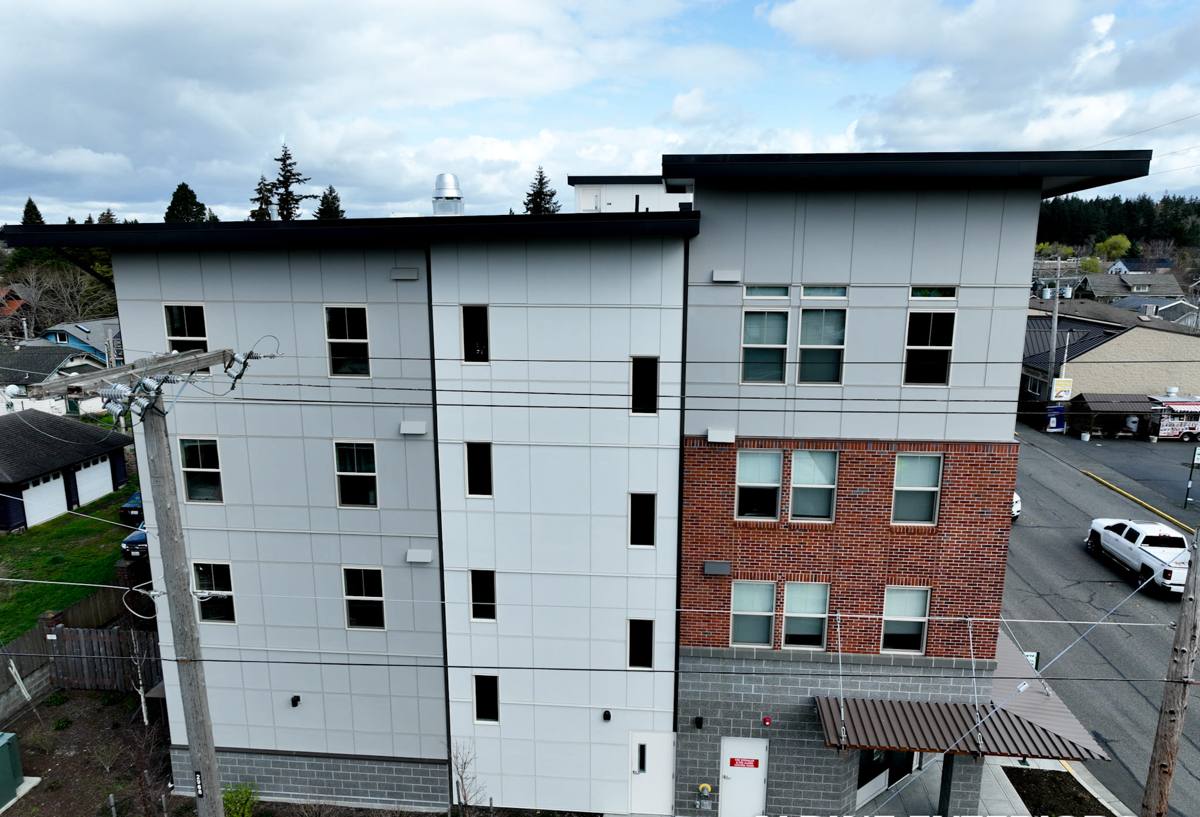
 Chuckanut Exterior
 Why Lake Samish Windows Take More Abuse Than the Average Whatcom County Home
Homes around Lake Samish sit in a spot where a few different weather patterns overlap. You've got the maritime air pushing in off Samish Bay and the Sound, driving rain that comes in sideways during fall and winter storms, and heavy tree cover around much of the lake that keeps siding, trim, and window frames shaded and damp for long stretches of the year. That combination is hard on windows in ways that don't show up right away.
Salt-laden air corrodes hardware and fasteners faster than it does further inland. Driving rain finds any gap in flashing or caulking and pushes water behind trim instead of just running off the glass. And the tree canopy that makes lakefront living so appealing also means less direct sun on north- and east-facing walls, which stretches the moss and algae season out for months longer than a home in open sun would see. None of this means windows fail quickly — but it does mean the margin for a sloppy install is much smaller here than it is in a drier part of the state.
What a Correct Window Job Actually Involves on This Lake
A window replacement is not just popping an old unit out and a new one in. Done right, it's a waterproofing job first and a window install second. On Lake Samish properties in particular, a few details matter more than usual:
- A proper sill pan or sloped sill flashing so any water that gets past the glass drains back outside instead of pooling against the wood framing
- Housewrap and flashing tape integrated correctly with the existing wall assembly, lapped so water always sheds downward and outward
- Backer rod and a compatible, flexible sealant at the exterior joint — rigid or incompatible caulk cracks with seasonal movement and lets water in
- Shimming the unit square, level, and plumb so the sash operates correctly and weatherstripping seals evenly for years, not months
- Insulating the gap between the frame and rough opening without overfilling it, which can bow the frame and cause the window to bind
Skip any one of these steps and the window can still look fine for a year or two while moisture works its way into the framing behind it. By the time it shows up as a soft spot in the sill or a stain on interior trim, the repair is bigger than a window job.
Choosing a Frame Material That Can Handle This Climate
There's no single "best" window material — it depends on the home, the budget, and how much upkeep you want to sign up for. Here's how the common options hold up under Lake Samish conditions specifically:
| Material | Moisture/Rot Resistance | Maintenance | Typical Cost Range |
|---|---|---|---|
| Vinyl | Very good — won't rot, doesn't need painting | Low — occasional cleaning | $ |
| Fiberglass | Excellent — very stable in wet/dry cycling | Low | $$ |
| Wood-clad (wood interior, aluminum or vinyl exterior) | Good if the cladding and flashing are done correctly | Moderate — exterior is low-maintenance, interior wood needs occasional finish work | $$$ |
| Aluminum | Fair — resists rot but can corrode near salt air without a good finish, and conducts cold | Low, but watch for pitting over time | $$ |
For a shaded, damp lot near the water, we lean toward vinyl or fiberglass for most homeowners because they don't give moss and moisture anything to work with over time. Wood-clad windows still make sense on homes where the look matters and the budget allows for the extra care, but we're honest with clients that they come with a longer-term maintenance commitment in a climate like this one.
Glass and Glazing: Managing Condensation and Temperature Swings
Lake-adjacent humidity plus Pacific Northwest temperature swings is a recipe for condensation, both on the interior glass surface and, if a seal fails, between the panes themselves. A few things make a real difference:
Pane Count
Double-pane is the standard baseline and performs well when properly sealed. Triple-pane adds another layer of insulation and can help on colder, more exposed sides of a lake home, but it's a heavier unit and not always worth the added cost on a well-shaded wall that isn't losing much heat to begin with.
Low-E Coatings and Gas Fills
A low-emissivity coating helps control heat transfer in both directions — keeping summer heat out and winter heat in — without darkening the glass. Argon gas fill between panes adds a bit more insulating value. Neither is exotic technology at this point; both are standard on most quality replacement windows.
Fogging Between Panes
If you ever see haze or moisture trapped between the glass layers on an existing window, that's a failed seal, not a cleaning problem — the gas fill has escaped and outside air is getting in. It's one of the most common reasons homeowners around the lake end up calling us, and it's not repairable; the insulated glass unit needs to be replaced.
How We Approach a Window Project at Lake Samish
- On-site assessment. We look at each opening, check the condition of the existing framing and sill for rot or past water intrusion, and measure precisely rather than working off estimates.
- Material and glass selection. We walk through frame material, glazing options, and grille or style choices based on your home, your budget, and how exposed that particular wall is to weather.
- Ordering and lead time. Custom windows are built to your exact openings, so there's a lead time between ordering and delivery — we'll give you a realistic window rather than guess.
- Careful removal. Old windows come out with attention to what's underneath. If we find soft framing or old water damage, we flag it before covering it back up with a new unit.
- Installation and flashing. The new window goes in plumb, level, and square, with flashing and sealant details built for driving rain, not just fair-weather performance.
- Finish work and walkthrough. Interior and exterior trim gets finished, everything is cleaned up, and we test operation with you before we call the job done.
Problems We Commonly Run Into Around the Lake
A few issues show up often enough on Lake Samish properties that they're worth mentioning directly:
- Moss and algae buildup on sills and lower trim from shaded, slow-drying areas of the house, which holds moisture against wood and paint longer than it should
- Hidden rot behind old trim where a previous window was caulked over instead of properly flashed
- Failed weep holes on older vinyl or aluminum units, clogged with debris so water can't drain out of the frame
- Corroded hardware on windows that have been exposed to salt-tinged air for many years without much upkeep
- South- and west-facing units showing UV wear on trim and seals faster than the shaded sides of the same house
A Simple Maintenance Checklist for Lake Samish Homeowners
Whether your windows are new or original to the house, a little seasonal attention goes a long way in this climate:
- Clear moss and debris from sills, tracks, and weep holes at least once a year, more often on heavily shaded walls
- Check exterior caulking annually for cracking or gaps and re-seal before winter rains set in
- Look for haze or condensation trapped between panes — it means a seal has failed
- Test that sashes open, close, and lock smoothly; sticking can mean the frame has shifted or swelled
- Wipe down and lightly lubricate hardware on older aluminum or wood windows to slow corrosion
- Watch interior sills and drywall below windows for staining, which can point to a flashing failure worth catching early
Why It Matters to Hire a Crew That Already Works This Lake
Lake Samish homes aren't all the same age or built the same way — the area has a mix of older cabin-style structures that have been converted to full-time homes and newer construction, often on lots with narrow gravel access, mature trees close to the house, and grading that slopes toward the water. A crew that's worked this area before knows how to plan access and staging around those constraints instead of figuring it out on the fly.
There's also a practical side to Whatcom County permitting and code requirements for window replacement, especially on older structures where an opening may need to be adjusted to meet current egress or energy code. And frankly, a contractor who has already dealt with moss-covered sills, hidden rot behind old trim, and salt-air corrosion on this lake is going to spot those problems faster than one seeing it for the first time — which matters when the goal is fixing the underlying issue, not just installing new glass over it.
Get a Straight Answer on What Your Windows Need
If you're dealing with drafty, foggy, or hard-to-operate windows on a Lake Samish property, we're happy to take a look and give you an honest read on what's going on and what it would take to fix it — no pressure, no obligation. Use the form below to request a free estimate.