 Chuckanut Exterior
 Building Decks for Columbia's Salt Air and Moss Season
Homes in the Columbia area of Chuckanut sit close enough to Puget Sound and tucked under enough conifer cover that a deck here takes a very specific kind of beating. Salt-laden air moves through the trees and settles on every exposed surface, which speeds up corrosion on fasteners and hardware faster than you'd see on an inland lot just a few miles away. Add in driving rain that comes in sideways during fall and winter storms, and shade from mature evergreen cover that keeps everything damp long after the rain stops, and you've got a recipe for a deck that grows moss on the walking surface itself, not just the roof and gutters.
None of that means a deck can't hold up for decades in this part of Whatcom County. It means the material choices, fastener grades, and drainage details have to match the actual conditions on the lot, not a generic build sheet. That's the difference between a deck that needs real attention every few years and one that quietly does its job.
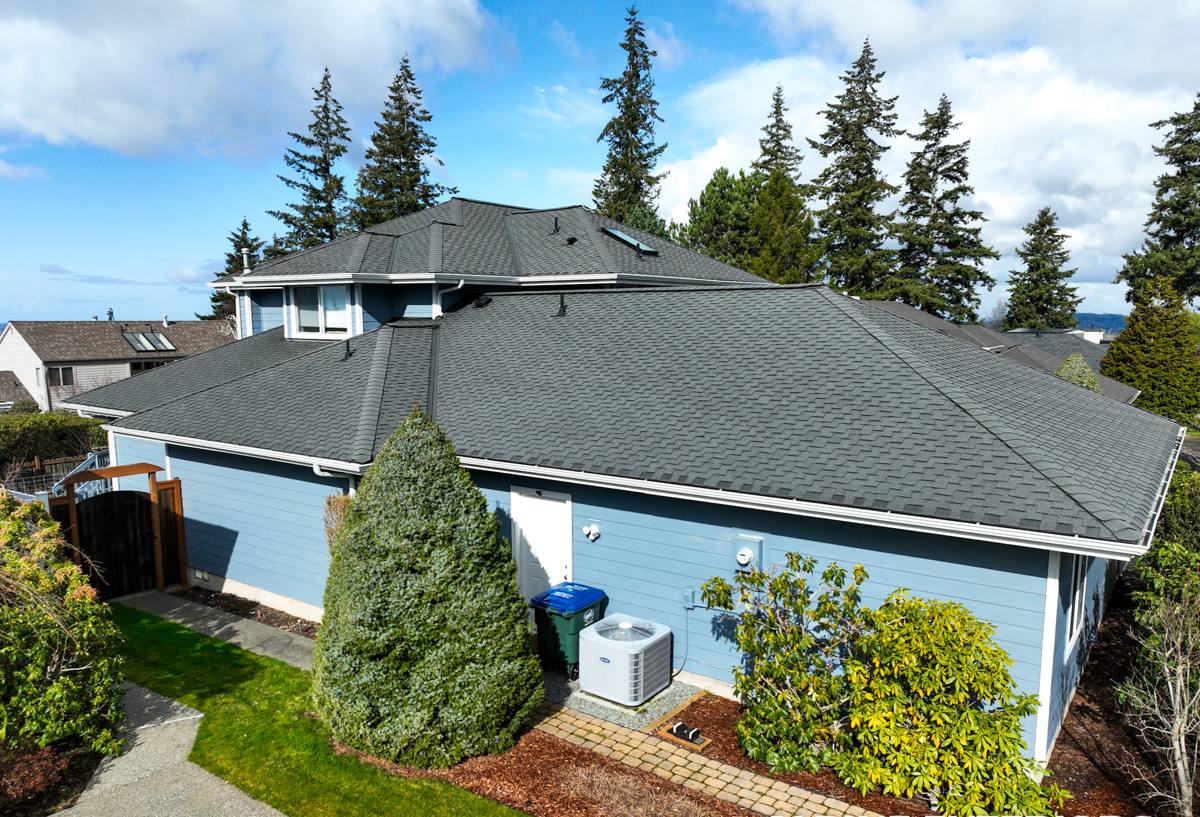
What a Columbia Deck Needs to Hold Up Long-Term
Every lot in this neighborhood is a little different, and those differences matter more for a deck than most homeowners expect.
Sun and Shade Vary Block to Block
A deck tucked under fir or cedar canopy stays wet longer after every rain and gets a fraction of the direct sun a more open lot would see. That shade is pleasant to sit under, but it's also exactly what moss, algae, and mildew need to establish themselves on decking boards, stair treads, and railings.
Soil Moisture and Drainage
Footings and posts set in soil that stays saturated for weeks at a time need to be sized and placed with that in mind. Poor drainage around a deck's foundation is one of the more common reasons posts settle unevenly or ledger boards start pulling away from the house years before they should.
Wind-Driven Rain
Storms off the water don't just fall straight down — wind pushes rain sideways and up under railings, stair stringers, and the gap where a deck meets the house. Flashing and water management details at that ledger connection matter as much as the decking material itself.
Decking Material Comparison for Whatcom County Weather
There's no single "best" decking material — there's the material that fits your budget, your maintenance appetite, and the amount of shade and moisture your particular lot deals with.
| Material | Moisture/Rot Resistance | Moss & Mold Resistance | Maintenance | Typical Lifespan |
|---|---|---|---|---|
| Cedar | Good when sealed regularly | Fair — needs cleaning in shaded areas | Annual cleaning and re-sealing | 15–20 years |
| Pressure-Treated Fir/Pine | Good with proper fasteners and sealing | Fair to poor in heavy shade | Regular sealing, watch for checking | 15–20 years |
| Composite Decking | Excellent — won't rot | Good, but surface film can grow in deep shade | Periodic washing, no sealing needed | 25–30 years |
| PVC/Capped Polymer | Excellent — fully synthetic | Very good, sheds moisture readily | Occasional washing | 25–30+ years |
We install real wood decking when a homeowner wants that look and is prepared for the upkeep it requires in a shaded, damp climate. For most Columbia projects with any real tree cover, though, we point people toward composite or capped polymer boards — not because wood is a bad product, but because the maintenance burden of keeping natural wood moss-free under a canopy is a real, ongoing cost that a lot of homeowners underestimate at the time of installation.
Framing and Substructure: Where Decks Actually Fail First
The decking surface is what you see, but the framing underneath is what determines whether a deck lasts. This is also where corner-cutting shows up years later as a safety problem, not just a cosmetic one.
Ledger Board Flashing
The connection where a deck attaches to the house is the single most common failure point we find on older decks in this area. Without proper flashing and a water-shedding detail at that ledger, rain works its way behind the board and into the rim joist over time — invisible from the outside until the wood underneath is compromised.
Fastener and Hardware Grade
Standard electro-galvanized screws and joist hangers corrode noticeably faster this close to salt air. We frame with stainless steel or hot-dip galvanized hardware rated for coastal exposure, because the cost difference up front is small compared to what it costs to fix hardware failure in a structural connection later.
Footing Depth and Post Bases
Footings need to go below the frost line and account for how saturated the soil gets on a given lot. Post bases that hold the post above standing water — rather than embedding it directly in concrete or soil — cut down significantly on the slow rot that eventually shows up at ground level.
Railings and Hardware That Handle Salt Air Without Rusting
Railings take more direct weather exposure than almost any other part of the structure, and they're also what people touch, lean on, and inspect up close.
Wood balusters and cable rail systems both work well here, but they come with different trade-offs worth being upfront about:
- Wood railings need the same sealing schedule as wood decking, and moss can establish on horizontal rail caps in shaded spots faster than on the deck floor itself.
- Cable rail systems use stainless steel cable, which resists salt air corrosion well, but the end fittings and turnbuckles still need to be rated for coastal exposure and periodically checked for tension.
- Aluminum and composite railing systems trade a bit of visual warmth for very low maintenance and strong resistance to both rust and moss.
Whatever system a homeowner chooses, we spec fasteners and brackets to the same coastal-grade standard as the framing underneath — a railing is only as reliable as the hardware holding it to the structure.
Designing to Shed Water and Resist Moss, Not Fight It Every Season
A well-designed deck fights moss and standing water passively, through spacing and layout, rather than relying entirely on homeowner upkeep.
Board Spacing and Airflow
Proper gapping between boards lets water drain through instead of sitting on the surface. Too tight, and debris packs into the gaps and holds moisture against the board edges — one of the more common causes of premature rot at board ends.
Under-Deck Drainage
For decks built over living space, patios, or storage areas, an under-deck drainage system routes water off the top surface and away from the structure below, instead of letting it drip through indefinitely.
Orientation and Vegetation Management
Where the layout allows it, orienting a deck to catch more available daylight — and keeping overhanging branches trimmed back — cuts down meaningfully on how much moss pressure the surface deals with over a season.
Our Process for a Columbia Deck Project
Every project starts with an honest look at the specific lot, not a standard template.
- Site assessment — we look at sun exposure, shade patterns, existing drainage, and soil conditions before recommending materials or a footing plan.
- Design and material selection — sized to the home, the intended use, and the maintenance level the homeowner actually wants to commit to.
- Permitting — deck permits and inspections are handled through the applicable local building department; we manage that process rather than leaving it to the homeowner.
- Construction — framing first, with coastal-grade hardware and proper ledger flashing, then decking, railings, and stairs.
- Final walkthrough — we go over the finished deck and a straightforward maintenance schedule so there are no surprises the first wet season.
Deck Maintenance Checklist for Chuckanut's Climate
A little seasonal attention goes a long way toward avoiding bigger repairs down the road:
- Sweep debris and needles out of board gaps before fall rains set in — trapped debris holds moisture against the wood.
- Wash the deck surface at least once a year, more often in heavily shaded areas prone to moss.
- Check and re-seal wood decking and railings on the manufacturer's recommended schedule.
- Inspect fasteners and hardware annually for early signs of rust or corrosion, especially near stair stringers and railing posts.
- Confirm the ledger board flashing and any under-deck drainage are still shedding water properly, particularly after major storms.
- Trim back overhanging branches to reduce shade and debris buildup on the deck surface.
Why Hire a Crew That Already Works in Columbia
A lot of what determines whether a deck lasts in this part of Chuckanut isn't visible in a glossy brochure — it's knowing which lots hold moisture longest, which hardware grade actually holds up to the salt air coming off the water, and how the local building department wants a deck permit submitted. A crew that has already built and maintained decks in this specific neighborhood has seen which details matter here and which corners get cut on decks that end up needing early repair. That local track record is worth more than a generic warranty on paper.
If you're planning a new deck or replacing one that's past its prime, we're happy to come take a look at your property and put together a straightforward, no-pressure estimate — just fill out the form below to get started.