 Chuckanut Exterior
 Custom Decks for Blanchard Homes Near Chuckanut
Blanchard sits close enough to the water, and close enough to the trees, that a deck out here works harder than one built twenty miles inland. Homes along the Chuckanut corridor deal with a specific combination of conditions: salt-laden air moving in off the water, driving rain that hits siding and decking sideways during winter storms, and long stretches of shade and dampness that turn into moss season almost year-round. A deck built without those conditions in mind will look fine for a year or two and then start showing problems — soft spots, rusted fasteners, slick green boards — well before it should.
We build custom decks for this area specifically, not as a side job between projects somewhere drier. That matters more than most homeowners realize until they've had a deck fail early.
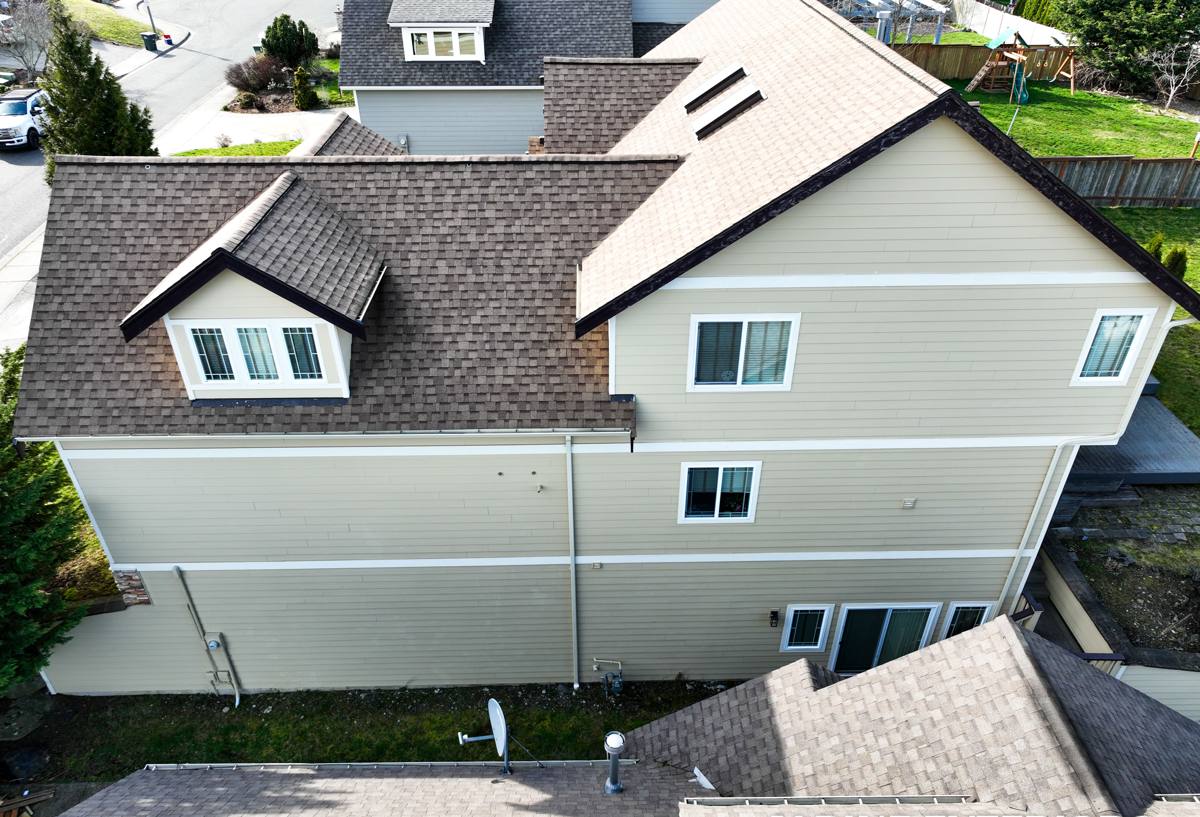
What Salt Air and Driving Rain Actually Do to a Deck
Two separate problems show up on decks in this part of Whatcom County, and they don't get solved the same way.
Salt air and corrosion
Salt-laden air accelerates corrosion on anything metal — fasteners, joist hangers, post bases, railing hardware. Standard electro-galvanized screws and hangers that would last decades in a dry inland climate can start rusting within a few years this close to the water. Once a fastener rusts, it loses holding strength long before it looks obviously bad, which is part of why deck framing failures often come as a surprise.
Driving rain and water intrusion
Rain that comes in sideways doesn't just fall on a deck — it drives up under boards, behind ledger boards, and into any gap in flashing. A deck ledger that isn't properly flashed and separated from the house band board is one of the most common points of hidden rot we find on older decks in this area, and it's also one of the leading causes of deck collapses nationally when it goes unaddressed for years.
Choosing Decking Material for This Climate
There's no single "best" decking material — there's a best material for a given budget, look, and maintenance appetite, evaluated honestly against what this climate does to it. Here's how the common options actually perform in a salt-air, high-rain, moss-prone setting like Blanchard.
| Material | Salt Air / Corrosion | Moss & Mildew Resistance | Maintenance | Typical Lifespan |
|---|---|---|---|---|
| Pressure-treated wood | Good if fasteners are stainless or coated correctly | Needs regular cleaning and sealing to resist moss | Annual cleaning, re-sealing every 1–2 years | 15–20 years with upkeep |
| Cedar | Naturally decay-resistant; still needs corrosion-rated hardware | Moderate — moss still takes hold without airflow and cleaning | Regular oiling/sealing to hold color and resist moisture | 15–20 years with upkeep |
| Composite decking | Excellent — no wood fibers to swell or corrode | Good, but surface algae/moss still needs occasional washing | Periodic washing, no sealing or staining | 25–30 years |
| PVC / capped polymer | Excellent — fully synthetic, unaffected by salt exposure | Best moisture and moss resistance of the group | Lowest — occasional rinse | 25–30+ years |
Wood still has a place, especially when a homeowner wants a specific traditional look or is working with a tighter budget, and it can hold up well here as long as it's detailed correctly. Composite and PVC cost more up front but remove most of the ongoing maintenance burden that this climate otherwise demands.
What we don't recommend, and why
We steer people away from thin, unrated composite boards and mixed-fiber products that aren't fully capped on all sides. In a wet, humid climate like this, any exposed wood fiber in a composite board is a moisture entry point, and once that starts, it doesn't reverse. It's not that these products are unusable everywhere — it's that they're a poor match for how much rain and dampness this area sees, and we'd rather steer a homeowner toward something that will actually hold up than sell a cheaper board that causes problems in five years.
Framing, Fasteners, and Where Deck Failures Actually Start
The decking surface is the part everyone sees, but the framing underneath is what determines whether a deck is safe. This is where corner-cutting shows up years later, usually hidden until someone notices bounce underfoot or a soft spot near the ledger.
- Ledger boards flashed with proper step flashing and a water-resistant barrier, never just caulked and bolted to siding
- Stainless steel or heavy hot-dip galvanized fasteners and hangers rated for coastal/marine exposure, not standard construction-grade coating
- Joist tape over framing lumber to keep water from wicking into end grain and fastener holes
- Footings set below frost depth and sized for the actual soil conditions on the lot, not a generic minimum
- Post bases that hold posts above standing water, never posts set directly into wet soil or concrete
- Proper board spacing and airflow underneath to let the structure dry out between rain events
None of this is visible once the deck is finished, which is exactly why it matters who builds it. A deck that looks identical to a neighbor's can be built to a completely different standard underneath.
Moss, Drainage, and Design Choices That Matter Here
Moss doesn't happen because a deck is dirty — it happens because a surface stays damp and shaded long enough for spores to establish. In Blanchard's tree cover and long wet season, that's most of the year on north-facing or heavily shaded decks. Design choices made before construction affect how much moss pressure a deck deals with for its whole life:
Board orientation and drainage
Decking run in the direction that sheds water fastest, combined with slightly gapped boards, lets rain move through instead of pooling. Solid-surface decks without any drainage plan tend to hold water on the board tops and develop moss and slick spots first.
Airflow underneath
Low decks built tight to grade with poor skirting ventilation trap moisture underneath, which speeds up both moss growth on the surface and rot in the framing below. Where grade and design allow, we build in ventilation gaps rather than closing a deck off completely.
Sun exposure and landscaping
We can't move the trees, but where a homeowner has flexibility in deck placement or size, orienting toward available sun and away from constant shade cuts down on moss dramatically. It's a conversation worth having at the design stage, not something to fix after the fact.
Permits, Setbacks, and Guardrail Requirements
Most custom decks in this area require a building permit, and elevated decks always need code-compliant guardrails and stair construction. A few things homeowners in Blanchard should expect going in:
| Factor | What It Affects |
|---|---|
| Deck height above grade | Determines whether guardrails and specific footing/frost depth requirements apply |
| Property line setbacks | Sets how close a deck can be built to the property boundary, especially on smaller lots |
| Attached vs. freestanding | Attached decks require ledger inspection; freestanding decks avoid ledger flashing risk but need their own footings |
| Guardrail and baluster spacing | Code-mandated height and gap limits for any deck above a set height threshold |
| Stair geometry | Rise, run, and landing requirements are inspected and commonly flagged when missed |
We handle permit drawings and inspections as part of the build rather than leaving a homeowner to sort it out. Skipping a permit on an elevated deck isn't just a paperwork risk — it can affect insurance and resale down the line if the work was never inspected.
How We Build a Custom Deck, Start to Finish
- Site visit and design conversation — we look at grade, drainage, sun exposure, and how the deck will actually be used before talking materials
- Material and layout selection — honest comparison of wood, composite, and PVC options based on budget and how much maintenance the homeowner wants long-term
- Permit drawings and submission — we prepare and file what's needed for the local jurisdiction and wait for approval before digging
- Footings and framing — built to marine-grade fastener and flashing standards from the ground up, not just at the visible surface
- Decking, railing, and stairs — installed to the layout and drainage plan set at design stage
- Final walkthrough and inspection sign-off — we go over the finished deck together and make sure permit inspections are closed out
Maintaining a Deck in Blanchard's Climate
Even a well-built deck needs some seasonal attention here — the climate doesn't let any exterior surface run truly maintenance-free. What we recommend depends on material, but the basics apply across the board:
- Sweep debris and standing leaves off the surface regularly, especially in fall when moss spores are most active
- Rinse or gently wash the deck surface once or twice a year to interrupt moss and algae before it takes hold
- Check and clear gaps between boards so water keeps draining instead of pooling
- Inspect ledger flashing and railing hardware annually for rust staining or loose connections
- Re-seal or re-stain wood decking on the schedule the product actually needs, not "when it looks bad"
- Trim back overhanging branches where possible to reduce shade and moss pressure
Why a Crew That Already Works Blanchard Makes a Difference
A deck built by a crew unfamiliar with this stretch of Chuckanut Drive and the surrounding Whatcom County terrain is more likely to miss the details that matter here — the fastener grade, the flashing detail, the drainage plan for a shaded lot. We already know which parts of a build need to be over-specified for salt air and driving rain, because we've gone back and diagnosed the decks that weren't. That experience shows up in decisions made before the first post hole is dug, not in repairs made a few years later.
If you're planning a custom deck in Blanchard or anywhere along the Chuckanut corridor, we're glad to walk the property, talk through material options honestly, and put together a free, no-pressure estimate. There's a form below to get that conversation started.