 Chuckanut Exterior
 Deck Repair for Columbia Homes
The Columbia area sits close enough to the water that its decks live a harder life than decks a few miles inland. Between salt-laden air rolling off the bay, driving rain that comes in sideways during winter storms, and a moss season that can stretch from October well into spring, outdoor structures here take a steady beating. We've spent enough time working on decks in this part of Chuckanut and greater Whatcom County to know which failure points show up again and again, and what it actually takes to fix them properly instead of just patching the symptom.
This page is about deck repair specifically — not replacement, not new construction. If your deck is structurally sound but showing its age, or if something has gone wrong that needs a real fix rather than a cosmetic cover-up, this is what a correct job looks like for a home in Columbia.
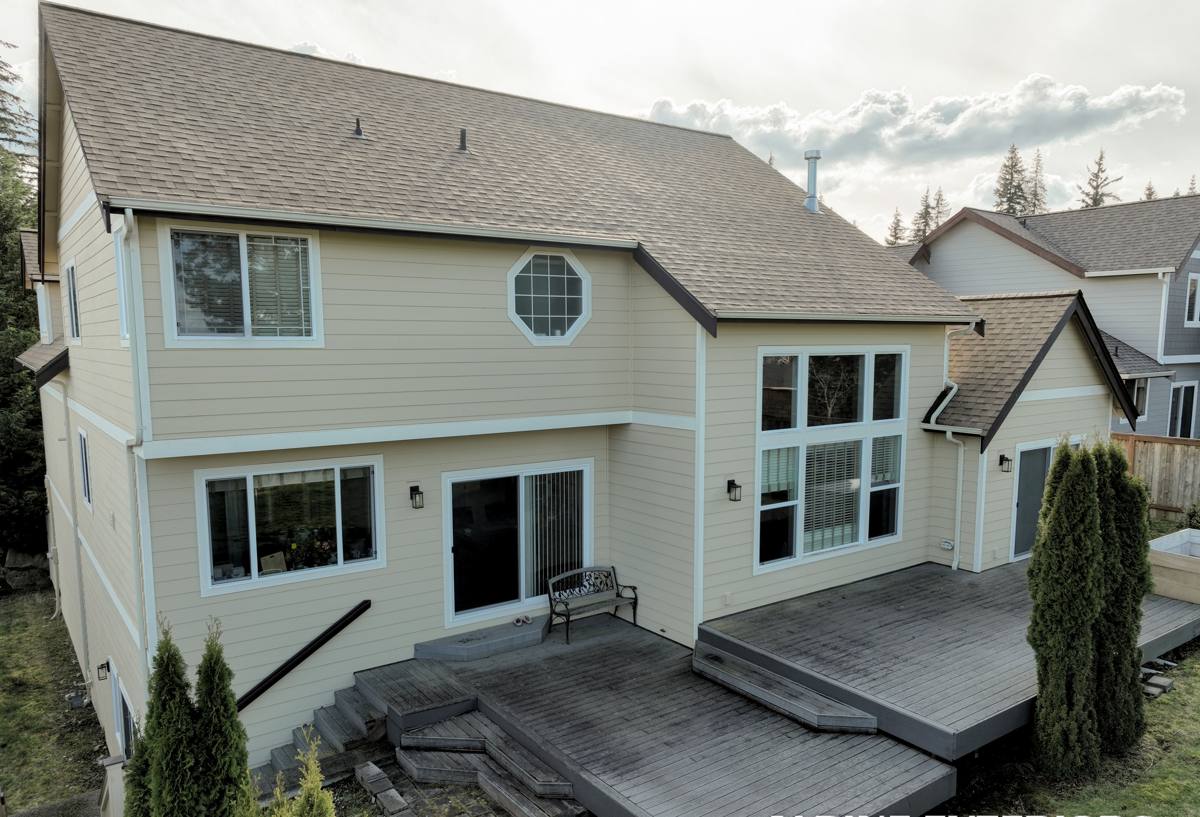
Why Columbia Decks Wear Differently
Salt Air and Corrosion
Homes closer to the water deal with airborne salt that settles on every exposed surface, including deck hardware. Nails, screws, joist hangers, and bolts that aren't rated for coastal exposure corrode faster here than they would twenty miles inland. Corrosion doesn't always show on the surface — a fastener can look fine from above while it's lost most of its holding strength underneath a joist hanger or ledger board.
Driving Rain and Water Intrusion
Whatcom County storms don't just fall straight down — wind pushes rain sideways and up under railings, into end grain, and behind ledger flashing that's even slightly out of place. Water that gets trapped rather than shed is what turns a small maintenance item into a rot problem. Flat horizontal surfaces, fastener heads, and the joint where a deck meets the house are the areas that take the worst of it.
Moss, Algae, and a Long Damp Season
A moss season that runs most of the year means decking boards, especially wood ones with any horizontal grain exposure, stay damp far longer than they would in a drier climate. Moss and algae hold moisture against the wood surface, which accelerates surface decay and makes boards slick and unsafe underfoot long before they look structurally compromised.
Signs a Deck Needs Repair — Not Just a Wash
Homeowners often call us after noticing something that seems minor. Some of it is cosmetic. Some of it isn't. A few reliable signs that it's time for an actual repair rather than a cleaning or a coat of sealant:
- Soft or spongy spots underfoot, especially near the house or along board ends
- Railings or posts that flex or wobble when pushed
- Visible gaps, rust staining, or movement at joist hangers and ledger connections
- Boards that have cupped, split, or pulled away from fasteners
- Persistent dark staining or a musty smell near the ledger or under the deck
- Stairs that feel uneven or have visible sag in the stringers
Any one of these on its own might be a small fix. Several at once usually means water has been getting into the structure for a while, and it's worth having someone look at the whole system rather than just the board you noticed.
What a Correct Deck Repair Actually Involves
Start With the Structure, Not the Surface
A repair that only replaces the decking boards you can see, without checking what's underneath, is a cosmetic fix wearing a structural price tag. A proper repair starts with the ledger board connection to the house, the joists, the posts, and the footings. In our climate, this is where the real damage tends to hide — surface boards can look fine while the framing underneath has been absorbing water for a season or two.
Fasteners and Hardware
Given the salt exposure in this area, hardware matters more here than in a lot of other markets. Joist hangers, structural screws, and bolts should be rated for the level of corrosion resistance the site actually needs — not just whatever meets minimum code. Mixing incompatible metals (certain fastener types against certain hardware finishes) can actually accelerate corrosion rather than prevent it, so matching hardware correctly is part of doing this right.
Flashing and Water Management
Ledger flashing is one of the most common failure points we find, and it's rarely visible until boards are pulled back. If flashing was installed incorrectly, or wasn't installed at all, water has likely been getting behind the ledger and into the house's rim joist. Correcting this is not optional — it's the difference between a repair that lasts and one that fails again in a year or two.
Decking, Railings, and Stairs
Once the structure is confirmed sound (or corrected), the visible repair work — replacing damaged boards, tightening or rebuilding railings, addressing stair stringers — goes much further because it's not sitting on a compromised base.
Our Repair Process
- Inspection. We look at the whole deck system — ledger, framing, posts, footings, and surface — not just the spot you called about.
- Honest scope. We tell you what's cosmetic, what's structural, and what can reasonably wait. We won't pad a repair with work that isn't needed.
- Repair, in the right order. Structural and water-management issues get corrected first; surface and cosmetic work comes after, so it isn't undone by a problem underneath.
- Protection. Where it makes sense, we recommend sealing, staining, or hardware upgrades suited to this area's salt exposure and rain load — not a generic, one-size-fits-all product.
Repair or Replace? Weighing the Real Factors
Not every deck with problems needs to come out entirely, and not every deck is worth saving as-is. The honest answer depends on how far the damage has spread and how the structure was originally built.
| Factor | Favors Repair | Favors Replacement |
|---|---|---|
| Framing condition | Solid, dry, no rot at joists/posts | Widespread rot or corrosion at structural members |
| Ledger connection | Properly flashed, no water staining | Long-term water intrusion behind ledger |
| Age of structure | Under 15-20 years, built to reasonable standards | Older deck, outdated fastening or footing methods |
| Extent of damage | Isolated to a few boards or connections | Damage spread across multiple systems (deck, rails, stairs) |
| Cost pattern | Repair cost is a fraction of new build | Repair cost approaches a large share of replacement |
We'll walk this table through with you in person rather than guess from a photo. A deck that looks rough on the surface is sometimes structurally fine underneath; a deck that looks decent from the yard can have serious problems at the ledger you'd never see without pulling boards.
Materials: What We Use for Repairs in This Climate
For structural repairs — joists, ledgers, posts — we use lumber rated for exterior/ground-contact use as appropriate, matched to hardware that won't fight the moisture and salt exposure typical of the Columbia area. For decking repairs, both wood and composite have a place, but they come with different trade-offs worth understanding before you decide:
- Wood decking is easier to spot-repair board by board and blends more naturally with an existing wood deck, but it needs regular sealing or staining to hold up against this area's rain and moss season.
- Composite decking resists moss and moisture better with less maintenance, but repairs are less forgiving — matching an existing composite board's color and texture years later can be difficult, and it's a more particular installation that doesn't tolerate shortcuts.
We'll tell you honestly which option fits your specific deck, your budget, and how much upkeep you actually want to do — not just push whatever's easiest for us to install.
A Homeowner's Seasonal Deck Checklist
Between professional inspections, a few habits go a long way toward catching problems before they need a repair call at all:
- Clear moss and debris from board gaps each fall before wet season sets in
- Keep planters, rugs, and furniture from sitting directly on boards long-term — trapped moisture accelerates decay
- Check railings and stair rails for wobble a couple times a year
- Look under the deck after a heavy storm for fresh water staining near the ledger
- Reseal or restain wood decking on the schedule the product actually calls for, not just when it looks faded
- Have hardware and framing checked every few years, since corrosion and rot both start out of sight
Why a Crew That Already Works Columbia Matters
Deck repair isn't a one-size-fits-all trade. A crew that regularly works in Columbia and the rest of Chuckanut already knows how salt exposure behaves on hardware in this specific area, how far moss season actually reaches into the calendar here, and which failure points show up most in decks built to older or looser standards. That familiarity means less guesswork, a faster and more accurate inspection, and fewer surprises once boards come up. It also means we're not learning your area's climate on your project — we're applying what we've already seen locally.
If your deck in Columbia has a soft spot, a wobbly rail, or just feels like it's due for an honest look, we're happy to come take a look and tell you straight what it needs. There's a free, no-pressure estimate form below — reach out and we'll get you scheduled.