 Chuckanut Exterior
 Why Storms Hit Burlington-Area Roofs Differently
Homes around Burlington sit in a stretch of Northwest Washington where the weather doesn't just get wet — it gets aggressive in specific ways. Wind off the water carries salt air that slowly works on exposed metal and fasteners. Storms tend to arrive as driving, sideways rain rather than gentle straight-down showers, which pushes water into places a roof was never designed to shed water from. And because so many lots here have mature tree cover and shaded northern exposures, moss season isn't a short nuisance — it's close to year-round. A roof that would hold up fine in a drier inland climate can develop real problems here within a few storm seasons if it wasn't built and maintained with this specific combination of salt, wind-driven rain, and moss in mind.
That's the backdrop for every storm damage call we take in this area. We're not just repairing "a roof" — we're repairing a roof that has to survive this particular coastline's weather pattern, year after year.
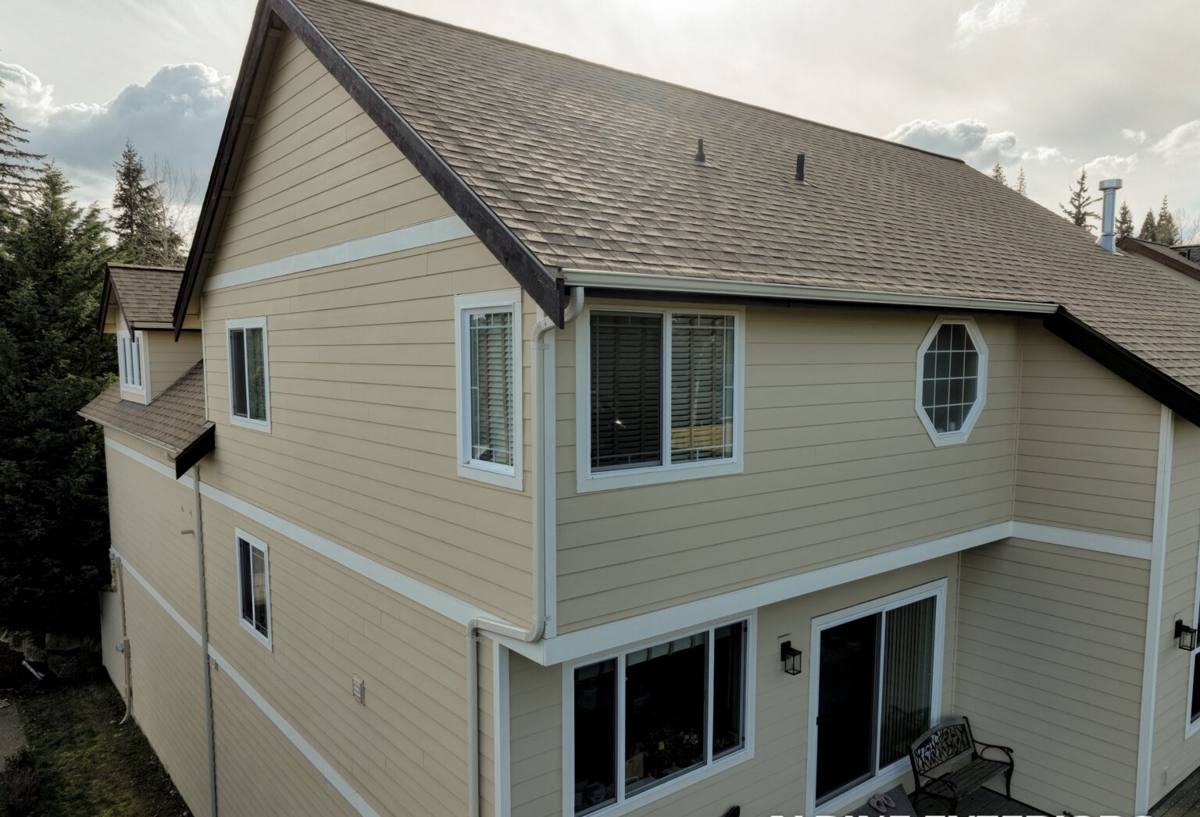
What Storm Damage Actually Looks Like Here
Storm damage isn't always a dramatic hole in the roof. In our experience working this region, it's often subtle enough that homeowners don't notice until a leak shows up inside — sometimes weeks after the storm that actually caused it.
Wind Damage
Sustained wind and sudden gusts lift shingle tabs, break the sealant bond between courses, and can crease or crack shingles even when nothing blows off entirely. A shingle that looks intact from the ground may already be unsealed and vulnerable to the next rain event.
Wind-Driven Rain Intrusion
This is the one that catches people off guard. Rain pushed sideways by wind can work its way under flashing, around chimneys and skylights, and through vents that would never leak in calm weather. The roof covering itself might be fine — the failure point is almost always flashing, sealant, or a transition detail.
Impact and Debris Damage
Branches, cones, and wind-blown debris from nearby trees can crack shingles, dent metal flashing, and clog gutters mid-storm, which backs water up under the roof edge.
Granule Loss and Accelerated Wear
Heavy, repeated rain events wash asphalt shingle granules away faster than in drier climates. Granule loss doesn't cause an immediate leak, but it shortens the life of the roof and is often the first visible sign that a roof is heading toward trouble.
What a Correct Storm Damage Repair Actually Involves
A quick patch job can make a leak stop for a while, but it doesn't address why the leak happened. A correct repair starts with figuring out the actual failure point, not just the spot where water showed up inside the house — water often travels along the underlayment or decking before it drips through the ceiling, so the visible stain and the real damage can be several feet apart.
Once we know the cause, a proper repair generally includes:
- Removing and replacing damaged shingles or roofing material, matched as closely as possible to the existing roof
- Inspecting and repairing flashing around chimneys, skylights, vents, and roof-to-wall transitions
- Checking the decking underneath for soft spots, rot, or water staining before new material goes down
- Confirming the underlayment (the water barrier beneath the shingles) is intact in the repaired area
- Clearing and checking gutters and downspouts, since blocked drainage is a common contributor to storm-related leaks
- Resealing any exposed fasteners or seams with appropriate roofing sealant, not general-purpose caulk
Skipping any of these steps is how a "repaired" roof ends up leaking again in the next storm — often in a slightly different spot, which makes homeowners think they have a new problem when it's really the same one.
Our Process for Burlington-Area Storm Repairs
1. Inspection and Documentation
We start with a full roof inspection, not just a look at the spot where the leak appeared. We photograph and document what we find — this matters both for giving you an honest repair plan and for supporting an insurance claim if you decide to file one.
2. Temporary Protection, If Needed
If a storm has left an active leak or exposed decking, we can tarp or temporarily seal the area to stop further water intrusion while a full repair is scheduled. This isn't cosmetic — a few extra days of exposure can turn a shingle repair into a decking replacement.
3. A Clear, Written Repair Plan
We explain what's actually damaged, what caused it, and what the repair involves — in plain terms, before any work starts. If a repair isn't the right call and replacement makes more sense, we'll tell you that directly rather than patching something that needs more.
4. The Repair Itself
We match materials to your existing roof where possible, address the root cause (not just the symptom), and pay particular attention to flashing and sealant details given how much of our local damage traces back to wind-driven rain finding a weak transition point rather than a failed shingle field.
5. Cleanup and Final Check
Job site cleanup, a final walk-through, and a check that gutters and drainage paths are clear so the repair isn't undermined by water pooling nearby.
Repair or Replace? How We Help You Decide
Not every storm-damaged roof needs to come off. But sometimes storm damage exposes the fact that a roof was already near the end of its useful life, and a full repair budget is better spent on replacement. Here's generally how we think about it:
| Factor | Leans Toward Repair | Leans Toward Replacement |
|---|---|---|
| Roof age | Under roughly 12-15 years | Nearing or past expected lifespan |
| Extent of damage | Localized to one area or slope | Spread across multiple areas or slopes |
| Decking condition | Solid, no rot found | Soft spots or rot discovered during inspection |
| Granule loss | Isolated to the damaged section | Widespread across the whole roof |
| Moss/moisture history | Minimal prior moss buildup | Long-term moss growth with underlying wood damage |
We'll walk you through where your roof falls on this and give you an honest recommendation, not the answer that happens to be more profitable for us.
Materials and Methods: The Trade-offs We Weigh
Given the salt air and near-constant moisture exposure in this area, we lean toward roofing materials and flashing metals with strong corrosion resistance, and toward algae-resistant shingle products where a roof has significant shade exposure and moss history. These aren't the cheapest options on the market, but in a climate this demanding, the maintenance burden and shortened lifespan of lower-grade materials tend to cost more over time than the upfront savings are worth.
We're also careful about sealants and adhesives — a product that cures fine in a dry climate can behave differently when it's applied in the damp, cool conditions common here for much of the year. Getting this right is less about brand names and more about installation timing and technique matching the actual weather on the day of the repair.
Insurance and Storm Claims: What to Know Going In
Many storm repairs are at least partially covered by homeowner's insurance, but coverage depends on your specific policy, the cause of damage, and your insurer's assessment. We're not insurance adjusters and won't promise a claim outcome, but we can:
- Provide clear photo documentation of the damage and its likely cause
- Give you a written estimate your insurer can review
- Point out damage that may not be obvious to an untrained eye during an adjuster's visit
If you're planning to file a claim, it's worth getting a roofing inspection before or alongside the adjuster's visit, so you have an independent, contractor-level assessment of what actually needs to be fixed.
Moss and Long-Term Moisture: The Slow Damage Storms Reveal
Storm damage and moss damage often show up together here, because a long moss season weakens a roof's surface and drainage over time, making it more vulnerable when a storm does hit. Moss holds moisture against the roof surface, can lift shingle edges as it grows, and often signals that a section of roof gets less sun and airflow than the rest — which is also where wind-driven rain tends to cause the most trouble.
As part of any storm repair, we'll flag areas with heavy moss buildup and talk through realistic options: moss treatment and removal, improved attic ventilation, or, where trees are the underlying cause, trimming back branches that keep a section of roof shaded and damp.
Signs You Should Have Your Roof Inspected After a Storm
- Granules collecting in gutters or at downspout outlets
- Any water stains on ceilings or upper interior walls, even faint ones
- Visibly lifted, curled, or missing shingles from the ground
- Dented or displaced flashing around chimneys, vents, or skylights
- Sagging or uneven rooflines
- A musty smell in the attic or upper floors after wet weather
- Debris buildup on the roof surface that hasn't been cleared
Any one of these on its own might be minor. A few together are usually a sign it's time for a professional look before the next storm system comes through.
Why It Matters That We Already Work in Burlington
A roofing crew based near Chuckanut that regularly works the Burlington area isn't just closer geographically — we've seen how this specific stretch of weather actually behaves on real roofs, season after season. We know which details tend to fail first in wind-driven rain, how aggressively moss builds back in the shaded lots common around here, and how salt air affects fasteners and flashing over time. That local pattern recognition is what separates a repair that holds up from one that reopens in the next storm.
It also means a faster response. After a significant storm, roofing crews from farther away get spread thin fast. Working this area regularly means we're already familiar with the conditions and can typically get to an inspection sooner.
Get a Straight Answer About Your Roof
If a recent storm has you wondering whether your roof needs attention, we're glad to take a look. We'll give you an honest read on what we find, what it would take to fix it right, and what it would cost — no pressure, no upsell. Use the form below to request a free estimate.