 Chuckanut Exterior
 Windows Built for the Bow Stretch of Whatcom County
Homes in and around Bow sit close enough to the water that the weather does things a lot of window manufacturers never designed for. Salt-laden air off the Salish Sea corrodes hardware and finishes faster than inland installations. Driving rain, pushed sideways by wind off the water, finds every gap in a poorly flashed window. And the long, damp moss season that defines this part of Whatcom County keeps wood trim and sills wet for months at a stretch. Window installation here isn't just about picking a good-looking window — it's about getting the flashing, sealing, and material choice right for a specific kind of exposure.
This page is about one job: installing windows correctly in Bow-area homes. Not a general overview of window types, not a sales pitch for one brand — just what actually holds up out here, and what a proper install looks like.
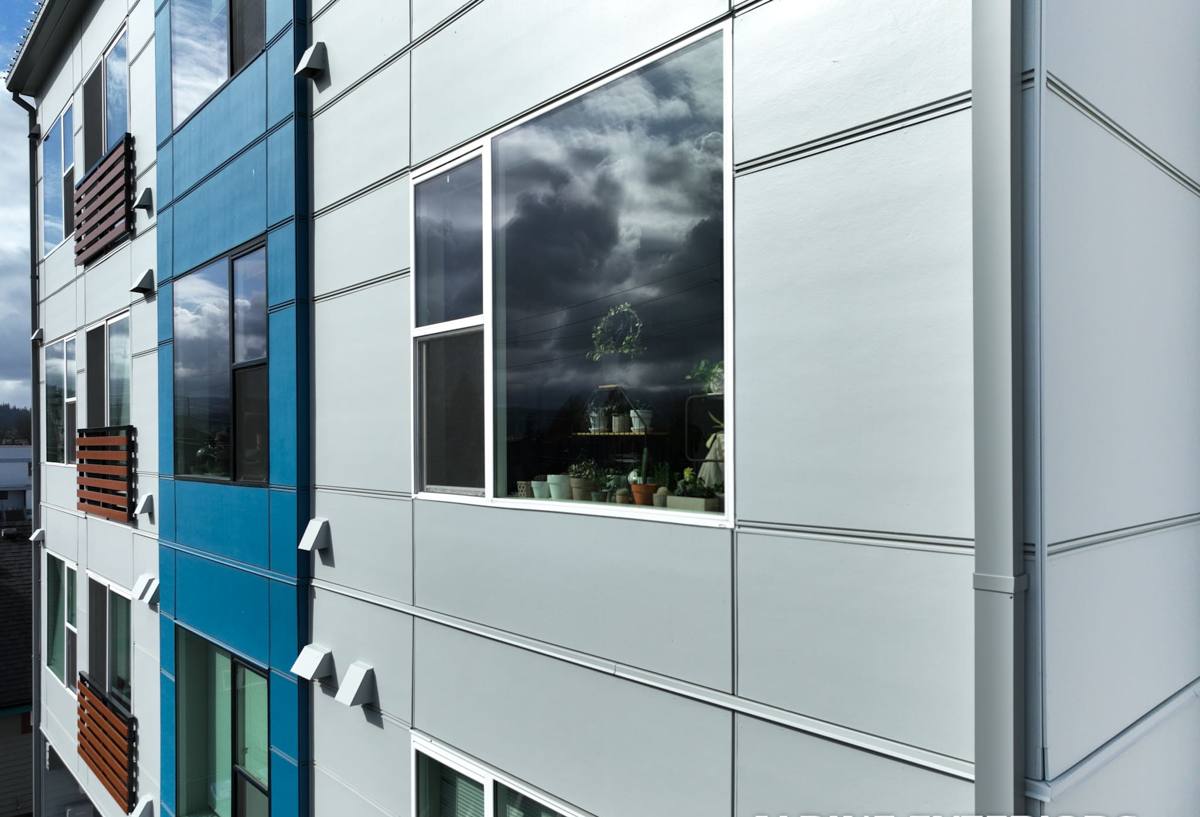
What Salt Air, Driving Rain, and Moss Season Do to Windows
Salt air
Airborne salt is corrosive to exposed metal — window balances, screen frames, hinges, and cheap fasteners all take a beating over time. It also breaks down some paints and finishes faster than a typical inland climate would, which is why window trim near the water often looks tired years before it should.
Driving rain
Wind-driven rain doesn't just fall on a window — it gets pushed into every joint, nail fin, and seam. A window that would be fine in a calm rain climate can leak here if the flashing details and sealant work weren't done with wind-driven exposure in mind. Most water intrusion problems we see in this area trace back to installation, not the window unit itself.
Moss and moisture season
The long wet stretch from fall through spring means wood trim, sills, and any exposed fasteners stay damp far longer than they would in a drier climate. Moss and algae take hold on north-facing and shaded walls, holding moisture against the building longer. That sustained dampness is hard on any material that isn't sealed and detailed correctly at the window opening.
Signs a Bow-Area Home Needs Window Attention
Some of these are obvious, some show up slowly. Worth checking for before winter:
- Fogging or a hazy film between the panes of a double-pane window — the seal has failed
- Soft or discolored trim or sill wood, especially on the side of the house that faces prevailing wind and rain
- Drafts you can feel near the frame even when the window is fully latched
- Windows that are hard to open, close, or lock — frames can swell or warp with moisture over time
- Visible moss or dark staining creeping onto the window frame or trim from the surrounding wall
- Paint that's peeling or bubbling right at the window perimeter, which often points to moisture getting behind the trim
- Noticeably higher heating bills without any other explanation
Any one of these on its own might not mean much. Two or three together, especially on the weather-exposed side of the house, usually means it's worth having someone look at the actual installation, not just the window itself.
What a Correct Window Installation Actually Involves
The window unit itself is maybe a third of what determines whether an installation holds up. The rest is in the details around it.
Sill pan flashing
A sloped, sealed sill pan under the window opening gives any water that does get past the window somewhere to go — out, not into the wall framing. This is one of the most commonly skipped steps in lower-cost installs, and it's one of the most important in a wind-driven rain climate.
Head and jamb flashing, integrated correctly
Flashing has to be layered with the house wrap in the right order — like shingles — so water sheds down and out rather than getting trapped behind the siding. Flashing tape and housewrap tie-ins matter as much as the window brand.
Air sealing and insulation at the rough opening
The gap between the window frame and the rough opening needs to be sealed and insulated without over-packing it, which can bow the frame. Done right, this cuts drafts and moisture movement into the wall cavity.
Correct fastening and shimming
A window that isn't shimmed level and square will operate poorly and stress the seals over time — harder to open, uneven gaps, premature wear on the balance hardware.
Exterior sealant, appropriate to the siding
The right sealant depends on what's around the window — fiber cement, wood, vinyl siding — and needs to be applied so it can move with the building without cracking.
Choosing Materials for This Climate
There's no single "best" window material — it depends on exposure, maintenance appetite, and budget. Here's how the common options hold up specifically against salt air, driving rain, and a long wet season:
| Frame Material | Salt Air / Corrosion | Moisture Tolerance | Maintenance |
|---|---|---|---|
| Vinyl | Handles it well — no corrodible metal frame | Good, won't rot | Low — occasional cleaning |
| Fiberglass | Very good — dimensionally stable, resists corrosion | Excellent | Low |
| Wood, unclad | Poor unless finish is kept up | Needs vigilant upkeep in a wet climate | High — repainting/sealing on a schedule |
| Wood, aluminum or fiberglass clad | Good — cladding protects the exterior face | Good on the exterior side; interior wood still needs normal care | Moderate |
| Aluminum | Can pit and corrode faster near salt air without a quality finish | Prone to condensation without thermal breaks | Moderate |
For most homes in this area, we steer people toward vinyl or fiberglass for straightforward, low-maintenance performance, or clad wood when the look of real wood on the interior matters and the owner is fine with the added upkeep. We're honest about the trade-offs either way — it's your house and your maintenance schedule, not ours.
Glass and hardware worth asking about
Low-E coatings and argon or krypton gas fills help with energy performance and condensation resistance, which matters through a long, wet, cool season. Stainless or corrosion-resistant hardware — hinges, locks, balances — is worth the upgrade this close to salt air, since standard hardware finishes can start showing wear years sooner out here.
Our Installation Process
- On-site assessment. We look at the existing windows, the wall assembly where visible, and the exposure of each elevation — a west-facing wall catching wind-driven rain gets treated differently than a sheltered side.
- Product selection. We walk through frame material, glass package, and hardware options based on that specific home's exposure and your budget, not a one-size answer.
- Removal and opening prep. Old units come out carefully, and we inspect the rough opening and sill for any hidden rot or moisture damage before anything new goes in — this is often where problems from a previous install show up.
- Sill pan and flashing installation. Sloped sill pan, properly layered head and jamb flashing, tied into the house wrap correctly.
- Setting, shimming, and fastening. Window is leveled, squared, and secured so it operates smoothly and the seals aren't under stress.
- Insulation and air sealing. The gap around the frame is filled correctly — sealed against drafts without distorting the frame.
- Exterior finish and sealant. Trim and sealant matched to your siding type, detailed to shed water rather than trap it.
- Final walkthrough. Every window operates, locks, and seals the way it should before we call the job done.
What Drives the Cost
Every home is different, and a written quote for your specific windows is the only number worth trusting. In general terms, these are the factors that move the price up or down:
| Factor | Effect on Cost |
|---|---|
| Number of windows and opening sizes | More units and larger openings raise total cost |
| Frame material chosen | Vinyl is typically the most budget-friendly; fiberglass and clad wood cost more upfront |
| Condition of the existing rough opening | Hidden rot or damage found during removal adds repair work before the new window can go in |
| Access and elevation | Upper-story or hard-to-reach windows take more time and equipment |
| Glass and hardware package | Upgraded low-E glass, gas fills, and corrosion-resistant hardware add cost but pay off in a coastal climate |
| Siding and trim work involved | Matching or repairing surrounding trim and siding adds labor beyond the window itself |
Why It Matters to Hire a Crew That Already Works in Bow
A crew that's spent time on homes along this stretch of Whatcom County already knows which elevations tend to take the worst of the wind-driven rain, how fast moss builds up on shaded trim, and what corrosion looks like on hardware that's been exposed to salt air for a few winters. That's not something you can fully learn from a manual — it comes from having done the work in this specific setting. It means fewer surprises during the job and a better chance the installation is still performing the way it should years down the road, instead of just looking fine on install day.
Keeping New Windows Performing After Install
Even a correctly installed window benefits from a little upkeep in this climate:
- Rinse salt residue off frames and hardware occasionally, especially after storms
- Keep gutters and downspouts clear so water isn't sheeting down past windows
- Check exterior sealant lines yearly for cracking or separation, especially after the first winter
- Clear moss or algae buildup on nearby siding and trim before it holds moisture against the wall
- Operate locks and hardware a few times through the winter so they don't seize up from disuse
If you're noticing drafts, fogged glass, sticking sashes, or trim damage on a Bow-area home, or you're planning ahead for a remodel, we're happy to take a look and walk you through honest options for your specific house. Reach out for a free, no-pressure estimate — the form below gets you started.