 Chuckanut Exterior
 Storm Damage Roof Repair for Bow Homes
Bow sits close enough to the water and the tree line that its roofs take a specific kind of punishment — one that's different from what you'd see further inland. When a windstorm rolls through Whatcom County off the Salish Sea, it doesn't just bring rain straight down. It drives it sideways, it lifts shingle edges that face the wrong direction, and it deposits salt-laden moisture on every exposed fastener and flashing seam. We repair storm-damaged roofs in this area regularly enough to know what to look for first, and just as importantly, what's actually worth fixing versus what's cosmetic.
This page is specifically about storm damage repair for homes in and around Bow — not a general roofing overview. If a recent storm left you with missing shingles, a leak, or debris damage, here's what a proper repair involves and how we approach it.
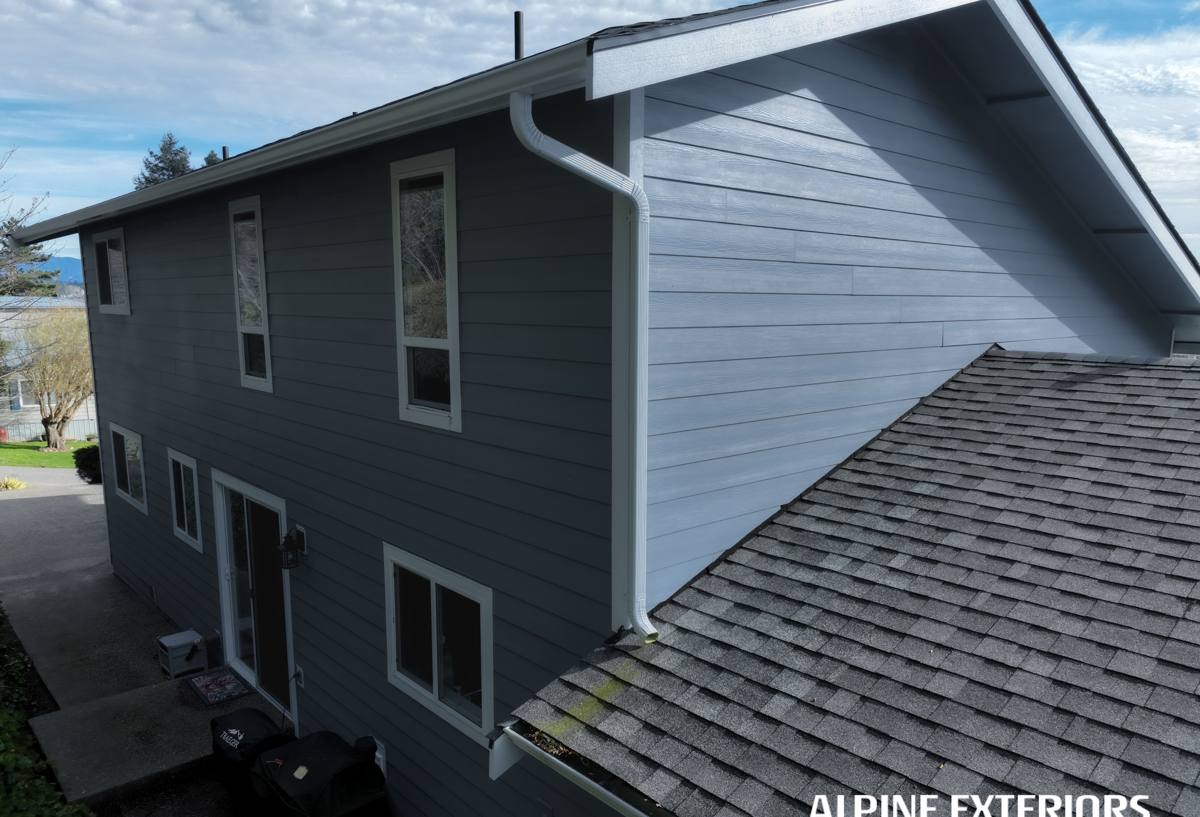
Why Bow Roofs Take a Different Kind of Beating
Three things stack up against roofs out here, and they compound each other rather than acting alone.
Salt Air and Fastener Corrosion
Proximity to the water means airborne salt settles on roofing metal — flashing, nail heads, gutter hangers — and accelerates corrosion compared to a roof twenty miles inland. A storm doesn't cause this corrosion, but it exploits it: a fastener that's already weakened by years of salt exposure is far more likely to back out or shear during high wind than one that's still fully seated.
Wind-Driven Rain at Transitions
Straight-down rain rarely causes leaks on a roof in good condition. Wind-driven rain is different — it gets pushed sideways and upward into places the roof system was never designed to shed water from that angle. Valleys, wall-to-roof transitions, and chimney flashing take the worst of it during a real storm event.
A Long Moss Season
Whatcom County's wet season runs long, and shaded, tree-covered lots around Bow keep roofs damp for extended stretches. Moss and algae growth on a roof isn't just cosmetic — moss holds moisture against the roofing surface, and that constant dampness is what lets a small storm-caused gap turn into a real leak instead of drying out and sealing itself back up.
Storm Damage vs. Normal Aging: How to Tell the Difference
Not every problem we find after a storm was caused by that storm. Being honest about this matters, especially if you're planning to file an insurance claim.
| Sign | Usually Storm Damage | Usually Aging / Wear |
|---|---|---|
| Missing shingles in a cluster or wind pattern | Yes — especially on the windward side | Rare unless roof is already at end of life |
| Granules pooling in gutters after one event | Yes, if sudden and heavy | Gradual granule loss is normal aging |
| Lifted or creased shingle tabs | Yes — classic wind signature | Uncommon from age alone |
| Cracked, curling shingles across the whole roof | No | Yes — sun and age related |
| Fresh dents on soft metal (vents, flashing) | Yes — often hail or debris impact | No |
| Moss coverage and soft, spongy decking | No, but moss can hide storm damage underneath | Yes — long-term moisture exposure |
This is part of why we don't just look at the roof from the ground. A visual scan can miss the difference between wind damage and years of moss holding moisture in one spot — and insurance adjusters will ask which one they're looking at.
What a Correct Storm Damage Repair Actually Involves
Start With an Honest Assessment
Before any repair, we walk the roof and check the attic from inside if there's access. Water doesn't always show up directly below where it entered — it can travel along rafters or sheathing before it drips somewhere visible. A repair that only patches the spot with the visible stain, without tracing the actual entry point, tends to fail again in the next storm.
Match the Existing Material
A patch repair only holds up long-term if the replacement shingles, flashing, and underlayment are compatible with what's already on the roof — matching profile, matching exposure, and ideally matching age and color so the repair doesn't stand out or shed water differently than the surrounding field.
Flashing and Underlayment, Not Just Shingles
Most storm leaks we trace back to flashing — around chimneys, skylights, valleys, and wall intersections — rather than the shingles themselves. A repair that replaces missing shingles but ignores the flashing underneath them is a repair that leaks again the next time wind pushes rain uphill under the shingle edge.
Our Process From Call to Completion
- Initial call or photo review — you describe what you're seeing, we ask a few questions to gauge urgency (active leak vs. cosmetic damage).
- On-site inspection — we get on the roof (weather permitting) and check the attic side where possible, documenting what we find with photos.
- Written scope and estimate — what needs repair, what materials we'll use, and a realistic cost range, explained in plain terms.
- Temporary protection if needed — if there's an active leak, we'll discuss tarping or temporary sealing to stop water intrusion before the full repair is scheduled.
- Repair work — completed to match existing roofing, with flashing and underlayment addressed, not just surface shingles.
- Final walkthrough — we show you what was done and what to watch for going forward.
Insurance Claims: What's Worth Knowing
Many storm damage repairs in this area do get filed as insurance claims, and a few things tend to matter to adjusters: dated photo documentation of the damage, a clear distinction between storm-caused damage and pre-existing wear, and an itemized scope of repair rather than a vague estimate. We can provide documentation to support a claim, but we don't inflate scopes or describe wear-and-tear as storm damage to make a claim easier — that's the kind of thing that gets claims denied or flagged later, and it's not how we'd want our own roof handled either.
What to Do After a Storm (Before We Arrive)
- Do not get on the roof yourself, especially if it's wet, mossy, or you can see obvious damage from the ground — it's not worth the fall risk.
- Take photos from the ground of anything visible: missing shingles, displaced flashing, debris on the roof.
- Check the attic (if accessible) and ceilings for staining, dampness, or a musty smell.
- Move furniture or belongings away from any area with a visible or suspected leak.
- If there's active water coming in, a bucket and a shifted piece of furniture buys time — don't attempt a DIY roof patch in the rain.
- Note the approximate date and conditions of the storm for your own records and any insurance conversation.
Why a Crew That Already Works Bow Matters
A roofer who works this area regularly already has a working sense of which parts of a Bow roof tend to fail first — usually flashing details and north- or shade-facing slopes where moss holds moisture longest. That's not a substitute for actually inspecting your specific roof, but it does mean we're not guessing at how Whatcom County's climate interacts with a given roof design. We're also not driving in from out of the area for a one-time repair and disappearing — if something about the repair needs a follow-up look after the next storm, we're still local.
Cost Factors for Storm Damage Repair
Repair costs vary a lot based on scope, so instead of a single number, here's what actually drives the price up or down.
| Factor | Why It Matters |
|---|---|
| Extent of shingle loss | A handful of missing shingles is a small repair; wind damage across an entire slope approaches replacement territory. |
| Flashing involvement | Flashing repair at chimneys, valleys, or walls adds labor and sometimes custom metal fabrication. |
| Underlayment or decking damage | If water has reached the plywood decking, that wood may need replacing before new shingles go on — this is the biggest cost swing. |
| Roof pitch and access | Steeper roofs and limited access (tight lots, tall trees) increase labor time and safety setup. |
| Material matching | Older or discontinued shingle lines can be harder to match, sometimes requiring a larger repair area for a consistent look. |
| Insurance involvement | Claims-based repairs may require additional documentation time but don't change the physical scope of work. |
When Repair Isn't the Right Call
Sometimes an honest assessment leads to a different conversation. If a roof is already near the end of its service life and storm damage is widespread rather than isolated, patching it can mean spending real money on a roof that needs full replacement within a year or two anyway. We'll tell you if that's what we're seeing rather than doing a repair we know won't hold.
If a recent storm left your Bow home with roof damage, we're happy to take a look and give you a straight answer — no pressure, no inflated scope, just an honest read on what's actually going on up there. Request a free estimate using the form below and we'll get back to you to schedule a time.