 Chuckanut Exterior
 Roofing Built for Bow's Coastal Conditions
Bow sits close enough to Samish Bay and Puget Sound that homes here deal with a different mix of weather stress than roofs just a few miles inland. Salt-laden air off the water accelerates corrosion on exposed metal fasteners and flashing. Driving rain off the Sound doesn't fall straight down — it comes in sideways during winter storms, which means underlayment, flashing laps, and edge details matter more here than they would on a calmer roof in a sheltered valley. And Whatcom County's long, wet, mild winters give moss and moisture months to work into anything installed with shortcuts. A new roof in Bow needs to be built for that combination from the deck up, not just shingled over and hoped for.
When we install a new roof for a Bow homeowner, we're thinking about all three of those stressors at once: corrosion resistance in the metal components, water-shedding performance in wind-driven rain, and a surface and airflow design that doesn't invite moss to take hold for the next 20-plus years.
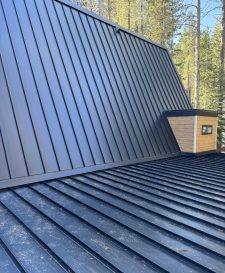
What Chuckanut-Area Roofs Are Up Against
Salt Air and Corrosion
Properties near Samish Bay and the Chuckanut shoreline see measurably more airborne salt than roofs farther inland. Salt exposure speeds up corrosion on nails, screws, drip edge, and flashing that isn't rated for it. Cheap or mismatched fasteners are one of the most common failure points we find on older coastal roofs — not the shingles themselves, but the metal holding everything together.
Driving Rain
Storms coming off the water push rain sideways and under roof edges, valleys, and any flashing that's a little short or a little loose. A roof that would perform fine in a dry climate can leak here if the underlayment and flashing details aren't built for wind-driven water specifically.
Moss and Prolonged Moisture
Western Washington's mild, wet winters mean roofs stay damp for extended stretches, especially on north-facing slopes and under tree cover, which is common on wooded Bow lots. Moss doesn't just look bad — its root structure lifts shingle edges and holds moisture against the roof deck, which shortens the life of everything underneath it.
What a Correct New Roof Installation Actually Involves
A roof is a system, not a single layer of shingles. Skipping or shortcutting any one of the following steps is where most premature roof failures start.
1. Tear-Off and Deck Inspection
We remove the old roofing down to the deck rather than layering over it. This lets us actually see the plywood or plank sheathing underneath and catch soft spots, rot, or delamination before they get covered up and forgotten for another 20 years.
2. Deck Repair
Any damaged sheathing gets replaced before anything new goes down. Installing a new roof over a compromised deck is one of the most common corners cut in this trade, and it guarantees problems later — usually right when the warranty won't help.
3. Ice-and-Water Shield and Underlayment
Given how much wind-driven rain this area sees, we pay particular attention to underlayment coverage at eaves, valleys, and any low-slope transitions — the places water is most likely to be pushed by wind rather than just running off by gravity.
4. Flashing
Flashing around chimneys, skylights, vents, and roof-to-wall intersections is where the majority of leaks originate on any roof, coastal or not. We use corrosion-resistant metal appropriate for salt-air exposure and make sure laps and step flashing are sized generously for driving rain, not just installed to minimum code.
5. Field Roofing Material
Shingles, metal panels, or whatever system fits the home, installed to manufacturer spec with the fastener pattern and exposure the product is rated for — not a faster pattern that saves labor time.
6. Ventilation
Proper intake and exhaust ventilation keeps the attic and roof deck drier and more temperature-stable, which matters for moss resistance and shingle lifespan alike in a climate this consistently damp.
7. Cleanup and Final Inspection
Magnetic sweep for nails, gutter and downspout check, and a walk-through so you know what was done and why.
Material Choices for This Climate
There's no single "best" roofing material for every home — it depends on budget, roof pitch, architectural style, and how much upkeep you want to take on. Here's how the common options stack up specifically for salt air, driving rain, and moss exposure:
| Material | Salt-Air Durability | Wind-Driven Rain Performance | Moss Resistance | Typical Maintenance |
|---|---|---|---|---|
| Architectural asphalt shingle | Good, with corrosion-resistant fasteners | Good with proper underlayment and flashing | Moderate — benefits from algae-resistant granules and periodic cleaning | Low to moderate |
| Metal roofing (standing seam) | Very good with coastal-rated coatings and fasteners | Excellent — few seams for water to find | Good — smooth surface sheds moss more easily | Low |
| Cedar shake | Fair — requires diligent maintenance near salt air | Fair — more seams and gaps than shingle or metal | Poor without regular treatment; moss-prone in shade | High |
| Composite/synthetic shingle | Good | Good with correct installation | Moderate to good depending on product | Low |
We'll walk through the honest trade-offs for your specific roof — pitch, sun exposure, tree cover, and budget — rather than pushing one material as a default. Cedar shake, for example, can look great on the right home, but it demands a maintenance commitment that not every homeowner wants to sign up for in a climate this wet.
Why Local Experience on This Coastline Matters
A roofing crew that hasn't worked near the water regularly can miss things that aren't obvious until a few winters in — using standard-grade fasteners instead of corrosion-resistant ones, underestimating how far sideways rain can travel under an edge, or not accounting for how much shade and moisture a wooded Bow lot holds onto compared to an open inland property. These aren't exotic problems, but they're specific to this stretch of Whatcom County, and they show up as callbacks and premature wear if they're missed at installation.
Working roofs in and around Chuckanut, Bow, and the broader Whatcom County coastline means we spec materials and details for this environment as a matter of course, not as an afterthought.
Our Process, Start to Finish
- Roof assessment — We inspect the current roof, deck condition, ventilation, and any problem areas specific to your property's exposure and tree cover.
- Written estimate — A clear, itemized quote covering materials, labor, and scope, with material options explained in plain terms.
- Scheduling — We plan around Whatcom County's weather windows to minimize the chance of a delay mid-project.
- Tear-off and deck inspection — Full removal, with any deck damage identified and priced before we proceed.
- Installation — Underlayment, flashing, field material, and ventilation installed to spec.
- Final walkthrough — We review the finished roof with you and answer questions before we consider the job done.
Signs a Bow Home May Need a New Roof Rather Than a Repair
- Shingles that are cupping, curling, or losing granules in large patches, not just isolated spots
- Moss buildup that returns quickly after cleaning, especially on shaded or north-facing slopes
- Daylight visible through the attic roof deck, or damp insulation after storms
- Flashing that's visibly rusted, lifted, or separated around chimneys and vents
- A roof at or past its material's expected service life, especially if it's never been reinstalled with modern underlayment
- Multiple past repairs in different areas — a pattern that usually means the whole system is aging out, not just one spot
If you're only seeing one or two of these, a repair may still be the right call — we'll tell you honestly if that's the case rather than upselling a full replacement you don't need yet.
What Affects the Cost of a New Roof Here
Roofing costs vary by home, and we don't publish blanket numbers because they're not honest until we've seen your roof. That said, these are the main factors that move the price up or down for a Bow-area installation:
| Factor | Why It Matters |
|---|---|
| Roof size and pitch | More surface area and steeper pitches mean more material and labor time |
| Material choice | Asphalt shingle, metal, and cedar carry different material and labor costs |
| Deck condition | Rotted or soft sheathing found during tear-off adds repair cost not visible from the ground |
| Number of penetrations | Chimneys, skylights, and vents each require flashing work that adds time |
| Tear-off scope | Removing multiple existing layers takes longer than a single-layer tear-off |
| Access and site conditions | Tree cover, steep lots, and limited equipment access near the water can affect labor time |
We provide a written, itemized estimate after seeing the roof in person, so there are no surprises once work starts.
Ready for an Honest Look at Your Roof?
If you're in Bow or elsewhere around Chuckanut and your roof is showing its age, we're happy to come take a look and give you a straight answer — repair, or full replacement, and why. Use the form below to request a free, no-pressure estimate.