 Chuckanut Exterior
 Metal Roofing Built for Bow's Coastal Weather
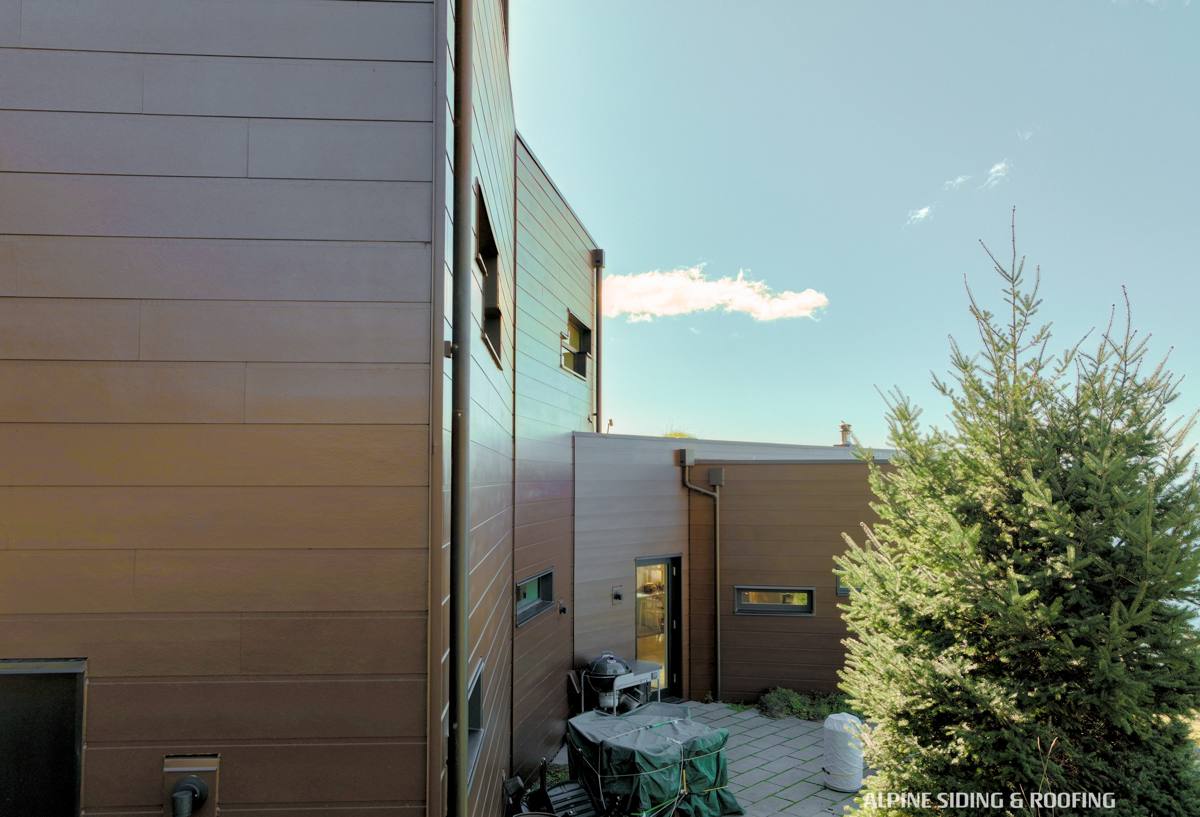
Bow sits close enough to the water that homes here take a different kind of weathering than houses just a few miles inland. Salt-laden air moves off the water and settles on every exposed surface, driving rain comes in sideways during winter storms, and the shaded, damp stretches of the year give moss months at a time to get established on anything with a north-facing slope. A roof in this spot doesn't just need to shed water — it needs to hold up to corrosion, resist wind-driven intrusion at every seam, and stay clean enough that moss can't take root and start lifting material. Metal roofing, installed correctly, handles all three of those demands better than most alternatives. Installed poorly, it can fail in exactly the same spots asphalt shingles do — just more expensively.
What This Climate Does to a Roof Over Time
Before talking about the roofing system itself, it's worth understanding what it's actually up against in Bow. This isn't generic "Pacific Northwest weather" advice — it's specific to a shoreline-adjacent property in Whatcom County.
Salt Air and Corrosion
Airborne salt is corrosive to unprotected or poorly coated metal, and it doesn't need direct ocean spray to do damage — it travels on the wind and settles as a fine residue on roofing, flashing, and fasteners. Bare or thinly coated steel, exposed cut edges, and mismatched metals (steel fasteners in an aluminum panel, for example) are where this shows up first. The fix isn't avoiding metal roofing — it's specifying the right alloy, coating, and fastener system for a marine-influenced environment, and detailing the installation so raw edges and dissimilar metals aren't left exposed to the weather.
Driving Rain and Wind-Driven Water
Storms coming off the water don't just drop rain straight down — they push it sideways, up under laps, and into any gap in flashing or fastening. A roof here needs positive water shedding at every seam, not just a system that works fine in a light, vertical rain. This is where the difference between a correctly lapped, properly fastened metal roof and a rushed one becomes obvious — usually a few winters later, as water finds its way into the deck at a weak seam.
A Long Moss Season
Shaded roof slopes, tree cover, and the area's damp stretch from fall through spring give moss and algae a long runway to establish. On organic roofing materials, moss holds moisture against the surface and works its way under tabs and shingles, shortening the roof's life. Metal doesn't give moss the same foothold — there's no granule surface or organic mat for spores to grip — but valleys, low-slope sections, and areas that stay shaded can still collect debris and grow moss on top of the surface if the roof isn't kept clear. It's a maintenance issue on metal, not a structural one, which is a meaningful difference.
Choosing a Metal Roofing System That Fits Bow Homes
"Metal roofing" covers several different systems, and they don't perform the same way in a salt-air, high-rain environment. The table below lays out how the common options compare for a property like the ones we see around Bow.
| System | Weather Performance Here | Best Fit |
|---|---|---|
| Standing seam (concealed fastener) | Strongest wind-driven rain resistance; no exposed fastener heads for corrosion to start at | Most Bow homes, especially anything close to open water or wind exposure |
| Exposed-fastener panel | Good water shedding on steeper slopes; fastener washers are the weak point over time in salt air | Outbuildings, shops, lower-budget projects where fastener maintenance is accepted |
| Metal shingle / stone-coated panel | Good appearance match to traditional roofing; more seams than standing seam, so more detailing required | Homes prioritizing a shingle look with metal's durability |
Standing Seam: Our Default Recommendation for This Area
For most homes in Bow, we recommend standing seam. The panels interlock with a raised, concealed seam, so there are no exposed screw heads sitting out in the weather waiting to loosen, back out, or corrode over the decades. That matters more here than it does further inland — every penetration in a metal roof is a place salt air and driving rain can start working on a fastener, and standing seam simply has fewer of them. It also handles thermal movement better over a long coastal temperature swing, which keeps seams tight instead of working themselves loose over time.
What a Correct Metal Roof Installation Actually Involves
Metal roofing gets a reputation as "install it and forget it," and that's true — but only if the installation underneath the panels is done right. Most metal roof failures we're called out to inspect trace back to shortcuts in the layers you never see once the job's done.
- Solid, properly ventilated decking — metal roofing telegraphs an uneven deck, and trapped moisture underneath a non-breathing panel system will rot decking from below
- A full synthetic or high-temp underlayment — this is the actual waterproofing layer; the metal panels are the weather shield on top of it, not a substitute for it
- Correct fastener type and spacing — matched to the panel material to avoid galvanic corrosion, and spaced to manufacturer wind-load specs, not "close enough"
- Properly lapped and sealed flashing at every valley, wall intersection, chimney, and vent penetration — this is where the majority of leaks originate on any roof, metal or otherwise
- Panel expansion allowance — metal expands and contracts with temperature; clips and seams need to accommodate that movement without stressing the panel or fasteners
- Ridge and eave detailing that keeps wind-driven rain and blown debris from working backward under the panel edge
Skip any one of these and you can end up with a roof that looks like a premium metal system from the ground but leaks or corrodes on the same timeline as a poorly installed asphalt roof — while costing considerably more to fix because of how the panels have to come off to access the problem.
Cost Factors for a Metal Roof in Bow
Metal roofing costs more upfront than asphalt shingles — that's a fair trade-off for its longevity, but it's worth understanding what actually drives the price on a given project rather than treating every metal roof as one flat number.
| Factor | Why It Matters Here |
|---|---|
| Panel system (standing seam vs. exposed fastener) | Concealed-fastener systems cost more in material and labor but need less long-term maintenance in salt air |
| Roof complexity (valleys, dormers, penetrations) | Every valley and penetration is extra flashing and labor — and an extra spot for wind-driven rain to test |
| Coating and gauge | Heavier gauge steel and a quality factory-applied PVDF-based coating resist salt-air corrosion far longer than a thin mill finish |
| Tear-off vs. overlay | Tear-off lets us fix deck and ventilation issues before they're covered up for decades — usually the right call on an older roof |
| Access and pitch | Steeper or harder-to-access roofs take longer to install safely and correctly |
Our Installation Process
- On-site inspection. We look at the existing roof, decking condition, ventilation, and how the roof is currently handling water at valleys and penetrations — the things that tell us what's actually needed, not just what's visible from the ground.
- System recommendation. Based on the roof's exposure, pitch, and your budget, we recommend a panel system and coating spec suited to a salt-air, high-rain environment — explained in plain terms, with the trade-offs laid out honestly.
- Tear-off and deck prep. Old roofing comes off, the deck gets inspected and repaired where needed, and ventilation is corrected if it's inadequate — a common issue on older Bow-area homes.
- Underlayment and flashing. A full synthetic underlayment goes down first, followed by properly lapped flashing at every valley, wall, and penetration.
- Panel installation. Panels are fastened or seamed to manufacturer spec with correct expansion allowance, matched fasteners, and clean, sealed terminations at ridges and eaves.
- Final walkthrough. We go over the finished roof with you, point out anything you should know for ongoing care, and answer questions before we consider the job done.
Maintenance in a Moss-Prone, Salt-Air Climate
A well-installed metal roof needs far less upkeep than shingles, but "far less" isn't "none" — especially in a climate that layers salt air on top of a long moss season.
- Clear debris from valleys and low-slope sections a couple of times a year so moss and algae can't build up a bed to grow in
- Keep gutters and downspouts flowing freely — standing water at the eave is where corrosion and moss both get a head start
- Have flashing at chimneys, vents, and wall intersections checked periodically; sealant and flashing are the parts of any roof most likely to need attention over time
- Trim back overhanging branches where practical to reduce shading and debris on north-facing slopes
- After major windstorms, do a visual check for lifted panel edges or loose fasteners rather than waiting for a leak to show up inside
Why Hire a Crew That Already Works in Bow
Metal roofing done right isn't complicated, but it is unforgiving of shortcuts, and it's easy for a crew that mostly works inland or mostly works asphalt to underestimate what a shoreline-adjacent property in Whatcom County actually needs. A crew that already works in and around Bow knows to spec fasteners and coatings for salt exposure without being asked, knows which roof orientations in this area collect moss fastest, and has already seen how driving rain off the water tests flashing details that would pass inspection somewhere drier. That's not a marketing point — it's the difference between a roof that's still tight in twenty years and one that needs corrective work in five.
If you're weighing metal roofing for a home in Bow, we're happy to take a look and give you a straight, no-pressure assessment of what your roof actually needs — no obligation attached. Use the form below to request a free estimate.