 Chuckanut Exterior
 Why Decks in Bow Fail Faster Than Decks Inland
Bow sits close enough to the water that salt air is a daily fact of life, not an occasional nuisance. Combine that with Whatcom County's long wet season and the shade thrown by mature trees on many lots, and you get three forces working against an outdoor deck at the same time: corrosion, moisture intrusion, and moss. A deck built to a generic national spec will often show problems within a few years here — rusting fasteners, soft spots at the ledger board, green film on the walking surface by late fall. A deck built for this specific area, with the right materials and connections from day one, doesn't have those problems.
This page is about one job in one place: building a new deck for a home in Bow. Not a general overview of decking products, and not advice written for a dry climate. Everything below reflects what actually holds up here.
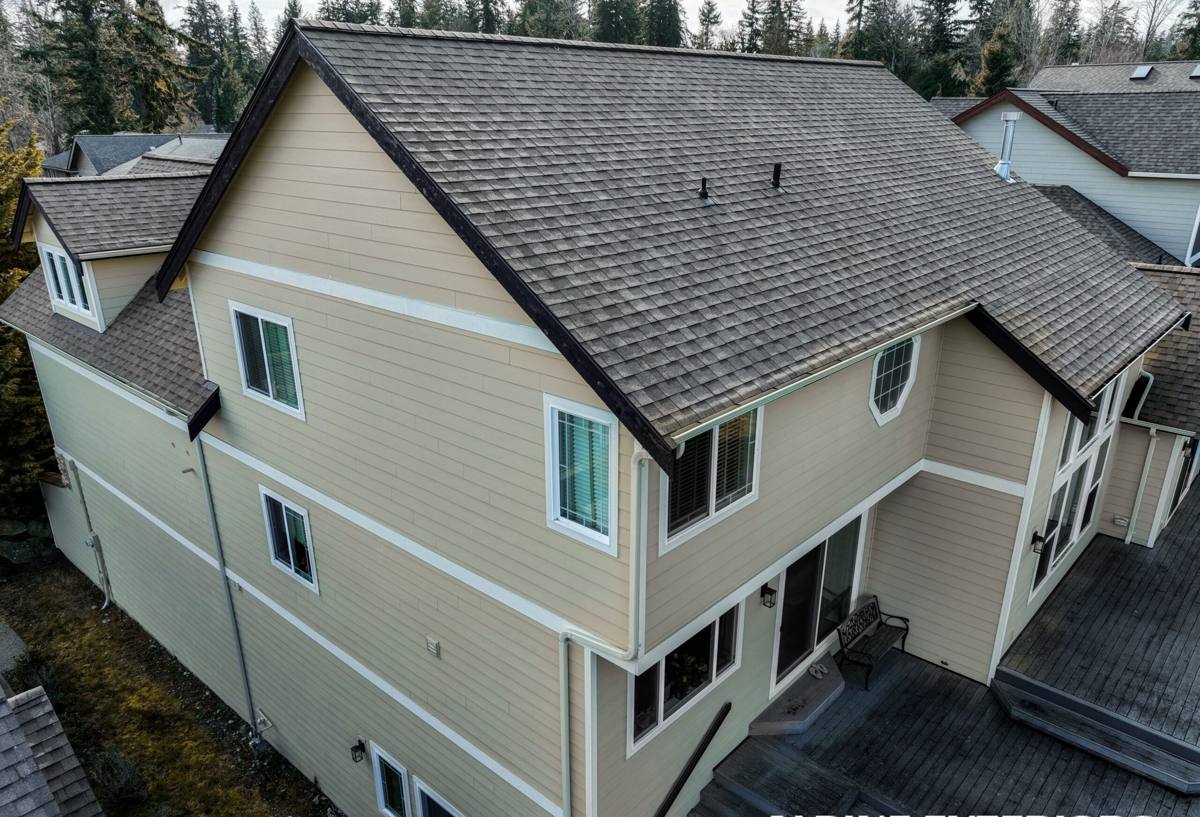
What Salt Air, Driving Rain, and Moss Actually Do to a Deck
Salt Air and Metal Hardware
Airborne salt accelerates corrosion on anything metal — joist hangers, structural screws, post bases, railing brackets. Standard zinc-coated fasteners that are perfectly fine in a drier inland town will start rusting within a season or two this close to the water. Once a fastener corrodes, it loses holding strength long before it looks obviously bad, which is exactly why so many deck failures are a surprise to the homeowner.
Driving Rain and the Ledger Connection
The ledger board — the piece that attaches the deck to the house — is the single most important structural connection on most decks, and it's also the one most exposed to wind-driven rain. Water that gets behind a poorly flashed ledger doesn't just rot the ledger itself; it can work its way into the house's rim joist and wall framing. Whatcom County's rain doesn't fall straight down often enough for that to be a minor detail.
Moss, Shade, and Standing Water
A long moss season means any horizontal surface that stays damp and shaded will grow moss, and moss holds moisture against the decking material far longer than open air would. On wood decking that means accelerated rot in the boards themselves. On composite decking it means a slick, slippery surface and a buildup that has to be cleaned off regularly or it will stain. Either way, moss is a design problem as much as a maintenance problem — deck orientation, gaps between boards, and drainage underneath all affect how much of it you get.
What a Correctly Built Deck for Bow Actually Needs
Framing and Structural Connections
Correct framing here means stainless steel or heavily coated corrosion-resistant fasteners at every structural connection, a properly flashed and mechanically fastened ledger with a drainage gap or flashing detail that keeps water moving away from the house, and post bases set to keep wood off standing water. None of this is visible once the deck is finished, which is exactly why it's the part worth asking your contractor about directly rather than judging the job by the decking surface alone.
Decking Material Choices
There's no single right decking material for every home in Bow — it depends on your budget, how much shade the deck gets, and how much upkeep you want to do. Here's how the common options actually perform in this climate:
| Material | Moisture & Moss Behavior | Maintenance | Typical Lifespan Here |
|---|---|---|---|
| Pressure-treated wood | Absorbs water, needs sealing to shed moss growth | Annual cleaning and re-sealing | 10-15 years with upkeep |
| Cedar | Naturally moisture-resistant but still needs sealing near salt air | Regular cleaning, periodic oil or sealer | 15-20 years with upkeep |
| Composite decking | Doesn't rot, but moss and algae can grow on the surface film in shade | Periodic washing, no sealing needed | 25+ years |
| PVC/capped composite | Best moisture resistance, sheds surface moss more easily | Occasional washing | 25-30+ years |
We're honest with clients that composite and PVC products cost more up front and carry the manufacturer's warranty structure and installation requirements that come with them — but for a deck that gets shade and salt air, the lower long-term maintenance burden usually pencils out. Wood is a perfectly reasonable choice too, as long as you go in knowing it needs yearly attention here, not every-few-years attention.
Drainage and Slope
Every deck surface should have a slight slope away from the house so water sheds instead of pooling, and the framing underneath needs enough airflow that the underside can dry out between rain events. On decks built low to the ground or over patios, we pay extra attention to this because poor under-deck drainage is one of the biggest drivers of the moss and mildew problems homeowners call us about.
Permits and Code Requirements
Most new decks in Whatcom County require a building permit, and the requirements scale with the size and height of the deck — a low, ground-level deck has different rules than an elevated one attached to the second story. Permitting also touches on guardrail height, stair geometry, and footing depth, all of which matter more once you're above a certain height off the ground. We handle the permit process as part of the job rather than leaving it to the homeowner, because getting it wrong can mean a failed inspection or a deck that has to be partially rebuilt.
Our Process for a Bow Deck Project
- On-site assessment. We look at sun exposure, drainage, existing structure (if you're replacing a deck), and how the space will actually be used before we talk materials.
- Design and material selection. We walk through the options honestly, including cost, maintenance, and how each material behaves under Bow's specific conditions.
- Permitting. We prepare and submit the permit application and handle the required inspections.
- Demolition of the old deck, if applicable. Done carefully to protect landscaping and the house's siding and trim.
- Framing and structural connections. This is where corrosion-resistant hardware, proper ledger flashing, and correct footing depth get built in — the part that determines how long the deck actually lasts.
- Decking, railing, and finish work. Installed to the manufacturer's specifications when composite or PVC is used, since improper spacing or fastening can void a warranty.
- Final walkthrough and inspection. We review the finished deck with you and make sure it passes any required county inspection.
Mistakes We See on Decks Built by Out-of-Area Crews
A lot of the repair and rebuild calls we get in Bow trace back to a handful of avoidable problems. Before you hire anyone, it's worth knowing what to look for:
- Standard zinc fasteners used instead of stainless or heavily coated hardware near the water
- Ledger boards attached without proper flashing, leading to hidden rot at the house connection
- Decking installed flat with no slope, so water and debris pool instead of draining
- Board spacing too tight, trapping moisture and accelerating moss growth
- Under-deck areas with no airflow, creating a permanent damp, shaded microclimate
- Composite or PVC decking installed without following the manufacturer's fastening spec, putting the warranty at risk
Any one of these can look fine on the day the deck is finished. The problems show up a year or two later, which is part of why it pays to hire a crew that has already seen how decks age in this specific climate.
Living With Your Deck: Maintenance in This Climate
Whatever material you choose, a deck in Bow needs a bit more attention than the same deck would inland. Wood decking should be cleaned and re-sealed on a regular schedule to keep moss from getting a foothold. Composite and PVC decking need periodic washing to clear surface algae and moss, especially in shaded areas, but skip the sealing altogether. Railings and any exposed metal hardware are worth a visual check each season — catching early surface rust is a lot cheaper than replacing a corroded post base later. Keeping gutters and downspouts near the deck clear also matters, since overflow from a clogged gutter can dump far more water onto a deck than the rain itself.
Why a Local Crew Matters for This Job
Deck building isn't exotic work, but building one correctly for Bow's mix of salt air, driving rain, and shade-driven moss is a different job than building one for a dry inland lot. A crew that already works in this part of Whatcom County has already made the material and hardware decisions that hold up here, already knows what the permitting process looks like locally, and isn't learning on your project. That experience shows up years later, in the deck that's still solid and low-maintenance while a corner-cut one down the street is being torn apart.
If you're planning a new deck or replacing one that's showing its age, we're happy to come take a look and talk through what makes sense for your home. The estimate is free, there's no pressure, and you'll get a straight answer about materials, cost, and timeline — just fill out the form below to get started.