 Chuckanut Exterior
 Fairhaven's Weather Doesn't Go Easy on Siding
Homes in Fairhaven sit close enough to the water that salt-laden air is a constant, not an occasional nuisance. Add Whatcom County's driving rain — the kind that comes in sideways off the water during fall and winter storms — and you've got a climate that tests every seam, joint, and fastener on a house year-round. The bigger issue for most Fairhaven homes, though, isn't a single storm. It's the long stretch of gray, damp weather between storms that never fully dries out, especially on shaded walls tucked under mature evergreens. That combination of salt exposure and prolonged dampness is exactly what turns ordinary siding wear into moss growth, trapped moisture, and premature paint failure.
None of this means Fairhaven is a bad place to own a home with beautiful siding — it just means the material and the installation details matter more here than they would in a drier inland climate. A siding choice that performs fine in eastern Washington can struggle on a shoreline lot in Whatcom County.
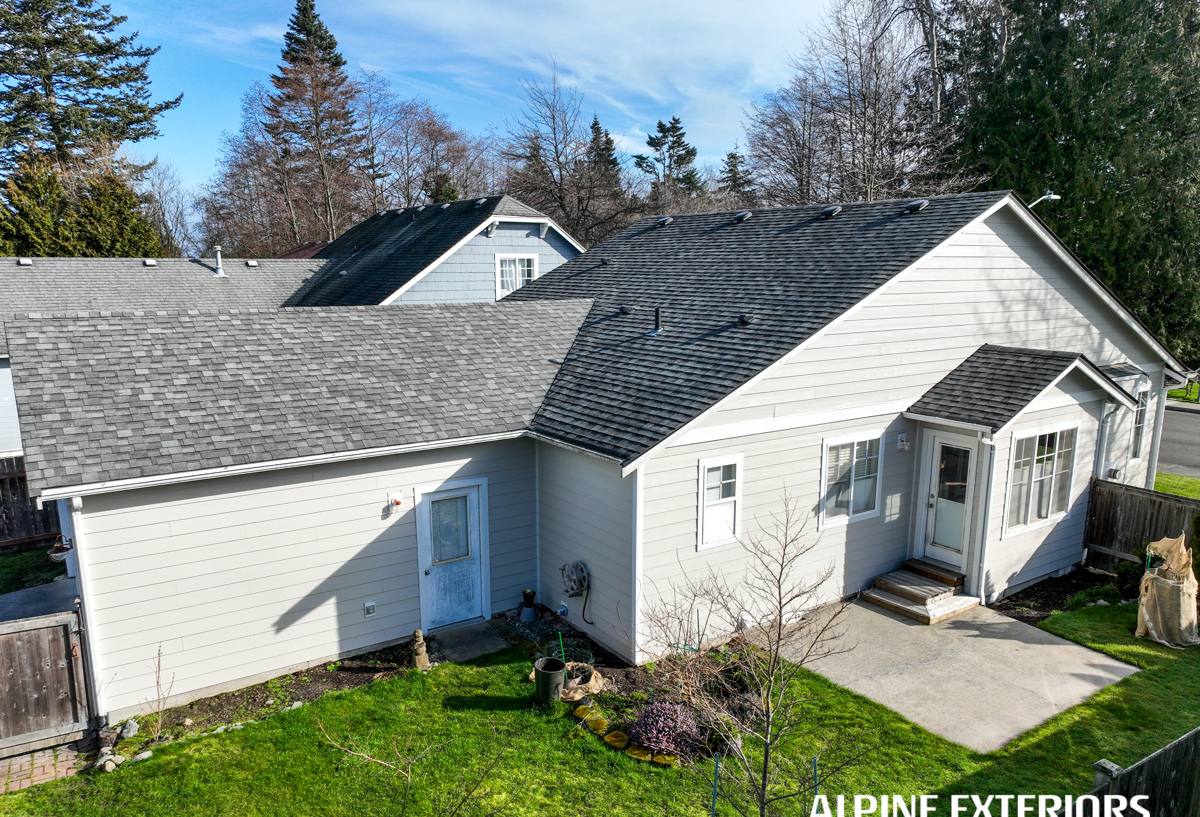
Why Board & Batten Fits This Neighborhood
Board and batten is a popular look on the craftsman, farmhouse, and coastal cottage-style homes common throughout older Whatcom County neighborhoods, Fairhaven included. The vertical panels with narrow battens covering the seams give a house a cleaner, more vertical line than traditional horizontal lap siding, and it pairs well with the mix of architectural styles you see on shoreline and near-shoreline streets.
Here's what's worth knowing before you fall in love with the look: board and batten isn't inherently better at shedding water than lap siding just because the lines run vertically. Water management comes from correct flashing, a drainage gap behind the panels, and quality sealant work at the joints — not from the orientation of the boards. In a climate that gets as much sustained rain as Fairhaven does, that distinction matters. Board and batten installed without proper water management behind it can actually trap moisture against the wall assembly worse than lap siding does, because the battens themselves create small dams for water if they're not detailed correctly.
Why We Only Install Board & Batten in James Hardie Fiber Cement
Board and batten can be built out of cedar, primed spruce, engineered wood like LP SmartSide, vinyl, or fiber cement. We've made a deliberate call to install it only in James Hardie fiber cement, and in a climate like Fairhaven's, the reasons are practical, not just a brand preference.
Moss, Algae, and Trapped Moisture
Cedar, primed spruce, and engineered wood products are organic materials. When moisture sits behind battens or against a north-facing wall shaded by trees, wood-based siding is feeding a slow rot process even when the surface still looks fine. Fiber cement doesn't give fungus and rot organisms anything to feed on. Moss and algae can still form a surface film on any siding material in this climate — that's a cleaning issue, not a material failure — but the difference is that a Hardie panel underneath that film is inert, while a wood-based panel underneath it is losing structural integrity you can't see from the ground.
Salt Air and Finish Life
Coastal air breaks down field-applied paint faster than it breaks down a factory-cured finish. James Hardie's ColorPlus finish is baked on under controlled conditions and holds color and adhesion through UV and salt exposure far longer than paint applied on-site to wood or engineered wood siding, which tends to need re-coating on a much shorter cycle near the water. Less repainting means fewer chances for a homeowner to defer maintenance and let a coating gap turn into a moisture problem.
Fire Resistance and Dimensional Stability
Fiber cement is non-combustible, which matters even in a wet coastal climate — Whatcom County still sees dry summer stretches and regional wildfire smoke seasons. Just as important day-to-day: fiber cement doesn't swell and shrink with moisture the way wood battens do, so caulk joints and fastener lines stay tighter for longer instead of working loose and opening a path for water.
What a Correct Board & Batten Installation Actually Involves
Board and batten fails in wet climates almost always because of installation shortcuts, not because the product itself was wrong. A correct install for a Fairhaven home includes:
- A drainage gap (rainscreen) behind the vertical panels so any moisture that does get past the surface can drain and dry instead of sitting against the sheathing
- Fastening pattern and spacing that follows James Hardie's published installation specification for vertical siding, not a generalized "siding is siding" approach
- Flashing at every horizontal joint and at every point the wall meets a roofline, deck, or window
- Kick-out flashing wherever a roof edge meets a sidewall, to direct roof runoff away from the siding instead of behind it
- Sealant used only where Hardie's specification actually calls for it — over-caulking joints that are supposed to allow drainage traps water instead of stopping it
- A starter strip and proper clearance from grade, roofing, and any attached structures so the bottom edge of the siding isn't sitting in standing water or splashback
Skip any one of these and you can end up with siding that looks correct for a year or two and then starts showing staining, soft spots, or lifted battens right where the shortcuts were taken.
Comparing Board & Batten Materials for This Climate
| Material | Moisture/Moss Behavior | Salt Air Durability | Maintenance Burden |
|---|---|---|---|
| James Hardie fiber cement | Won't rot; surface moss/algae is a cleaning issue, not structural | Factory ColorPlus finish resists salt-driven fading and chalking | Occasional soft wash; no repainting cycle in most cases |
| Cedar | Rot risk if moisture is trapped behind battens or under moss growth | Salt air accelerates weathering and finish breakdown | Regular refinishing, sealing, and moss/mildew treatment |
| Engineered wood (e.g. LP SmartSide) | Better than raw wood but still an organic substrate; edge and joint exposure is the weak point | Coating wears faster near salt air, especially at cut edges | Repainting and joint inspection on a shorter cycle |
| Vinyl | Won't rot, but can trap moisture behind it if not vented correctly; limited in a true board-and-batten profile | Can fade, warp, or become brittle with sustained UV and temperature swings | Low, but limited repair options if damaged or discolored |
Our Process for a Fairhaven Home
We start with an on-site inspection, and in this climate that means looking specifically for what a lot of homeowners miss: moss or dark staining concentrated on shaded or north-facing walls, soft spots near the base of existing siding, and any signs of moisture staining below roof-wall intersections. If there's existing wood or engineered wood siding, we check for trapped moisture at the sheathing before recommending a full tear-off versus a targeted repair.
From there, installation follows James Hardie's vertical siding specification with a drainage gap behind the panels, correct flashing at every transition, and fastening to spec — not shortcuts to save a day of labor. We finish with a walk-through so you know exactly what was done and why, and we provide the paperwork for James Hardie's limited warranty, which is transferable if you sell the home.
Maintaining Board & Batten Through a Long Moss Season
Even the right material in the right installation still needs basic upkeep in a climate this damp. A simple annual routine goes a long way:
- A soft wash once a year (or more often on heavily shaded walls) to keep moss and algae from building up a persistent film
- Keep gutters and downspouts clear so overflow isn't running down the siding face
- Trim back tree branches and shrubs that are keeping a wall shaded and damp longer than the rest of the house
- Check caulk joints once a year for cracking or separation, especially after a hard winter
- Pay closer attention to north-facing and tree-shaded sections — that's where moss problems concentrate first on almost every Fairhaven home we look at
- Address any roof-wall flashing issue right away rather than waiting for a visible stain to appear
Why a Crew That Already Works This Area Matters
A contractor who works Fairhaven regularly already knows where moss and moisture problems tend to show up first on homes in this specific microclimate, what Whatcom County's permitting and inspection process looks like, and how to detail flashing for a shoreline-adjacent wall assembly without guessing. That local familiarity shows up in fewer callbacks and fewer surprises once the siding is on the wall — not in anything you can see from the curb on day one.
If you're planning a siding project in Fairhaven and want a straight answer about what board and batten in James Hardie fiber cement would involve for your home, we're happy to take a look and walk you through it. Reach out for a free, no-pressure estimate using the form below.