 Chuckanut Exterior
 Why Blanchard's Marine Climate Is Hard on Windows
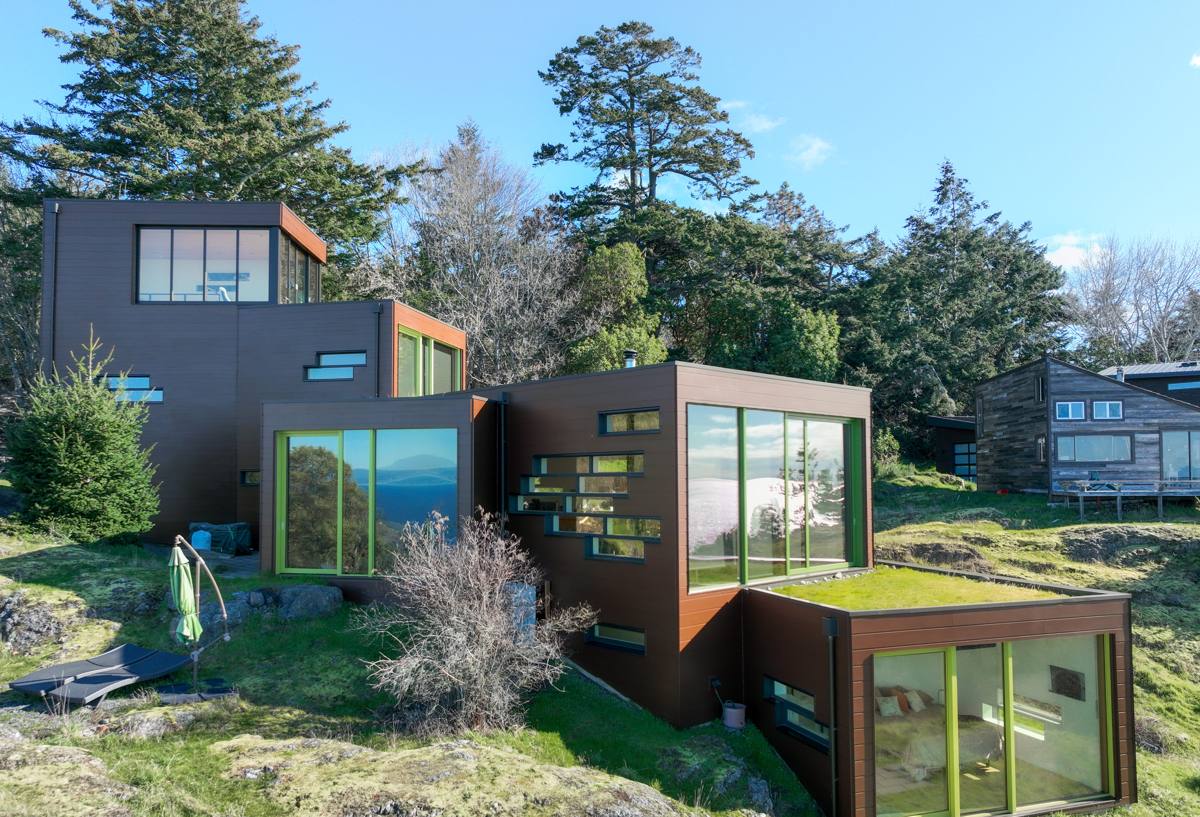
Homes in the Blanchard area sit close enough to the water and the tree line that windows take a beating most inland houses never see. Salt-laden air moves through the corridor and settles into anything metal, working on hinges, balance systems, and exposed fasteners year after year. Add in driving rain that comes sideways during winter storms, and you've got moisture testing every seam around a window, not just the glass. Then there's moss season — the long stretch of mild, wet weather that lets moss and algae take hold on sills, cladding, and anywhere water sits instead of shedding. None of this means windows are a lost cause here. It means the product and the installation both need to be matched to what Whatcom County's coastal weather actually does to a house, not to a generic spec sheet.
What "Energy-Efficient" Actually Means for This Area
"Energy-efficient" gets used loosely in window marketing. For a Blanchard home, it should mean three specific things working together: how much heat the window loses, how much solar heat it lets in, and how well it holds up structurally against wind and water. Get one of these wrong and the others don't matter much.
U-Factor and Heat Loss
U-factor measures how much heat escapes through the window — lower is better. In a marine climate with a long heating season and relatively mild but persistent cold, a low U-factor window pays for itself in comfort near the glass as much as in the utility bill. Drafty or single-pane windows are usually the coldest spot in an older Blanchard living room, and it's often more noticeable than the bill itself.
Solar Heat Gain Coefficient (SHGC)
SHGC measures how much solar heat passes through the glass. Because this region gets a lot of overcast days but can also get strong low-angle sun off the water, the right SHGC depends on which direction a room faces and how much glass is in it. We don't push one number for every elevation of the house — a west-facing wall catching afternoon sun needs a different answer than a shaded north wall.
Design Pressure (DP) Rating
This is the one homeowners hear about least, but it matters most for wind-exposed sites near Chuckanut. The DP rating tells you how much wind and water pressure a window is engineered to resist before it leaks or flexes. A window with great energy numbers but a low DP rating can still let wind-driven rain through the frame in a bad storm. For anything with direct exposure, we size the DP rating to the site, not just the room.
Signs Your Current Windows Are Costing You Money
Most homeowners don't replace windows because of a single dramatic failure — it's a slow accumulation of small problems. Here's what we look for during a walk-through:
- Fogging or a permanent haze between panes of double-glazed glass — a sign the seal has failed and the insulating gas or air gap is gone
- Soft, spongy, or discolored wood at the sill or bottom corners of the frame
- Visible moss, algae, or dark streaking on the sill or lower sash that keeps coming back after cleaning
- Windows that are hard to open, close, or lock, or that no longer sit flush in the frame
- Noticeable drafts or a cold zone near the window even when it's fully closed
- Condensation forming on the inside of the glass regularly during colder months
- Rooms that are consistently harder to heat than the rest of the house
Any one of these can be a minor fix. Several together, especially on a home more than 20-25 years old, usually mean the windows are past the point where sealant and adjustment solve the problem.
Frame Material Comparison for Coastal Exposure
Frame material matters as much as glass package in a salt-air, high-moisture environment. Here's how the common options generally compare for this kind of exposure:
| Material | Energy Performance | Salt Air & Moisture Resistance | Maintenance | Typical Cost Tier |
|---|---|---|---|---|
| Vinyl | Good, consistent | Very good — won't corrode or rot | Low | Lower to mid |
| Fiberglass | Very good, stable across temperature swings | Excellent — dimensionally stable in wet/dry cycles | Low | Mid to higher |
| Wood-Clad | Good, warm interior feel | Depends heavily on cladding and detailing quality | Higher — exposed wood needs upkeep | Higher |
| Aluminum | Weaker unless thermally broken | Prone to corrosion and pitting in salt air over time | Moderate | Varies |
We don't rule out any of these outright — a wood-clad window with well-detailed cladding and good overhangs can do fine here. But we're honest with clients about the trade-off: the more maintenance a product needs to perform well in salt air, the more that maintenance has to actually happen. For a lot of Blanchard homes, vinyl or fiberglass hits the best balance of performance and low upkeep, especially on exposed elevations.
Getting the Installation Right
The window unit itself is maybe half the equation. Installation quality is what determines whether that energy performance and moisture resistance actually shows up in the finished wall.
Flashing and Sill Pans
Every opening gets a sloped sill pan and properly lapped flashing tied into the weather-resistive barrier, so any water that gets past the window sheds outward instead of collecting at the sill. This is the single most common shortcut on rushed installs, and it's usually invisible until years later when rot shows up inside the wall.
Air Sealing and Insulation
The gap between the window frame and the rough opening gets sealed and insulated correctly — not just foamed shut, since over-filling can bow a frame out of square. Done right, this closes the draft path without distorting the window's operation.
Fasteners and Hardware
Given how much salt air moves through this area, we use corrosion-resistant fasteners and hardware rather than standard-grade options. It costs a little more up front and saves the homeowner from failed screws or streaking corrosion stains a few years down the road.
Our Process From Estimate to Cleanup
- Site visit to assess each window's condition, exposure, and framing, and to measure openings accurately
- Product and glass package recommendations based on which wall the window is on and how exposed it is to wind and rain
- Careful removal of the old unit, checking framing and sheathing underneath for hidden moisture damage before anything new goes in
- Sill pan and flashing work integrated with the existing weather barrier and siding
- Window installation, shimming, and air sealing to spec
- Interior and exterior trim finish work to match the home
- Final walkthrough and operation check on every window before we consider the job done
If we find rot or hidden damage during removal, we stop and talk to the homeowner before proceeding rather than covering it up and moving on.
Why a Local Blanchard Crew Matters
A crew that already works this stretch of Whatcom County knows which elevations catch the worst of the wind-driven rain, which older home styles in the area tend to have hidden framing issues around windows, and how much of a head start moss gets on a north-facing sill versus a south-facing one. That familiarity shows up in small decisions — which flashing detail to use, which DP rating actually fits a given site, how much lead time to build in around the wetter months. It also means we're not guessing at permitting requirements or showing up once and disappearing; we're working in the same area on an ongoing basis and standing behind what we install.
Living With Your New Windows Through Moss Season
Even a well-installed, high-performance window benefits from basic upkeep in this climate. A couple of times a year — especially heading into and coming out of the wetter months — it's worth clearing debris and moss growth off sills and tracks, checking that weep holes (the small drainage openings in the frame) aren't clogged, and confirming exterior caulking at the trim hasn't cracked or pulled away. None of this is heavy work, but skipping it is how small moisture problems turn into bigger ones over a few wet seasons.
What Affects the Cost
Window replacement cost depends on frame material, glass package, size, number of openings, and how much flashing or structural repair is needed once the old window comes out. Homes with hidden rot behind the old frames will cost more to do correctly than homes where the framing is sound — and that's usually not knowable until the old unit is out. Rather than quote a number that doesn't reflect your actual house, we'd rather walk the exterior with you, look at what's really there, and give you a straight answer based on what your home needs.
If you're weighing whether your windows in Blanchard need attention, we're happy to take a look and give you an honest, no-pressure estimate — no obligation, just a clear read on what's going on and what it would take to fix it right. There's a form below to get started.