 Chuckanut Exterior
 Board & Batten Siding Built for Blanchard's Coastline
Blanchard sits close enough to Samish Bay and the water that its homes take a different kind of weathering than siding just a few miles inland. Salt-laden air, wind-driven rain off the water, and a long, damp moss season put real demands on any exterior cladding. Board and batten siding — with its clean vertical lines and deep shadow reveals — is one of the most popular styles we install in this part of Chuckanut and Whatcom County, but the look only holds up if the material and the installation are matched to what this specific stretch of coastline actually does to a house.
This page is about that one combination: board and batten siding, done right, for homes in and around Blanchard. We're not going to give you a generic siding overview — we're going to explain what your climate demands, what correct installation looks like, and why the crew doing the work matters as much as the product itself.
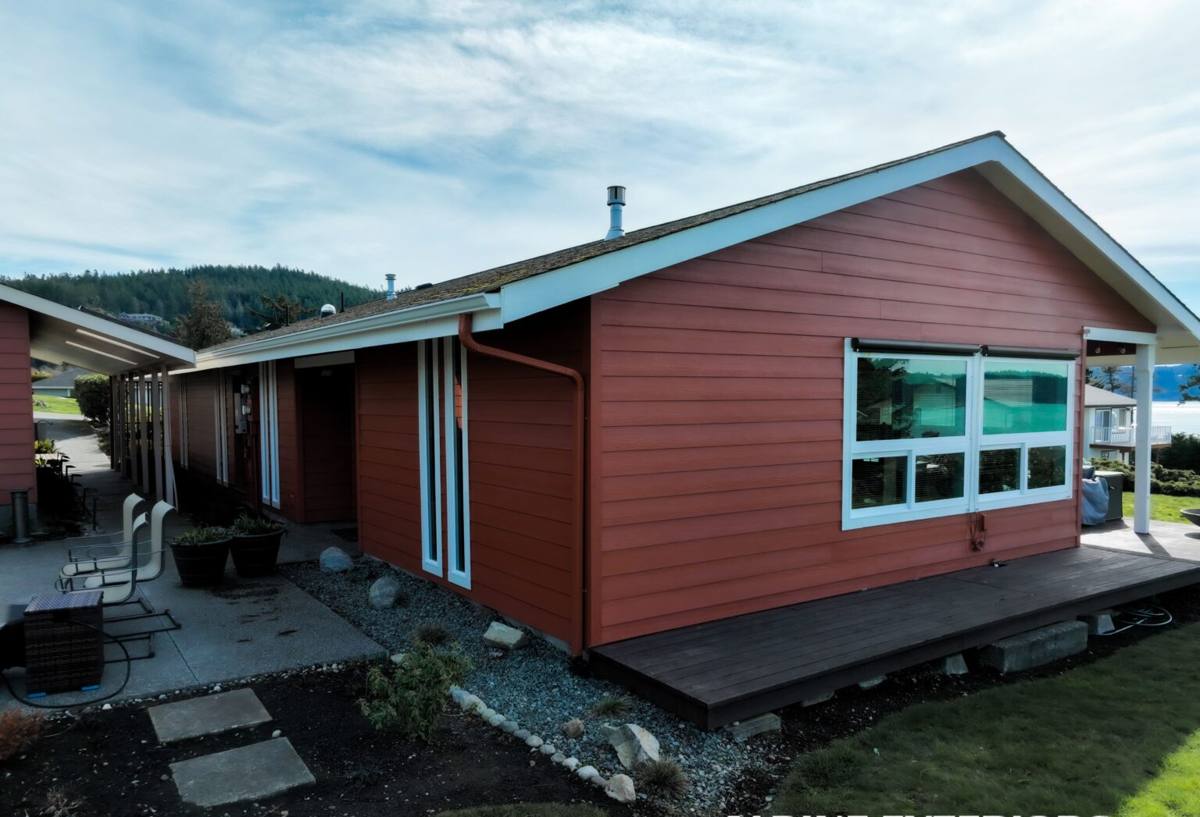
What Salt Air, Driving Rain, and Moss Season Do to Siding
Homes near Blanchard deal with three climate stressors that don't hit every part of Whatcom County the same way:
- Salt air — moisture carrying dissolved salt accelerates corrosion of fasteners, flashing, and any metal trim components, and it can degrade lower-quality paint and coatings faster than inland exposure.
- Driving rain — wind off the water pushes rain sideways into wall assemblies, not just straight down. Siding systems that rely on gravity alone to shed water can let moisture work its way behind the cladding.
- Long moss season — the Pacific Northwest's wet, shaded, mild-temperature stretch (roughly fall through spring) is ideal moss and algae growth conditions, especially on north-facing walls, under eaves, and anywhere airflow is limited.
Board and batten siding has a lot of vertical seams and batten-to-panel joints compared to lap siding — more places for water to find a way in if the assembly behind it isn't built correctly, and more surface texture for moss and algae to take hold on if the material and finish aren't up to it.
Why Board & Batten Is a Good Fit for Blanchard Homes — When Built Right
Board and batten isn't just a style choice. The vertical battens create a shadow-line pattern that sheds water differently than horizontal lap siding, and on a lot of Blanchard's farmhouse-style, craftsman, and modern homes it's a look that fits the setting well. The style works with the coastal climate, not against it, provided three things are true:
The Substrate Doesn't Trap Moisture
Fiber cement doesn't swell, rot, or delaminate the way some wood and wood-composite substrates can when they take on repeated moisture exposure. That matters more here than in a drier inland location.
The Drainage Plane Is Continuous
A correctly built wall assembly behind board and batten siding gives any water that gets past the cladding a way to drain back out, rather than sitting against sheathing.
The Finish Resists Salt and UV
A factory-applied finish engineered to hold color and resist coastal weathering outperforms field-applied paint over the long run, especially on a style with this much exposed vertical surface.
What a Correct Board & Batten Installation Actually Involves
A lot of siding failures we're called out to inspect in Whatcom County aren't material failures — they're installation shortcuts. Board and batten is less forgiving of shortcuts than lap siding because of how many seams it has. Here's what has to happen behind the scenes:
Weather-Resistive Barrier and Drainage Plane
A continuous, properly lapped weather-resistive barrier goes over the sheathing first, with a drainage gap behind the siding so incidental moisture has somewhere to go instead of sitting against the wall.
Flashing at Every Penetration and Transition
Windows, doors, roof-to-wall intersections, and any wall penetration need correctly integrated flashing — installed in the right order relative to the weather barrier — so water sheds outward at every transition, not just on the flat field of the wall.
Fastener Selection and Placement
In a salt-air environment, fastener corrosion resistance isn't optional. Fasteners need to be rated for the exposure and driven to the manufacturer's specified depth and spacing — overdriven or underdriven fasteners are one of the most common causes of premature siding problems.
Batten Spacing and Panel Joints
Battens need consistent spacing and correct fastening into the panel and framing below, with joints treated according to the manufacturer's installation instructions so the vertical seams stay weathertight over time.
Clearance at Grade and Hard Surfaces
Board and batten siding needs proper clearance from soil, decks, patios, and roof lines. Splash-back and constant dampness at the bottom edge is one of the fastest ways to shorten the life of any siding in a wet climate.
James Hardie Board & Batten Options
We install James Hardie fiber cement exclusively, and for board and batten there are two ways to build the look: pre-styled panel products or a true board-and-batten assembly using trim battens over vertical panels. Both give you the same visual result — the right choice depends on the home's design and budget.
| Option | What It Is | Best For |
|---|---|---|
| Hardie Artisan Board & Batten | Pre-styled panel system engineered specifically for the board and batten look, with a premium factory finish | Homeowners who want the highest-end finish and detailing |
| HardiePanel + HardieTrim Battens | Vertical fiber cement panels with separate trim battens installed over the joints | Flexible batten spacing and a more traditional build-up, often a better fit for budget-conscious projects |
| ColorPlus Factory Finish | Baked-on finish applied at the factory, available across Hardie's board and batten options | Homeowners who don't want to repaint on a maintenance schedule |
All of these are engineered as part of Hardie's HZ5 product line, formulated for the Pacific Northwest's wet, moderate-temperature climate — which is a meaningfully different engineering target than a product line built for a hot, dry, or freeze-heavy region.
Why We Only Install James Hardie
We don't install vinyl, LP SmartSide, primed wood, or other fiber cement brands, and that's a deliberate standard, not an oversight. Vinyl board and batten can look the part from a distance, but it's a thinner, more flexible material that can show waviness and doesn't offer the same fire resistance or long-term rigidity. LP SmartSide and primed wood products perform well when properly maintained, but they're wood-based and depend on an intact factory or field coating to keep moisture out — a bigger ongoing commitment in a climate that stays wet as much of the year as Whatcom County does.
James Hardie fiber cement is non-combustible, holds its shape and finish in wet, salt-exposed conditions better than wood-based alternatives, and comes with a strong transferable warranty backed by a manufacturer with a long track record in coastal Pacific Northwest climates. That's the trade-off we made a professional standard on, and it's why it's the only material we put on Blanchard homes.
Our Process for Blanchard Board & Batten Projects
- On-site assessment — we look at your home's exposure (how much wind-driven rain and shade it gets, current siding condition, and any moisture damage) before recommending an approach.
- Product and layout selection — we walk through Artisan versus panel-and-batten options, color, and batten spacing to fit your home's design.
- Removal and substrate check — old siding comes off and we inspect the sheathing underneath for any moisture damage before it gets covered back up.
- Weather barrier and drainage plane installation — done to manufacturer spec, not shortcut, since this is the part that matters most once the siding is on.
- Flashing and trim integration — windows, doors, and roof transitions detailed before panels go up.
- Panel and batten installation — fastened to Hardie's published specs for spacing, depth, and clearance.
- Final walkthrough — we go over the finished work with you before calling the job done.
What Board & Batten Siding Costs — The Factors That Move the Number
We're not going to quote a number here that doesn't mean anything without seeing your house, but these are the factors that actually move a board and batten project's cost:
| Factor | Why It Matters |
|---|---|
| Home size and wall complexity | More corners, dormers, and wall breaks mean more cutting, flashing, and labor time |
| Current siding removal | Tear-off and disposal of existing material adds time and cost versus new construction |
| Substrate repair | Any rot or moisture damage found underneath needs to be addressed before new siding goes on |
| Product choice | Artisan panels versus HardiePanel-and-batten assemblies have different material costs |
| Trim and detailing | Window and door trim, corner treatments, and batten spacing all affect labor |
Living With Board & Batten in a Moss-Prone, Salt-Air Climate
Correctly installed Hardie siding is low-maintenance, but "low" isn't "zero" in this climate. A few habits go a long way toward protecting your investment:
- Rinse siding periodically, especially on north-facing and shaded walls where moss and algae take hold fastest.
- Keep gutters clear so water isn't overflowing and running down the wall face.
- Trim back vegetation that keeps siding shaded and damp for extended periods.
- Check caulking at trim and penetrations every year or two and have any cracked or missing sections addressed.
- Have any impact damage or visible gaps inspected promptly rather than waiting — small issues are far cheaper to fix than water damage behind the wall.
If you're weighing board and batten siding for a home in Blanchard, we're glad to take a look, walk the exterior with you, and give you a straight assessment of what your home needs — no pressure, no hard sell. Use the form below to request a free estimate.